2 National opportunities and the way forward
Those nations – and individual companies – that succeed in harnessing the disruptive potential of deep and transformative technologies will strengthen their own foundations for economic growth, productivity growth and business development. If technology-based industry is to succeed, we must jointly develop a national knowledge base, ensure access to capital and skilled labour, utilise Norwegian data, use the public sector as a catalyst for innovation, and facilitate increased collaboration and radical innovation. And last but not least, we wish to work with the industry and other relevant stakeholders to define Norway’s ambitions and identify the technology areas that are critical for Norway, as well as to establish a constructive dialogue with the concerned stakeholders on the way forward.
2.1 Building knowledge about new technologies
A number of trend analyses have been produced that describe expected technological developments along the axes of time and significance. The US consultancy firm Gartner regularly publishes an analysis of technology trends. Figure 3 shows their overview of emerging technologies up to eight years into the future. This analysis also highlights the significant impact AI is already having in several areas, and how an as yet immature enabling technology such as quantum technology could prove to be of great importance for technological development and innovation in the longer term. Among several emerging technology areas, these two stand out as particularly relevant, although we are also seeing new emerging technologies in more established fields such as nanotechnology/advanced materials and biotechnology. Research into enabling technologies is a priority area. This is being pursued through initiatives by the Research Council of Norway and in following up the long-term plan for research and higher education.
As a small and open economy, it is crucial that Norway is able to develop national knowledge in order to contribute to the international knowledge base, strengthen its capacity and capability to absorb new leading-edge knowledge from abroad, and develop internationally competitive solutions in niches where we can add value. It is important that we as a nation are as well prepared as possible for how deep tech are developing and what impact they will have on society. This will be crucial for the Norwegian economy and security. The appropriate use of methodologies for developing alternative future scenarios and mechanisms for knowledge dissemination can help build national preparedness for technological development.
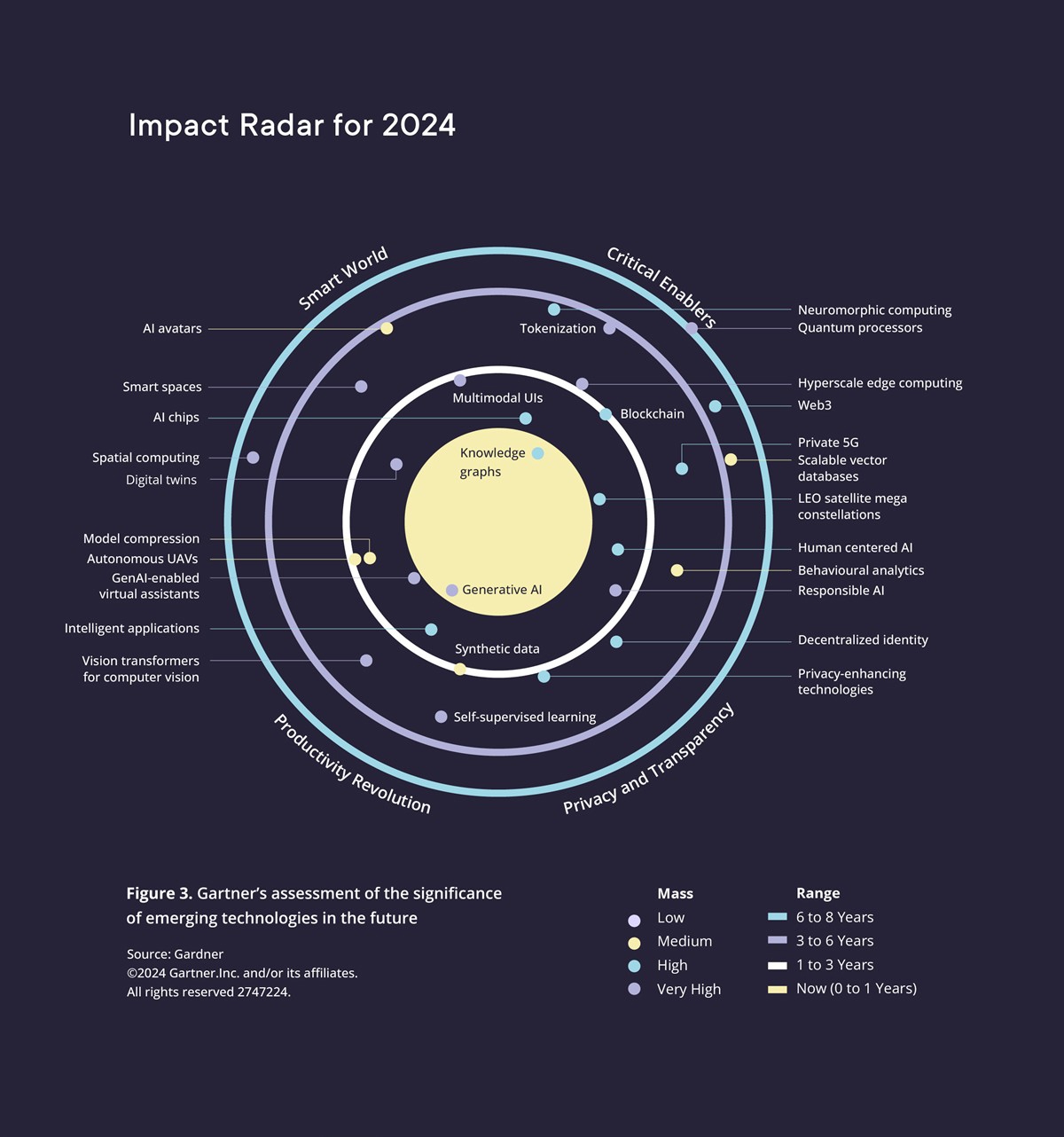
Figure 3. Gartner’s assessment of the significance of emerging technologies in the future
Artificial intelligence (AI)
AI involves giving digital systems the ability to take action and perform tasks, with some degree of autonomy, to achieve a predetermined goal. AI is used for a variety of purposes, including image and speech recognition, virtual assistants, robotics and autonomous systems, marketing, surveillance, diagnostics and analysis of various data, optimisation of systems and processes, and the generation of text, code, images, audio and video. AI has been at the forefront of research for a long time, but it is only recently, thanks to better access to data and computing power, that this technological development has led to applications such as public access to large generative AI models like ChatGPT.4 Tests show that AI has already outperformed humans in certain areas, such as face and image recognition and language comprehension.5 AI is expected to be a common denominator for new advances in research and innovation, and to contribute to new tools and mechanisms for industry. At the same time, the rise of algorithm-driven media platforms is contributing to increased polarisation, hidden influence and the spread of disinformation in society.
On the Global AI Index, Norway ranks 26th6, behind our Nordic neighbours. This ranking is partly explained by Norway’s low score in the development of basic platforms and algorithms on which innovative AI projects depend. On the other hand, the regulatory framework and the public’s perception of AI are highlighted as areas where Norway is well ahead. The Government AI Readiness Index 2024, which measures national authorities’ ability to integrate AI into public services, also ranks Norway 11th, ahead of our Nordic neighbours.7 Expertise in Norwegian industry is mainly concentrated in large companies such as Telenor, DNB, the Kongsberg Group, Equinor, Hydro and Yara, which are actively adopting and incorporating AI into their operations at the system level. Telenor is also in the process of launching its own AI factory. At the same time, we are also seeing the emergence of a growing number of smaller AI companies. A recent report, which provides an overview of approximately 350 Norwegian AI companies, shows that 30 per cent of the companies and AI tools surveyed were established in 2022 or later, and that 49 per cent of the companies have 10 or fewer employees.8 Nationally, we have networks such as NORA (Norwegian Artificial Intelligence Research Consortium) and centres of expertise such as NAIL (Norwegian Open AI Lab) at the Norwegian University of Science and Technology (NTNU), in addition to strong academic communities and research centres in the field of AI. The Research Council of Norway has recently designated six new research centres for AI with the aim of strengthening research, innovation and education in the field.
As the EU AI Act is incorporated into Norwegian law during 2026, the Government will establish national authority functions for guidance and supervision of compliance with the new AI rules. In 2026, the Government will establish AI Norway, which will serve as a new national arena for the responsible innovation, development and use of AI.
Norway’s new research centres for artificial intelligence
Through the Research Council of Norway, the Government is allocating just over NOK 1 billion over five years to six new research centres for AI. These centres will promote responsible and sustainable AI and strengthen Norway’s capacity for innovation and welfare in collaboration with international specialist communities. Together, they will cover societal impacts, technology and innovation, and touch on sectors such as health, industry and education. All six centres consist of a number of research partners and public/private user partners, and will receive up to NOK 200 million each over the next five years:
- ‘AI Centre for the Empowerment of Human Learning’ (led by the University of Bergen and NTNU) on new learning systems based on ‘hybrid intelligence’.
- ‘The Norwegian Centre for Trustworthy AI’ (led by the University of Oslo) on more accurate and fair AI systems for responsible use in areas such as healthcare, the justice system and policy development.
- ‘Center for AI & Creativity’ (led by the University of Oslo) on how AI affects creativity and copyright.
- ‘Norwegian Centre for Embodied AI’ (led by NTNU) on the development of robotic systems with embedded AI.
- ‘Norwegian Centre for Sustainable, Risk-averse and Ethical AI’ (led by Simula Research Laboratory AS) on the development of AI that addresses sustainability goals, security and accountability.
- ‘Norwegian Centre on AI for Decisions’ (led by NTNU and SINTEF) on the development of AI-based decision-making systems for industry and infrastructure.
Quantum technology
Quantum technology is technology that utilises key quantum mechanical phenomena9, and has applications in areas such as sensor, computing and communications technology. Quantum sensors use quantum phenomena to perform extremely precise measurements, for example in diagnostic imaging and navigation. Quantum computing utilises quantum mechanical principles that enable quantum computers to process data at extreme speeds, meaning that the potential for computing power – and for what can be achieved with a computer – is enormous. Quantum phenomena can also be used to create communication systems that enable the exchange of sensitive information using more secure encryption technology. Quantum technology is a field with great potential, attracting massive international investment that is expected to increase in the years ahead. Globally, USD 55 billion in public funding has been invested, and there is also significant investment from private companies, led by IBM, Microsoft, Google and others. China and the US are leading the way in both funding and technology, but Germany and France are also well ahead and investing heavily.
In Norway, our specialist communities are mainly concentrated on quantum science research (i.e. the foundational disciplines for quantum technology) at the largest universities, and we have yet to establish any new quantum technology companies. These communities point out that sensors, computing and communication could be relevant focus areas for Norway. Some of these areas may complement initiatives in other Nordic countries, such as the construction of quantum computers, which Norway does not currently have.10 Denmark has carried out a national survey of applications for quantum technology. Finland has recently presented its national quantum technology strategy, and work on a corresponding national strategy is now underway in Norway.11 The Nordic heads of government have recently presented a joint declaration on cooperation in quantum technology. Expanded Nordic cooperation can help to strengthen Norway’s competence base and promote new research and innovation for the benefit of industry.
The Government has
- defined AI, quantum technology and neurotechnology as priority technology areas in the long-term plan for research and higher education
- allocated NOK 1.17 billion through the Research Council of Norway, distributed among six AI research centres
- announced a NOK 100 million call through the Research Council of Norway for a maritime AI research centre, to be launched in 2025
- produced a guide for the responsible development and use of AI assistants in the public and private sectors
- secured national co-funding for the establishment of two technology infrastructure centres in Norway with the status of European Digital Innovation Hubs (EDIH)
- funded a technology convergence initiative at the Research Council of Norway that includes deep tech
- allocated NOK 43 million through the Research Council of Norway for quantum technology infrastructure
- allocated NOK 244 million through the Research Council of Norway to four centres for quantum technology research
- signed a declaration on Nordic cooperation in making the Nordic region a leader in quantum technology
- initiated work on a national strategy for quantum technology, covering research, innovation and business development, as well as security and international cooperation
- tasked the Research Council of Norway, the Norwegian Defence Research Establishment and the Norwegian National Security Authority with developing a knowledge base for the assessment of sensitive technologies
- tasked the National Library of Norway with training and making available Norwegian and Sami language models for use in the development of AI-based tools and services
The Government will
- facilitate the development of a national AI infrastructure that will, among other things, provide access to foundation models based on Norwegian and Sami languages and societal conditions
- incorporate the EU AI Act into Norwegian law and establish a national governance structure for the enforcement of the new AI rules during 2026
- consider participation in European industrial and technological cooperation in the field of AI through the Important Projects of Common European Interest (IPCEI) scheme
- promote national preparedness for technological development through the appropriate use of future scenarios and mechanisms for knowledge dissemination
- establish AI Norway – a national arena for the responsible innovation, development and use of AI in the public and private sectors. AI Norway will become part of the Norwegian Digitalisation Agency
2.2 Access to start-up and scale-up capital
The Draghi report12 on European competitiveness, commissioned by the European Commission, emphasises that Europe underperforms in the generation of growth companies based on emerging technologies. This is partly attributed to limited willingness to invest in European companies based on deep and disruptive technologies. The European Commission is promoting several measures to strengthen access to venture capital for start-ups and scale-ups through, among others, the Savings and Investments Union, the Clean Industrial Deal and the EU Startup and Scaleup Strategy. In addition, there is great anticipation surrounding the introduction of the new European Competitiveness Fund and the continuation of policy instruments from Horizon Europe and InvestEU into the EU’s new multiannual budget from 2028.
In line with a consistent finding from official reports, including that of the Capital Access Committee (NOU 2018: 5 Kapital iomstillingenstid – Næringslivetstilgangtilkapital [Capital in a time of transition: industry’s access to capital]), the Government assesses in the Financial Markets Report 2024 that the Norwegian capital market is generally functioning well. Norway has a broad range of financing options for industry, with companies across the country generally having good access to financing on market terms. Public policy instruments help to complement the private financing available.
However, access to capital varies between industries and phases. Start-up companies with ground-breaking solutions will require competent, risk-willing capital during the start-up phase, as it can be particularly challenging to analyse, validate and assess the risks and potential returns for companies operating amid technology shifts, where the landscape of players and markets can change rapidly. In the subsequent scale-up phase, once the company has gained a foothold in the market, there is a need for long-term capital geared towards returns that may be some way off, but with an upside that could be very high in the long run.
Where access to risk-mitigating capital for start-ups based on deep tech is insufficient, this may be due to factors such as a lack of expertise among investors, a small market, relatively low levels of e-commerce and varying application of regulations across national borders. High uncertainty and high research and development costs may also limit growth companies’ ability to service loans in the corporate banking market. A report by Oslo Economics, commissioned by Abelia13, also shows that Norway scores low on access to venture capital. An overview from the OECD shows that Norway is among the countries with the lowest levels of venture capital investment in the ICT sector as a share of GDP in 2023, which probably reflects the relatively small size of this sector in Norway.14
The Government has
- secured Norwegian participation in InvestEU, which opens opportunities in Europe for Norwegian companies in terms of capital, networking and expertise
- presented a white paper on entrepreneurs and start-ups with measures to improve access to start-up and scale-up capital in Norway
The Government will
- follow up on the white paper on entrepreneurs and start-ups by improving access to information on the conditions for Norwegian entrepreneurs, assessing ways to streamline the use of investment policy instruments, and catalysing private investment in start-up and scaling-up activities
- assess fund-of-funds cooperation between Investinor and owners such as pension funds and similar entities, with a view to improving access to capital in the Norwegian early-stage market
- monitor regulatory developments in the EU and assess the implementation of regulatory changes that promote innovation in Norway
- make use of access to EU capital instruments
2.3 Closing the skills gap
A shortage of skilled labour is a challenge in several sectors and industries. In its growth plan for the tech-industry, Abelia points out that a lack of technology skills can hamper growth across the entire economy, and that Norway’s strong technology skills are too concentrated in individual sectors.15 At the same time, technological development, including robotisation and automation, could also be part of the solution to labour shortages in the longer term.
The rapid emergence of AI and other deep tech is creating immediate skills needs in industry and public administration. New technology requires strategic technological and business understanding, as well as specialised technology skills. The Norwegian research institutes play a vital role as knowledge producers for industry and as disseminators of new knowledge from the research frontier. Companies need, among other things, knowledge of how AI works, access to AI services and the ability to train AI on business-relevant data to exploit the potential for increased productivity and value creation. There is also a significant shortage of qualified personnel in the field of quantum technology internationally, and the same is expected to be the case in Norway.
Financial expertise is also crucial to business success, particularly for the financing of new deep tech companies. A lack of investor capital leads to reduced access to strategic guidance and scaling expertise. Low-threshold schemes such as Industrial PhDs and industrial master’s degrees can be suitable policy instruments for the rapid transfer of university-level knowledge to companies. In this model, a company and a university or university college collaborate on a PhD or master’s degree project, with students spending 50 per cent of their time studying and 50 per cent working, paid by the company.
Future-oriented technology skills in Norway must first and foremost be built up within the country’s own population. For several years, the Government has allocated funds to increase student capacity at universities and university colleges in the fields of technology and ICT. The number of students in information and computer technology admitted annually to universities and university colleges has increased from around 3,100 to 5,200 between 2015 and 2024. This corresponds to a 70 per cent increase.16
Today, however, the proportion of students studying science and technology remains lower than the OECD average, and demand for labour with IT skills exceeds supply. In the new Education Act, the Government has placed greater emphasis on ensuring that upper secondary education and training are tailored to the needs of society. To strengthen society’s access to specialised digital skills, the Government has made it clear that it expects universities and university colleges to prioritise more student places in ICT.
As a European Economic Area (EEA) member, Norway is part of a large European market with free movement of labour. Furthermore, it must be borne in mind that Norwegian industry may require specialist expertise that is not available within the EEA.
Working life is the most important arena for lifelong learning. Effective tripartite cooperation and a sufficiently flexible education system are key prerequisites for working life to help employees acquire the skills needed to cope with necessary restructuring.
The Government has
- continued low-threshold schemes through the public research and innovation support system, such as the Industrial PhD and industrial master’s degree programmes
- appointed a committee to deliver a report by the end of 2025 on how new technology affects future skills needs
- established an industry programme for the financial sector to enhance skills in sustainability and technology
- established two innovation hubs to assist industry and the public sector in adopting new technology and raising skills in key technology areas
- allocated funding for 100 new student places in ICT in both 2024 and 2025 to meet the growing demand for digital skills
- established a new industry programme for information security and ICT in 2023. Courses developed through the industry programme will be delivered from 2025 to 2027
The Government will
- spend NOK 300 million over 3–5 years on attracting foreign researchers to Norwegian research communities (not limited to technology)
- assess the need to attract and retain highly qualified foreign research staff
- strengthen access to technology skills by prioritising student places in technical subjects and ICT in allocations to vocational colleges, university colleges and universities
2.4 Opportunities in our national strengths
Norwegian industry is well placed to succeed with new technology in established areas of strength, including ocean-based industries such as the petroleum, marine and maritime sectors. Here, domestic ownership through shipowners, equipment suppliers and system integrators has contributed to interoperability between systems and automatic data flow. Digitalisation in these industries is extensive and affects entire value chains, including autonomous ships, ocean monitoring, environmentally friendly shipping, fish health, aquaculture and seafood. Increased use of AI and greater data sharing between industry players will help to strengthen the position of the ocean-based industries in Norway and internationally. Digitalisation can strengthen the links between value chains in blue industries and exploit growth potential by transferring solutions and experience across industries.
Other areas with potential include agricultural technology and food technology. The use of AI, drones, robots and sensors contributes to more sustainable and efficient agriculture with reduced use of inputs (including fertilisers and pesticides). In the food industry, new technology, the robotisation of heavy, labour-intensive tasks and automation help to reduce production costs and the need for labour. Norwegian industry has collected large amounts of key data and is at the forefront of machine learning and AI. The AgriFoodTech Norway initiative brings together technology companies to facilitate scaling and internationalisation.
The health and medical technology field has large volumes of data under public control that can be utilised to develop new goods and services. Norwegian companies can contribute to a sustainable health sector and create new export opportunities.
Space activities encompass critical infrastructure for situational awareness and maritime operations, communications, monitoring of landslides and floods, power generation forecasts, management of the power grid, precise timing in financial transactions, weather forecasting and much more. Norwegian specialist communities have particularly excelled in the field of Earth observation. Our geographical location has also been a competitive advantage for the development of ground stations for downloading satellite data. Our extensive maritime areas mean that Norway derives particularly great benefit from space-based services.
In the fields of hydropower and renewable energy, the conditions are right for developing technological solutions for smart grids, energy management, battery technology, optimisation of energy production and distribution, carbon capture and climate modelling.
A robust Norwegian defence industry capable of delivering what we and our allies need is essential, particularly in an increasingly turbulent world. Several technologies developed in the civilian sector are relevant to the defence sector. So-called dual-use technologies cover many areas, but what they have in common is that they often have growth potential and relevance for multiple sectors, as is the case for maritime technologies and space technology.
The Government has
- developed a comprehensive public support system with strategic research and innovation initiatives in the ocean-based industries, including established sectors such as maritime, marine and petroleum, and new business activities in offshore wind, carbon capture, utilisation and storage (CCUS), etc.
- established strategic export initiatives in offshore wind, maritime, health, goods production and design, and tourism
- established a health technology scheme that supports the introduction of new health technology in the health and care services
- facilitated a strategic initiative in space activities, through Norwegian participation in European space programmes and support for a complete Norwegian value chain for small satellites
The Government will
- contribute to dialogue in relevant forums between established industries and suppliers of new technological solutions based on deep tech
- assess in more detail how best to promote the Norwegian technology industry internationally, including how the public support system and the foreign service missions can contribute to this work
- further clarify Norwegian interests and develop Norwegian positions to contribute as effectively as possible to international technology cooperation that affects the framework conditions for the Norwegian technology industry
- support and further develop efforts in dual-use technologies, to strengthen the security of Norway and its allies and to create profitable high-tech jobs with growth potential
2.5 Data as a driver for emerging markets
Technological drivers such as cloud services, sensor technology, semiconductor technology, the Internet of Things, big data analytics, AI and computing power are central to the data economy. Norway has strong capabilities in sensor technology and smart components, design and customisation of microchips, and a well-developed communications infrastructure. With sufficient computing capacity and the sharing of high-quality data, Norway can compete effectively in new data-driven markets.
Cloud services allow data to be stored and processed outside one’s own organisation, usually in large data centres, and are necessary to realise the potential of data science and AI. The Internet of Things contributes to growth in data availability using sensors and communication technology that can measure and report on the status of, for example, various production lines. Using a so-called digital twin, information from a physical system, such as a hospital, a factory or a ship, can be brought together in a virtual representation of the system. A digital twin provides easy access to complex information as a basis for decision-making. Examples of decisions include maintenance requirements, process changes, evaluation of new strategies, and so on. Kongsberg Digital is an example of a Norwegian company that is at the forefront of data utilisation.
Effective use of data requires sufficient data storage and computing power. Data centres will contribute to value creation and form part of the national digital foundation. The EU has measures in place to strengthen data access, and the Government is facilitating opportunities for national stakeholders to utilise these.
The need for high-performance computing will increase rapidly, and it is critical that the scale and design of such infrastructure meet the needs of the different parts of a data-driven industry at the right time. The Government has commissioned a Conceptual Appraisal (KVU) and a preliminary project, including external quality assurance, for a national high-performance computing infrastructure for research, public administration, and the development and use of AI in the public sector and in industry. The Government will consider the recommendations in connection with the regular budget processes. In the health sector, there is a particular need for computing power for research on pharmaceuticals and in genetics. Furthermore, computing power will be important for harnessing the potential of public health data for innovation and business development.
Norway has outstanding research and a vibrant industrial ecosystem in semiconductors and microelectronics, with companies such as Nordic Semiconductor and research communities at institutions such as NTNU and SINTEF. Semiconductors are critical components in everything from electronics to data centres, artificial intelligence and the renewable energy systems of the future. Leveraging Norway’s areas of strength, such as the design and development of energy-efficient semiconductors for wireless communication, can position Norway as a key part of the European and global semiconductor value chain, while also strengthening other Norwegian industries such as energy, the maritime sector, aquaculture, health and defence.
Access to European research and innovation collaboration, as well as infrastructure for pilot and demonstration facilities, is important for the further development of the microelectronics industry in Norway. The Norwegian technology-based industry should make use of the opportunities offered by EU initiatives, such as the European Chips Act. This can strengthen Norwegian participation in European technology development and production and make us less dependent on suppliers from other parts of the world.
The Government has
- facilitated national co-funding of Norway’s participation in the European partnership for cooperation on the development of next-generation semiconductor technology, the Chips Joint Undertaking (Chips JU)
- presented a national data centre strategy focused on value creation in and around data centres
- initiated a study into a national infrastructure for computing power for research, public administration and AI, and in that context assessed how much computing power Norway will need in the future
- established a national prioritisation council for the sharing and re-use of public sector data
The Government will
- introduce new legislation on data sharing to facilitate increased innovation in industry based on the use of public data
- hold industry organisations accountable so that they better facilitate cooperation on the digitalisation of value chains and data sharing
- facilitate Norway’s inclusion in the EU’s joint emergency preparedness and security of supply mechanism for access to microchips, through the incorporation of the European Chips Act into Norwegian law
2.6 The public sector as a customer and regulator
The public sector can be a driving force for innovation by developing an understanding of technology and using strategic schemes that encourage industry to create new solutions. For example, the public sector could be the sole customer and an important home market in parts of the medtech sector.17 The EU has regulations that encourage national authorities to share the risk when procuring research-based solutions. The regulations for innovative public procurement enable the public sector to seek solutions that are not currently available on the market. Dialogue with the market prior to the procurement process can increase the share of innovative procurement. Good collaborative relationships between the public sector and industry can help to create a home market that promotes the development of new goods and services and new business activity.
To manage the ethical challenges of new technology and ensure its responsible development, the EU, the OECD and the World Bank recommend establishing so-called regulatory sandboxes. These tools are useful for designing and adjusting regulations, particularly in new areas of technology. Sandboxes give companies and other stakeholders the opportunity to test out varying degrees of regulatory flexibility within a framework that temporarily sets existing regulations aside. This can clarify whether the stakeholders’ activities are within the bounds of the law.
In Norway, we have regulatory sandboxes at the Norwegian Data Protection Authority and the Financial Supervisory Authority of Norway, and a new regulatory sandbox for AI is now being established at the Norwegian Digitalisation Agency in connection with the incorporation of the AI Act into Norwegian law. The regulatory AI sandbox will be an important innovation tool and is intended to promote increased competitiveness and facilitate market access for Norwegian AI systems, particularly for small and medium-sized enterprises and start-ups. In the AI sandbox, suppliers of innovative AI systems can develop, train, test and verify that the product meets the requirements of the AI Act before it is introduced to the market or put into use. The AI sandbox will be a formal collaboration between the Norwegian Communications Authority, the Norwegian Digitalisation Agency and the Norwegian Data Protection Authority and will be hosted by AI Norway.
Public regulation is becoming increasingly important as new technologies with the potential for transformative change are developed. The EU AI Act will provide a predictable framework for the development and use of AI and ensure that AI-based products and systems are safe. At the same time, the OECD’s indicator for product market regulation (PMR) shows a negative correlation between regulation and growth. For Norway, the OECD points out that we have a PMR for entrepreneurship that compares unfavourably.18 The Draghi report also argues that the EU should reduce the regulatory burden to boost innovation and prevent technology companies from seeking to scale up in the US. At the same time, it is emphasised that technological development in Europe should build on ethical principles and a human-centric approach.
The Government has
- introduced regulatory sandboxes in the areas of privacy and AI
The Government will
- provide guidance and assistance to prepare start-ups and SMEs in particular for regulatory requirements relating to the ethical and responsible use of emerging and powerful technologies
- in connection with the incorporation of the EU AI Act into Norwegian law, introduce at least one regulatory sandbox at national level
- assess the need for further regulatory sandboxes, where companies can present their issues and receive concrete assistance with proposals for technologies and measures tailored to the company’s needs
- monitor, and make necessary adjustments to, the development of the regulatory regime in the EU to ensure responsible technological development that does not create unnecessary barriers to innovation
2.7 Cooperation on businesses’ terms
Norwegian technology-based industry that is to assert itself in a new technological landscape depends on strong research communities in emerging technologies. There is broad agreement on the significant need for faster commercialisation and utilisation of research-based knowledge. This will require not only good relations between universities, university colleges, the research institutes and industry, but also a recognition that industry plays an important role as an active participant in research. The US has been a leading nation in technology development for many decades. Much of the country’s strength lies in close collaboration and joint research between an innovative and technologically strong business sector and academic institutions. For example, significant scientific advances in the US in the development of AI have increasingly come about because industry has played an active and leading role in pushing the research frontier.
Good collaborative relationships between industry and public knowledge institutions should be based on companies’ needs, with clear relevance to the industry and market in which the company operates. The development of a national knowledge base in emerging technology areas such as AI, quantum technology and neurotechnology should take place through close collaboration between industry and universities, university colleges and the research institutes.
In several parts of Norway, there are strong research and innovation communities that link technology development to industry. In Trondheim, the communities at NTNU and SINTEF, together with commercialisation actors, have built up a complex ecosystem. Such ecosystems can help ensure that research results are put to use more quickly and developed into new solutions and new businesses.
Collaboration between industry and educational institutions can help strengthen the recruitment of graduates with expertise in emerging technologies. Leading research communities must collaborate more closely with companies than they do today to design research initiatives that can encourage companies to develop new solutions. Industry, for its part, can take a more active role and formulate clear challenges and issues that research communities can focus their efforts on.
One area where technology-based industry can particularly benefit from close collaboration with universities, university colleges and the research institutes is the development of relevant technology infrastructure. The European Commission has launched an initiative to develop a coordinated European approach to technology infrastructures to support European manufacturing and industry, particularly SMEs and start-ups. Technology infrastructures facilitate testing and scaling up, including pilot lines, demonstration facilities, cleanrooms and living labs. Technology infrastructures are often linked to the research institutes and technical universities but are also run by companies. Norway is monitoring this work, which is expected to be followed up in the EU’s next framework programme for research and innovation.
The Government has
- announced a call for funding for eight new Centres for Research-based Innovation (SFI)
- strengthened the scheme for doctoral degrees in industry (see Prop. 1 S (2023–2024))
- initiated a review of the collaboration between the research institutes and industry, addressing the institutes’ objectives, role, organisation, framework conditions and competitive environment
The Government will
- help meet industry’s need for digital skills through appropriate forums for cooperation between relevant educational institutions, industry, the public support agencies and the social partners
- encourage increased commercialisation, including through support for early-stage commercialisation under the Research Council of Norway’s FORNY scheme
- explore new measures to increase private funding of research that strengthens collaboration between academia, industry and the public sector, and boosts industry’s competitiveness
- develop the Centres for Research-based Innovation (SFI) scheme to make it more relevant to industry
- assess national follow-up to the EU’s technology infrastructure initiative
2.8 Promoting radical innovation
Radical innovation and ground-breaking projects involve high risk, dynamism and uncertain outcomes. Funding institutions must be able to identify project ideas with high potential and corresponding risk, as well as manage projects with unpredictable development trajectories.
The Draghi report highlights that Europe lacks effective policy instruments for high-risk breakthrough technologies, and that public support for R&D is ineffective. Technologies with disruptive potential must be identified at an early stage, and efforts must be made while the technology is still immature. To support such projects, instruments that allow for solutions tailored to the challenges of each individual project could be considered. In Germany, the Bundesagentur für Sprunginnovationen (SPRIND) has built up a significant portfolio of ground-breaking projects. Institutions in the US such as DARPA and Skunk Works19 have long been at the forefront of ground-breaking research and innovation. The Draghi report recommends that the European Innovation Council Fund (EIC Fund) be reformed along American lines to support high-risk projects. Several countries are establishing similar institutions, such as the Moonshot Research and Development Program (Japan) and the Advanced Research and Invention Agency (UK).
For established companies, EU policy instruments such as Horizon Europe, InvestEU, the Digital Europe Programme and the EU’s space programmes are important sources of funding. The EU has established the Strategic Technologies for Europe Platform (STEP) to direct funding towards strategically important technology areas. Norwegian technology-based industry should exploit the opportunities offered by the key EU programmes to support its own research and innovation projects and establish new collaborative partnerships.
In addition, the national research system must be capable of responding to technological changes. Evaluations show that Norwegian research in mathematics, ICT and technology succeeds in supporting existing industrial needs but is not proactive or quick enough to get started in new, emerging technology areas.20 To meet rapid technological shifts, more publicly funded research must be directed towards the future needs of technology-based industry and industry yet to be created.
Industry must also foster a culture of technological innovation, including a willingness to experiment and take risks. A lack of strategic understanding of technology among business leaders and on boards will be an obstacle for companies facing technological shifts that alter the market landscape and the range of opportunities. Such an understanding must be based on the premise that powerful technologies are not merely a tool for streamlining existing operations, but a driving force that challenges the company’s place in the economy in ways that should influence strategies and business models.
Many Norwegian companies use simple forms of AI, but few develop their own AI. Appropriate use of intellectual property rights (IPR) can help to secure value and avoid poor investments. An IPR strategy provides guidelines on how to identify, protect, maintain, defend and commercially exploit intellectual property assets.
The Government has
- presented a white paper on the research system (Meld. St. 14 (2024–2025))
- presented a strategy to increase industry investment in R&D
The Government will
- examine how needs relating to ground-breaking projects and experimental activities involving a high degree of uncertainty and rapid change are addressed within the current public support system
- continue to prioritise the further development and simplification of the industry-oriented public support system through the ‘Public Support System 2.0’ project
- facilitate the participation of Norwegian stakeholders in strategic EU calls for proposals in deep tech
- strengthen industry’s IPR knowledge
2.9 Setting concrete ambitions and establishing dialogue
The European Commission has drawn up a report outlining measures to realise the vision of a human-centric and sustainable digital society by 2030.21 The aim is to set out a concrete path forward and commit Member States to ensuring joint engagement from stakeholders at multiple levels.
The report emphasises the need to accelerate and strengthen collective efforts through policy measures and investment in digital technologies, skills and infrastructure. It also contains specific recommendations for Member States, which are expected to be followed up in national strategies.
The targets include, for example, that three out of four enterprises should be using cloud services, big data and AI by 2030. Over 90 per cent of small and medium-sized enterprises are set to adopt basic digital technologies, and the number of start-ups valued at over a billion dollars is set to double.
By setting specific targets for technological development – covering everything from the population’s skills to investment strategies and the number of quantum computers – a clear commitment is established for Member States, both individually and collectively, to achieve these targets by 2030.
Although Norway is not a member of the EU, the EU’s 2030 targets can serve as an inspiration for defining ambitions for the desired development and use of deep tech in Norwegian industry. Beyond the strategically important technology areas identified at EU level through the STEP platform, individual countries such as the Netherlands have also identified technology areas considered critical to the nation for creating value, addressing societal challenges and building national security.22
It is important to maintain a constructive dialogue with technology-based industry on national ambitions and on how we as a nation are to achieve our goals. Good coordination between relevant authorities and policy instruments will also be central to following up national objectives in this area.
The Government will
- assess the need to define nationally critical technology areas
- establish an advisory forum for ongoing dialogue with technology-based industry, to discuss matters including challenges, opportunities and the international position this industry should hold by 2035
- strengthen coordination between the most affected ministries and their subordinate agencies and policy instruments in following up the roadmap