1 Introduction
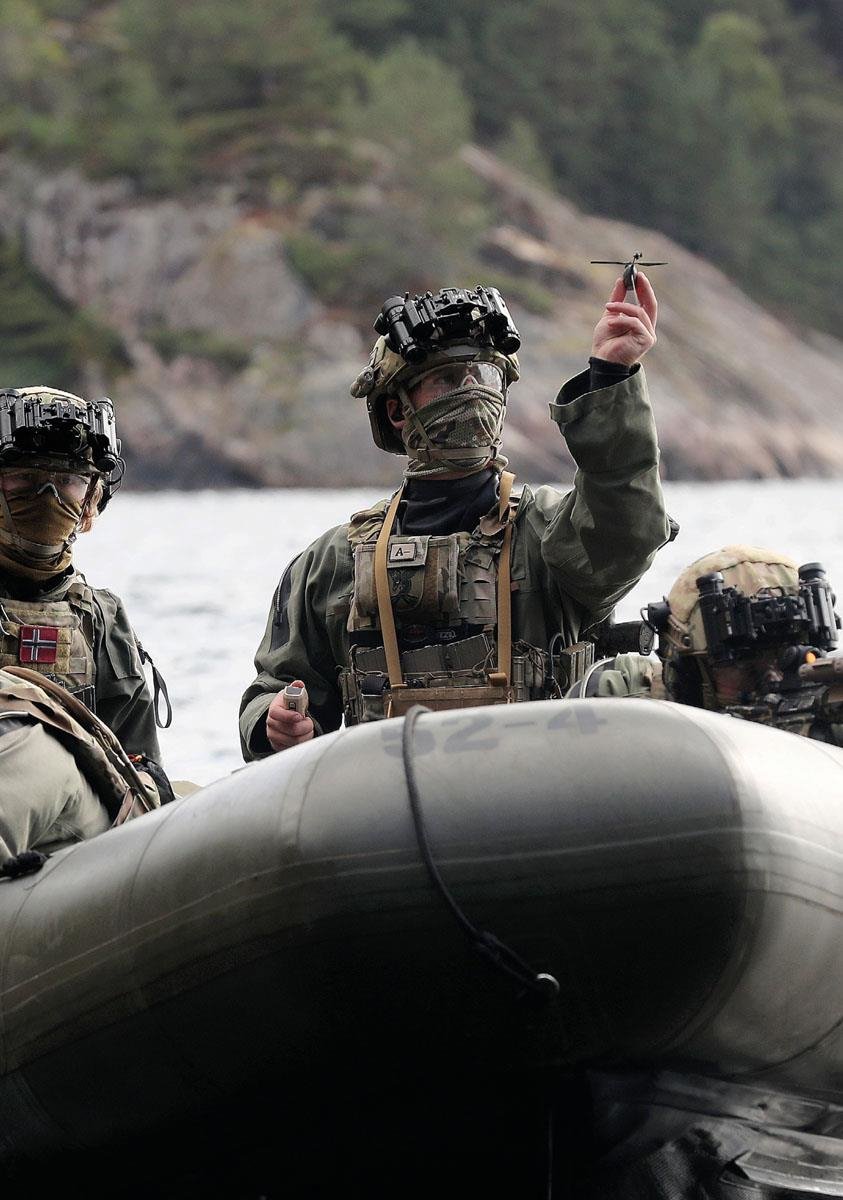
Uncrewed systems (commonly known as drones) have rapidly become a crucial part of modern military operations. Experiences from Ukraine and elsewhere clearly demonstrate how drones are changing the rules of the game on the battlefield. In the Middle East, as well, we are witnessing how drones can be utilised in conflicts. The development of drone and counter‑drone capabilities has become essential to maintaining defence capability. The development occurs in continuous cycles. The dynamics of developing measures and countermeasures are not unique in a military historical context; however, the rapid development of uncrewed systems represents a technological shift that challenges traditional concepts and will reshape aspects of how warfare is conducted. For the Norwegian Armed Forces, uncrewed systems provide increased speed, endurance, and operational flexibility. Simultaneously, they introduce new vulnerabilities. Overall, these developments underscore the need for flexible concepts and rapid innovation.
The Norwegian Armed Forces have been using drones since the 1970s, and their use is on the rise. The current Long-term Defence Plan includes the procurement of long-range uncrewed aerial vehicles (UAVs) for maritime surveillance, autonomous underwater systems, and UAVs for the Army and Home Guard. A number of initiatives are also underway across all branches of the Norwegian Armed Forces to explore new opportunities to rapidly improve operational capability and cost-effectiveness through the use of drones. Through Norway’s support for Ukraine’s defence against Russian aggression, both the defence and business sectors have gained expertise and experience that enhance the Norwegian Armed Forces’ ability to deploy new technologies and concepts in the areas of drones and counter-drones. Nevertheless, it is necessary to further reinforce these capabilities.
This strategy sets out the Government’s overarching framework and ambitions for the Norwegian Armed Forces’ use of uncrewed systems and capability to defend itself against such systems. The strategy has been developed to enable the Norwegian Armed Forces to respond to a heightened threat level, where the deployment of military force is characterised by technological advances and increased demands for rapid adaptation. The strategy describes how the entire defence sector, in cooperation with civil sector and allies, shall develop and deploy uncrewed systems in an effective, safe and forward-looking manner. At the same time, the strategy outlines the measures needed to strengthen Norway’s capability to defend itself against hostile use of drones.
To realise the strategy, the Norwegian Armed Forces must undergo further development in technology, doctrine, operational concepts, expertise, and organisational structure. The Norwegian Armed Forces must be capable of integrating uncrewed systems in coordination with other systems. At the same time, a robust counter-drone capability must be established to protect critical functions and maintain defence capabilities amid new threats. This requires a clear direction and common understanding across the total defence.
Through this strategy, the Government is prioritising strengthening the counter-drone capability, the ability to deploy new uncrewed systems technology, cross-sectoral and allied cooperation, and long-term investments in technology and expertise. The overarching objectives are to strengthen the Norwegian Armed Forces’ ability to address threats posed by drones, ensure the effective use of drones, and facilitate the comprehensive use of society’s resources in the area of drones. The strategy outlines measures that establish the framework for developing the Norwegian Armed Forces’ drones and counter-drone capabilities, cross-sectoral and multinational cooperation, innovation, research and development, bolstering industry, and the adaptation of acts, regulations, rules, and governance models.
Through this strategy, the Government aims to facilitate development by establishing suitable frameworks. The strategy outlines overarching directions and priorities, but does not specify deadlines or financial frameworks for the implementation of measures. The measures will be specified and implemented as part of continuous long-term planning and followed up through the established processes for force development and defence planning.
In March 2025, the Government published a white paper on Drones and Advanced Air Mobility (Meld. St. 15 (2024–2025)). This white paper is directed specifically at the civil sector and is limited to UAVs. It discusses various challenges associated with UAVs from a civil protection perspective. The drone strategy for the defence sector is specifically focused on the development, procurement, and deployment of drones for military applications. Together, the white paper on Drones and Advanced Air Mobility, along with the drone strategy for the defence sector, offer a more comprehensive overview of Norway’s approach to drones and uncrewed systems technology.
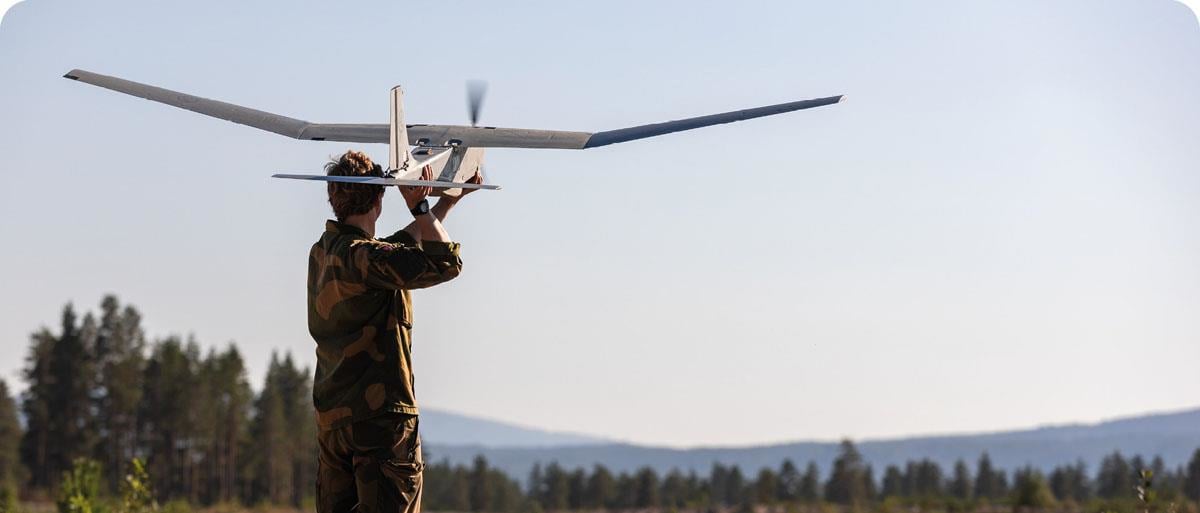
Boks 1.1 Drones
Drones can be defined as vehicles or platforms that operate without a human operator on board. Drones can be either remotely piloted or self-operating (autonomous). Drones can be utilised in the air, on land, at sea, and underwater. The term drone interfaces and overlaps with other systems without a human operator on board, including missiles, mine systems, and satellites. Uncrewed systems refer to a variety of vehicles and craft – commonly known as drones – primarily uncrewed aircraft (UAS/UAV), ground vehicles (UGVs), and maritime systems such as surface vessels (USVs) and underwater vehicles (UUVs/AUVs) that serve as platforms for payloads.
Uncrewed systems technology offers both military and civil actors a new scope for action. Drones can be useful across the entire spectrum of conflict, from peacetime to crisis and war. For example, drones can be used for search and rescue, delivery of supplies, communications, surveillance, intelligence gathering, electronic warfare effects, as decoys, and as weapons. Since drones do not have a human operator on board, high-risk operations can be carried out without endangering personnel. Uncrewed systems can supplement and replace large, personnel-intensive, and costly platforms, achieving similar military effects at a lower cost.
There is a wide variety of drones. This places different requirements on, for example, integration, interaction, and training. Drones are categorised by weight, size, function, and other parameters. Systems with high complexity, cost, and potential impact on their surroundings are subject to stricter requirements than simpler, low-cost systems that have only limited effects on their surroundings. This applies to development, procurement, and use.