3 Overarching objectives
3.1 A defence with enhanced counter-drone capability
Challenges
The most significant and urgent challenge is to reduce vulnerability to hostile use of drones. For example, in a possible armed conflict, Russia is expected to actively deploy drones, be innovative, and have access to industrial resources capable of supplying large numbers of drones.
Hostile use of large numbers of drones makes it challenging to defend all types of targets. The Norwegian defence concept relies on the Norwegian Armed Forces’ own capabilities, allied reinforcement, and support from the total defence system. This provides guidance on where counter-drone capability should be prioritised. Maintaining the Norwegian Armed Forces’ freedom of action and protection of reception and deployment areas for allied forces shall be prioritised. This is followed by the ability to maintain fundamental national functions that underpin national security interests.
The Norwegian Armed Forces currently do not have the desired capability to defend against the combined threat posed by Russian drones. There is a particular need for measures to enhance the capability to defend against large numbers of UAVs. At the same time, Norway has vast maritime areas where uncrewed systems can be deployed against vessels, maritime installations, and subsea infrastructure. Experiences from Ukraine demonstrate notable advances in the use of uncrewed systems in the maritime domain, and there is a growing need for counter-drone capabilities to address threats at sea and underwater.
Protecting civil society from drones, particularly UAVs, is a challenging task. A significantly higher level of protection is needed. An important prerequisite for increasing the level of protection is an improved capacity to detect drones as early as possible and to establish alert procedures. The prevention and countering of unauthorised or malicious drone activity is further described in the white paper on Drones and Advanced Air Mobility (Meld. St. 15 (2024–2025)).
Counter-drone capabilities can be strengthened through active and passive protection measures. The ability to detect drones is a prerequisite for the effective use of active protection measures. Several of the Norwegian Armed Forces’ existing sensor and weapon systems can be used in the defence against drones. However, additional sensors and countermeasures are needed to ensure the required protection. This necessitates the development of more cost-effective solutions. Current countermeasures involve weapon systems that are considerably more costly than the uncrewed systems they are designed to intercept. The use of expensive ammunition against inexpensive drones is not cost-effective and may limit investment in other parts of the defence structure.
Boks 3.1 Protection measures
Protection measures against drones encompass a wide range of capabilities and methods. Protection measures fall into two main categories:
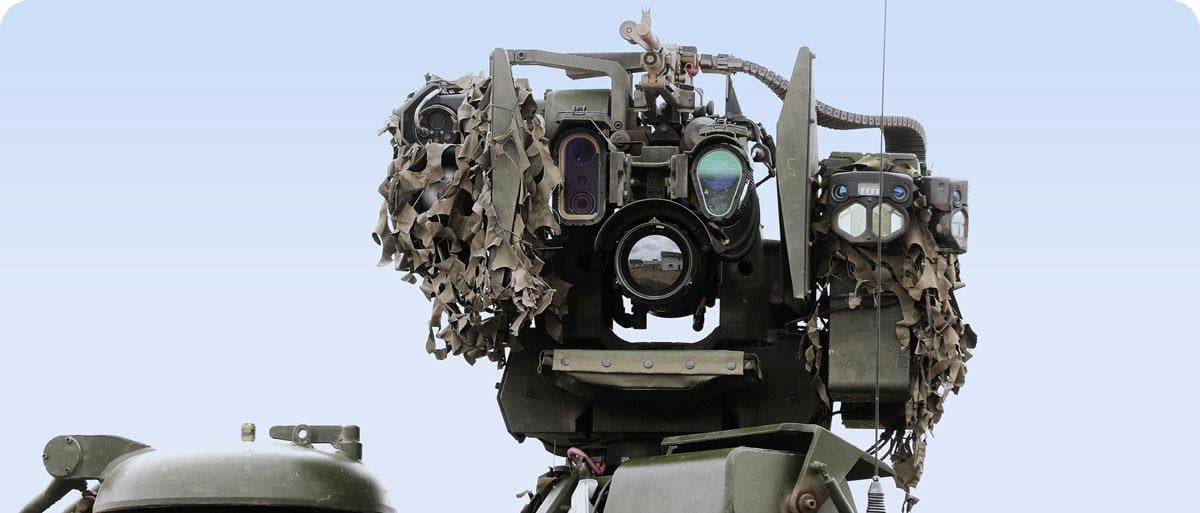
- Active measures are actions that detect and neutralise drones, or otherwise render them incapable of carrying out their missions. Such measures include jamming electronic signals, laser weapons, counter-drone interceptors, deploying nets, and other physical weapons systems such as cannons, machine guns, or missiles. These measures can be applied at all phases of a drone operation by disrupting, taking control of, or neutralising the drone before it reaches its target. Active protection measures, such as the use of cannons or machine guns against drones, pose several challenges, particularly when faced with large numbers of drones with unpredictable movement patterns. The use of electromagnetic countermeasures and laser weapons is limited by factors such as weather conditions and developments in autonomous technology.
- Passive measures prevent the adversary from achieving their desired outcome through the use of drones, without necessarily neutralising them. This may include the use of camouflage, shielding, dispersal, decoys, fortification works, or the setting up of nets to prevent small drones, in particular, from reaching their target. These measures are used to reduce one’s own vulnerability and the threat posed by an adversary’s drones.
The ability to detect drones, develop situational awareness, and establish alert procedures is a prerequisite for both active and some passive measures. Suitable sensors for this purpose are currently available. Examples include radar, as well as optical, radio frequency, and acoustic sensors. These must be combined in a manner tailored to the capabilities and needs of the various units to be protected.
Opportunities
Prop. 87 S (2023–2024) Long-term Defence Plan identifies strengthening protection against air threats as one of four priority areas. Defence against UAVs must be considered in conjunction with the strengthening of Norway’s air defence as one of the major priorities in the Long-term defence plan. A layered air defence provides protection for priority areas. If necessary, parts of the existing air defence can be used against UAVs. Counter-drone capabilities can also be enhanced through rapidly implemented, relatively low-cost passive protection measures. This will challenge the adversary’s ability to achieve their desired effect.
The challenge presented by numerous drones with unpredictable movement patterns can be addressed by using weapons capable of guiding themselves towards the target. New, more affordable, and better-suited missiles and interceptor drones are currently under development.
As new advances in uncrewed systems technology emerge, corresponding countermeasures must be identified swiftly. Further developing counter-drone capabilities requires continuous research, innovation, experimentation, and procurement of updated technology. Effective cooperation, where branches of the Norwegian Armed Forces experiment and analyse alongside business and research and development actors, provides a strong basis for developing protection measures. Experiences from Ukraine and other conflicts offer opportunities for rapid counter-drone learning and support new international capability and materiel collaborations in this area. The ability to systematically gather such experiences is a prerequisite for establishing a knowledge-based foundation for developing requirements for new systems and new functionality.
On behalf of the Ministry of Transport, the Ministry of Justice and Public Security, and the Ministry of Defence, a study was launched in autumn 2024 to explore the need to establish a national UAV detection centre. The purpose of the study was to assess whether a UAV detection centre could strengthen society’s ability to detect and understand threats and vulnerabilities associated with unauthorised or malicious drone activity, and to ensure the transfer of expertise between relevant actors on the security risks posed by such activity. The government ministries are currently reviewing the study.
Responsibility for military counter-drone capabilities across the various domains has been clearly defined within the Norwegian Armed Forces. This offers a solid foundation for the controlled further development of counter-drone capabilities.
Counter-drone initiatives
The establishment of a counter-drone initiative must be carried out through a joint, comprehensive, and coordinated effort within the total defence framework. This necessitates close cooperation between all relevant actors. In the defence sector, concrete counter-drone measures will be realised through continuous long-term planning and force development. Through such an initiative, the Norwegian Armed Forces will be able to effectively protect priority military targets against extensive hostile use of drones and support civil sectors in protecting critical societal areas. The Norwegian Armed Forces shall adapt quickly to new threats, thereby maintaining its counter-drone capability.
3.2 A defence that effectively uses uncrewed systems to enhance its operational capability
Challenges
Several of the existing uncrewed systems are not adapted to Norwegian and Nordic climatic, topographical and oceanographic conditions. This applies to uncrewed systems in the air, on land, and on or under water. For example, Norway has rugged mountainous areas, extensive fjord landscapes, and a coastline with many islands, which means that sensors, weapons, and communication systems that rely on line of sight have significantly reduced range. Norway also has vast maritime areas with varying depths and oceanographic conditions. Challenging conditions impact materiel and operational concepts that the Norwegian Armed Forces must plan for and adapt to.
Boks 3.2 Challenging conditions
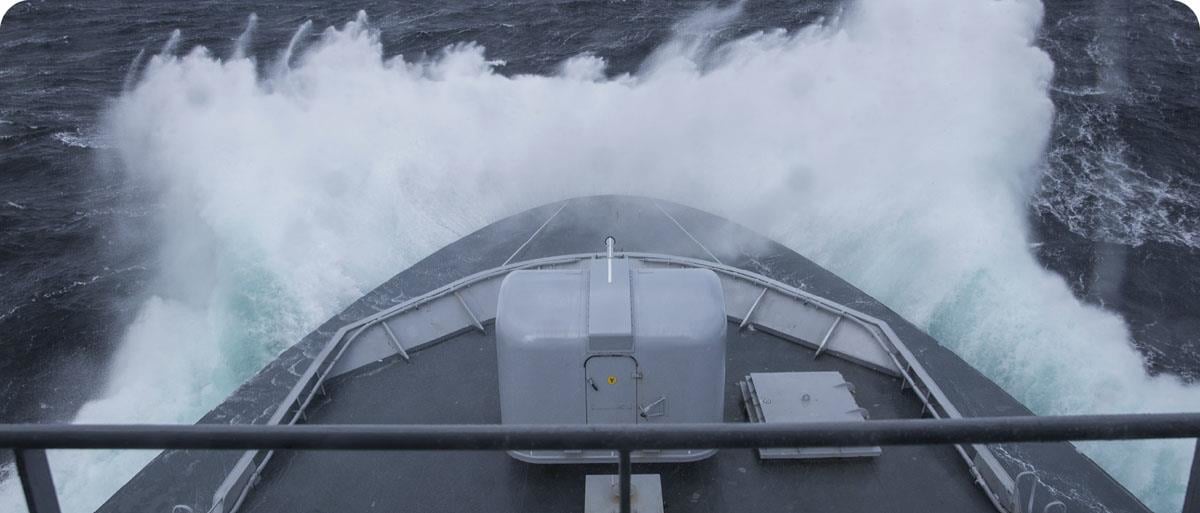
Operations involving uncrewed systems in the High North present unique challenges. Weather conditions such as strong winds, icing, and low cloud cover, combined with vast distances, deep-sea areas, and challenging topography, pose operational challenges for uncrewed systems.
UAVs are particularly vulnerable. Icing on propellers and wings can occur under certain meteorological conditions, reducing performance and, in extreme cases, leading to the loss of UAVs. Wind and turbulence, in particular, affect smaller and slower UAVs, reducing both their range and their capacity to complete missions. In the High North, the operational availability of small UAVs in wintertime is estimated to be as low as 40–60 per cent, primarily due to icing conditions. Sensor use is also affected by weather and geography. Thick cloud cover and poor visibility diminish the performance of optical sensors. Under certain conditions, layering in the air and water, known as ducting, can affect the propagation of electromagnetic and acoustic signals, thereby weakening both sensors and communication systems. In a maritime setting, waves and wind can make the recovery of uncrewed systems more challenging after a mission.
At the same time, these same conditions also present opportunities. Tailwinds and buoyancy can extend the range of uncrewed aerial systems (UAS), while terrain, cloud cover and natural stratification in the air and water can help reduce exposure to adversary sensors. This can offer significant operational advantages if the conditions are utilised properly.
For the Norwegian Armed Forces, it is crucial to plan for such variations and invest in solutions that both compensate for limitations and leverage opportunities. This necessitates further investment in research, development, and innovation, including protection against icing, integration of weather forecasting and geographic services, and adaptation of systems to Norwegian conditions.
The Norwegian Armed Forces are currently highly dependent on radio communications and space-based services. This presents a considerable vulnerability for uncrewed systems. Experiences from the war in Ukraine highlight intense competition for control of the electromagnetic spectrum. Although the development of autonomy and navigation without satellite support will reduce this vulnerability, both new and older systems will remain, to some extent, dependent on space-based services and robust radio communications.
The Norwegian Armed Forces and the defence sector currently use a limited number of small drones. Responsibilities related to military use of drones are perceived as fragmented by the business sector and other actors. Testing and training activities involving drones are limited. To enhance operational capability in the short term and better explore the long-term opportunities offered by new uncrewed systems technology, it is important to increase drone use and experimentation across all branches of the Norwegian Armed Forces and to adapt education and training to specific purposes. Limiting the number of variants provides economies of scale, but the aim of keeping operating costs low must be weighed against the need for broad testing and experimentation with different types of drones to strengthen innovation capacity. Increased use and experimentation lead to greater expertise and can contribute to the further development of existing technology and the capacity to adopt new technology. This will enable the Norwegian Armed Forces to make better use of cooperation with civil sectors and multinational efforts on future uncrewed systems.
The use of drones has distinct characteristics, including the task they are designed to perform, their size, and whether they operate in support of air, land, or maritime operations. For example, there is a significant difference between UAVs that replace artillery and UAVs that patrol vast maritime areas. Nevertheless, there is potential for synergies between the use of different types of drones in operational concepts and procedures, training, operations and technological interoperability.
Opportunities
Uncrewed systems can perform many tasks currently carried out by crewed systems, reducing personnel risk and increasing the pace, firepower, and endurance of an operation. Drones will deliver substantial operational improvements in surveillance and intelligence. Using drones enhances situational awareness across a broader area, reducing vulnerability of personnel and key combat platforms. Drones can be used for electronic warfare effects and as weapons. Extensive and varied use of drones, with different characteristics, can contribute to overwhelming the adversary’s counter-drone capabilities or make it highly resource-intensive to defend against them. Drones can also enhance our capacity to deliver supplies, communicate, carry out search and rescue operations, and provide medical care in challenging conditions.
Technology and concepts for use of uncrewed systems are developing rapidly, and uncrewed systems technology is expected to create opportunities beyond current applications. One example of such technology is quantum technology, which may enable future possibilities for drone use and counter-drone capabilities. Quantum technology is a dual-use technology that could have significant implications for future encryption, radar, sensors, navigation, and analysis.
Autonomy represents a more mature technological field. More autonomous drones, which can also utilise artificial intelligence, will be more resilient against radio communication interference and loss of satellite-based navigation. Autonomy and artificial intelligence enable collaborative drones to perform tasks that are difficult to manage remotely, such as synchronised attacks over long distances. Autonomy also enables the operation of a large number of drones with a small number of operators.
Uncrewed systems will be used in conjunction with other capabilities in the defence structure and enhance their effectiveness. The objective is for various types of drones to be used effectively alongside other capabilities, supporting, supplementing, and protecting the Norwegian Armed Forces’ other resources. The development of technology and concepts may, in the long term, enable profound conceptual transformations within the Norwegian Armed Forces, including a transition from crewed to uncrewed systems. This necessitates the continuous development of the Norwegian Armed Forces to effectively leverage technological and conceptual advances. Using drones can enhance the Norwegian Armed Forces’ operational capabilities more cost-effectively in both the short and long term.
Although the Norwegian Armed Forces currently use drones, there is potential for greater utilisation of the technology. There are already uncrewed aerial, surface, underwater, and ground vehicles with sufficient maturity and robustness to provide operational advantages. This applies to both civil-developed systems and systems developed specifically for military purposes. The Norwegian Armed Forces currently make particular use of uncrewed aerial and underwater vehicles. Meanwhile, developments are advancing rapidly. It is crucial to continuously adopt new technology in the defence structure and adapt doctrines and operational concepts. This involves identifying relevant technologies and expertise requirements, developing military concepts through testing and experimentation, and implementing them in operational units.
Similar to counter-drone capabilities, an enhanced ability to systematically gather experience, whether from ongoing conflicts or national and multinational experimentation, will be crucial for establishing a knowledge-based foundation for developing requirements for new systems and functionalities.
Boks 3.3 Autonomy
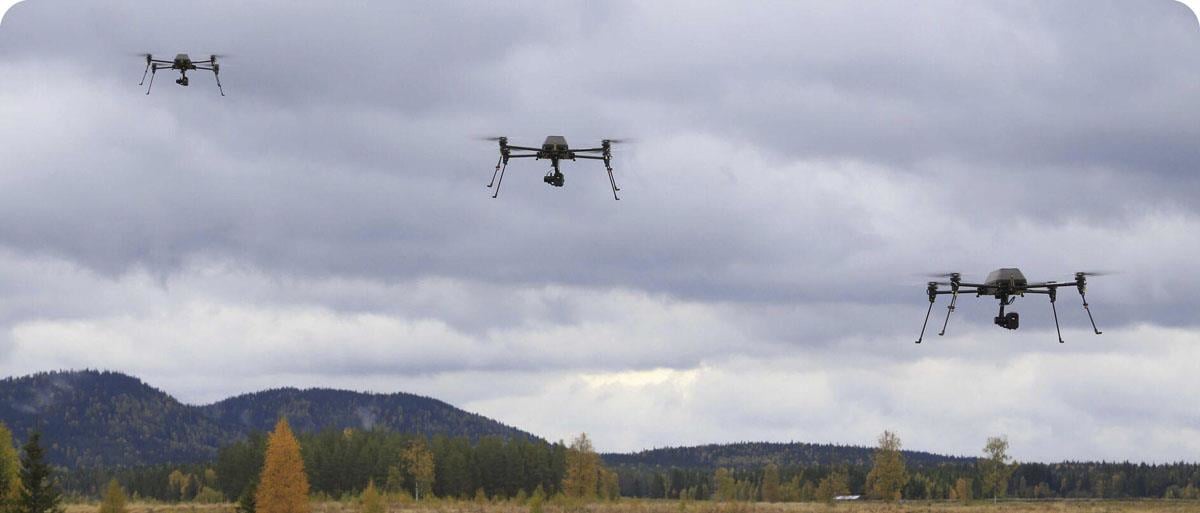
Through the use of artificial intelligence and machine learning, drones are becoming increasingly capable of interpreting sensor data, developing situational awareness, and acting within defined parameters. Autonomy in uncrewed systems refers to the ability to perform tasks without continuous human control. This may involve a single platform or multiple drones operating together as a system, often referred to as a swarm. The level of autonomy can range from basic automation to intricate decision-making processes carried out with minimal human input. Autonomy thus enables more drones to be deployed operationally without a corresponding rise in personnel needs. This offers the potential for rapid upscaling and increased operational effectiveness, especially in situations where availability, endurance, and response time are critical. Nevertheless, humans must continue to play a central role in interaction with autonomous systems. The division of roles between humans and machines must be adapted to the context, threat landscape, and operational needs. Autonomous functions must therefore be designed to support and relieve decision-makers, while enabling ethical, justifiable, and effective mission execution in line with international legal principles.
Drone initiatives
Prop. 87 S (2023–2024) Long-term Defence Plan proposes several drone acquisitions. In light of developments since the Long-term Defence Plan was adopted, there is a need to reinforce this effort through continuous long-term planning in the defence sector. The use of drones and their advantages shall be emphasised in the continuous development of the Norwegian Armed Forces’ operational capabilities. By prioritising the use of drones, the Norwegian Armed Forces shall harness the opportunities they offer in the air, at sea, underwater, and on land. Drones shall be used effectively and safely, on a large scale, under challenging conditions, and in cooperation with allies and the total defence.
3.3 A comprehensive ecosystem for drones and counter-drone measures
Challenges
Rapidly exploiting the opportunities presented by new technologies, including uncrewed systems, challenges existing mechanisms for defence planning, innovation, research and development, industrial cooperation, production, procurement, and administration. Continuous change and system integration require the ability to handle both rapid development and high complexity. It is necessary to further develop cooperation among defence-sector agencies.
The defence sector cannot solve current and future challenges without extensive cooperation with civil sectors. It is necessary to further develop cooperation between the defence sector and civil actors in total defence, allies, the knowledge sector, business, and others, both for the conduct of operations and for the development of operational capabilities. This also extends to the ability to operate drones and to defend against them.
Expertise in new technology with dual-use potential is stronger in several areas outside the traditional defence industry. It is necessary to better facilitate cooperation with small and medium-sized enterprises.
Opportunities
By further developing the traditional triangular collaboration between the Norwegian Armed Forces, the Norwegian Defence Research Establishment, and the defence industry, opportunities for innovation can be more effectively harnessed. Closer and expanded cooperation between the defence sector, allies, business, education and research communities, and other government agencies can better leverage available knowledge and experience from our own and other countries’ military operations, remove obstacles, and develop sufficient capacity for the timely procurement of materiel.
It is possible to strengthen the capacity to produce military drones by supporting and further developing efforts in dual-use technologies. This will enhance the security of Norway and its allies and create profitable high-tech jobs with growth potential; cf. the Government’s Roadmap for Technology-Based Business (available in Norwegian only) published in August 2025.
In addition to expanding cooperation between military and civilian research communities, cf. the white paper on secure knowledge in an uncertain world (Meld. St. 14 (2024–2025)) (available in Norwegian only), it will also be relevant to draw on expertise in drone use developed through vocational education programmes, in the research institute sector, and at university colleges and universities. The defence sector’s expertise requirements must be balanced with the needs of civil sectors. Increased cross-sectoral interaction is mutually beneficial and will ensure that the needs of both the military and civil sectors are met.
There is a growing number of international initiatives to utilise uncrewed systems technology. Participation in multinational cooperation can provide access to expertise, joint development, procurement, operations, training and exercises.
Establish a comprehensive ecosystem
It is necessary to further develop cooperation between the defence sector and civil actors so that, together, they form a comprehensive ecosystem of resources and expertise for drones and counter-drone measures. Increased cooperation with civil sectors and international cooperation will contribute to technological and conceptual innovation and give the Norwegian Armed Forces access to up-to-date expertise, software, and drone materiel, enabling rapid scaling up and replenishment.