Terms
Negative social control
Social control exists in all societies and cultures and is not inherently negative. Social control may be necessary, positive and empowering. The limits of what kind of control parents may exercise over their own children, for example, have changed over time. The main rule in Norwegian law is that parents, by virtue of their parental responsibility, have considerable freedom to make decisions and supervise their children. In principle, parents have the right to raise their children in accordance with their cultural background and religious beliefs. The lines between social or parental control and the forms of social control that are defined as negative are not always clear.
In this Action Plan, the term negative social control is used as an umbrella term that encompasses the use of pressure, surveillance, threats, coercion, or any other measures that systematically restrict a person’s self-fulfilment, or repeatedly prevent the person from making independent choices about their own life and future. When assessing whether a pattern of behaviour constitutes negative social control, account must be taken of the age and development of the person subject to control and the principle of the best interests of the child. The purpose of the control may be to ensure that the person lives in accordance with the norms of the family or group, e.g., to preserve or restore honour or reputation. There may also be other motives for the control. This understanding of negative social control aligns with the use of the term in Norwegian Official Report NOU 2024: 13 Lov og frihet [Law and Freedom] (available in Norwegian only).
Honour-motivated violence
Honour-motivated violence refers to physical and psychological violence perpetrated against a person with the aim of preventing loss of honour or restoring honour in families, relatives or communities where social standing is considered a collective concern. Honour-motivated violence may include various forms of negative social control and serious criminal offences such as domestic violence, forced marriage, female genital mutilation and honour killings. This is based on the conceptual understanding in Norwegian Official Report (NOU) 2024: 13 Lov og frihet [Law and Freedom] (available in Norwegian only).
Honour-motivated violence may occur in families and groups where individuals are expected to conform to the community and where each individual has a responsibility to ensure that the family and group have a good reputation. Girls and women are particularly vulnerable to honour-motivated violence as the honour of the family or group is often linked to the control of women’s sexuality, and unwanted behaviour may therefore be perceived as bringing shame to the entire family or group.
Honour-motivated violence replaces the term honour-based violence , which was previously used. The exception is where honour-based is included as part of the name of services or is used in other public documents. This is in line with the terminology used in NOU 2024: 13 Lov og frihet [Law and Freedom] (available in Norwegian only), and the Committee’s justification:
“The Committee has chosen to use the term honour -motivated violence or crime rather than honour -based. The reason is that honour as a motive for the criminal act or unlawful conduct is central.”
Female genital mutilation
Female genital mutilation is an umbrella term for various procedures that harm the genitalia of girls and women. Female genital mutilation can have severe physical and psychological consequences for those affected, and is often associated with pain, genital discomfort, and sexual problems. Female genital mutilation is prohibited under the Norwegian Penal Code. It is uncertain how many girls and women subjected to female genital mutilation are currently living in Norway, but in 2013, the number was estimated to be around 17,300. These are mainly individuals who were subjected to the procedure prior to moving to Norway.
Forced marriage
Forced marriage is a marriage in which one or both spouses do not have the opportunity to choose to remain unmarried without being subjected to violence, deprivation of liberty, other criminal or unlawful behaviour, or undue pressure. In practice, forced marriage may also entail that the individual does not have the opportunity to break off their engagement or leave their marriage, or choose a partner contrary to the family’s wishes, without being subjected to reprisals. Forced marriages are prohibited in Norway, regardless of the person’s age and whether the marriage was entered into in Norway or abroad.
Non-legal marriages are not recognised as marriages under Norwegian law, but are marriage-like relationships entered into in accordance with religious or cultural traditions, in Norway or abroad. Such arrangements may be perceived and treated as a marriage by the parties themselves, and their community, as well as in the parties’ countries of origin. Non-legal forced marriages are prohibited under the Norwegian Penal Code, in the same way as forced marriages.
Child marriage
Child marriage means that one or both of the parties to the marriage are under 18 years of age. The Norwegian Marriage Act sets an absolute age limit of 18 years for entering into marriage in Norway. As a general rule, marriages entered into abroad where one or both parties were under the age of 18 are not recognised in Norway. A child marriage entered into with a person under the age of 16 is prohibited under the Norwegian Penal Code.
Involuntary stays abroad
Involuntary stays abroad is a serious form of negative social control and involves a person being sent, taken or left behind abroad against their will. In line with the terminology used in Norwegian Official Report (NOU) 2024: 13 Lov og frihet [Law and Freedom] (available in Norwegian only) this Action Plan uses both the term involuntary stay abroad and harmful stay abroad to describe several different situations that children and adults may experience when staying abroad. As for children, the term involuntary stay abroad refers to cases where the child’s stay abroad falls outside the scope of the parents’ decision-making authority under their parental responsibility, as set out in Chapter 5 of the Norwegian Children Act.
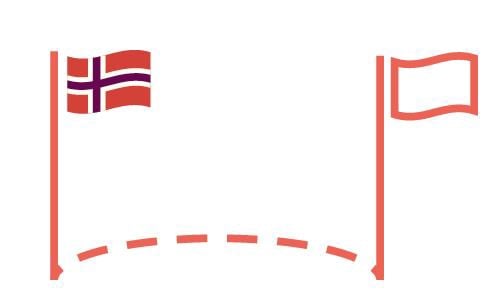
Involuntary stays abroad can cause physical and psychological harm. Harmful stay abroad is used in this Action Plan to describe situations where individuals are at risk of, or are subjected to, harmful acts while abroad. Harmful acts include forced marriage, female genital mutilation, violence and abuse, severe neglect, or the parents actively preventing the child from attending school. A stay abroad may also be involuntary without the affected person being subjected to such harmful acts.
Involuntary stay abroad is a broader concept than harmful stay abroad . For example, an involuntary stay abroad may include cases where a child or adult has travelled abroad together with a parent, spouse or cohabitant, and the person is deprived of their travel document and left abroad against their will. This can lead to victims missing out on schooling, losing their Norwegian language skills, networks and connection to Norway.

Particularly vulnerable groups
Research shows that young people with an immigrant background, and especially girls and women, are vulnerable to being subjected to negative social control. Individuals who break with norms regarding gender and sexuality (LGBT+ people) are also particularly vulnerable. This applies to both those with and without an immigrant background.
Other vulnerable groups may include:
- newly arrived refugees and immigrants
- unaccompanied minor asylum seekers and refugees
- persons with disabilities
- elderly persons living in relationships of dependency
- individuals in certain religious and life stance communities
The Action Plan’s focus areas
With this Action Plan, the Government is further strengthening its efforts to combat negative social control and honour-motivated violence. We are strengthening our efforts in four areas: legal safeguards, prevention, competence enhancement in the service system and involuntary stays abroad.