Part 2
The Government’s assessments and measures
6 Management and prioritisation of economic crime
6.1 Economic crime must be given sufficient priority
Prioritisation between different types of crime in the police and the prosecuting authority is done based on policy governing documents, such as the Government platform, Prop. 1 S and Recommendation 6 S. The management signals are communicated to the agencies e.g. through the ministries’ letters of allocation.
The police have a distinctive governance structure. In principle, the responsibility is divided into two parts, with criminal proceedings under the Higher Prosecution Authorities (DHP), and the rest of the police work under the National Police Directorate (POD). Both agencies are under the Ministry of Justice and Public Security.
The Ministry’s letter of allocation to the police, and POD’s performance agreements for the police districts, are designed based on a starting point of performance management, often in combination with more detailed management in individual areas. Detailed management can be a challenge for the police’s goal attainment.
In the Ministry of Justice and Public Security’s letter of allocation to the police for 2024, organised and economic crime is highlighted as one of the priority areas where POD has been asked to report on the efforts of both preventive measures and criminal proceedings. Furthermore, it has been specifically pointed out that proceeds from criminal acts shall be confiscated, and that cases with confiscation potential shall be prioritised. Efforts to combat economic crime were also highlighted as a priority crime area in the letters of allocation to the police for 2022 and 2023, but to varying degrees in the previous years. As a follow-up to the interagency cooperation to prevent and combat work-related crime, this topic has been highlighted in the annual letters of allocation since 2015.
The Director of Public Prosecutions has the overall responsibility for criminal proceedings, both in the police and in the Higher Prosecution Authorities. For criminal proceedings, the Director of Public Prosecutions’ signals communicated through the annual circular on goals and priorities are therefore an important governing document. In this circular, the Director of Public Prosecutions specifies which case areas are to be given special priority at any given time with regard to initiating and conducting investigations. Economic crime is included in the Director of Public Prosecutions’ central priority areas, along with a number of other areas.
This chapter takes a closer look at potential solutions that can help ensure that economic crime is given sufficient priority in the police districts and that cases are not discontinued due to a lack of capacity.
6.2 The need for coordinated management
The prevention and combating of economic crime is the responsibility of several agencies and several ministries. It is therefore an important prerequisite that the use of policy instruments and management in this field are coordinated across the ministries. Coordination through governance and management is a key ministerial task. It will also entail a clear division of responsibilities between the agencies. In such cases, management must be coordinated to achieve the best possible effect from the measures.1
As mentioned, the Ministry of Justice and Public Security’s letter of allocation to the police provides guidelines for which areas are to be prioritised each year and for which goals are to be achieved. Similarly, other ministries issue guidelines to their subordinate agencies. The management of the police must be seen in the context of the management of the regulatory agencies, which are also measured by their results in the fight against economic crime.
Several of the control agencies’ efforts to combat economic crime have been strengthened in recent years, based on a political desire to reduce the scale of, for example, fraud and work-related crime. For example, one of the objectives of the Norwegian Labour Inspection Authority is to uncover and combat work-related crime, and one of the six main objectives of the Financial Supervisory Authority of Norway is to combat crime in the financial area. Furthermore, the Tax Administration is monitored on whether businesses experience a high probability of detection. Preventing and combating work-related crime is also a priority area for the Tax Administration. In the Competition Authority’s letter of allocation, the Authority is asked to uncover and prevent competition crime in order to achieve its main objective. Norwegian Customs’ main goal is that the actors in the movement of goods should perceive the risk of non-compliance as high. The Labour and Welfare Administration is asked to prevent, detect, and follow up on social security misuse. For 2023 and 2024 specifically, the agency was asked to strengthen its efforts to carry out follow-up checks with the aim of uncovering several incorrect payments related to the temporary COVID measures.
However, strengthening efforts to combat economic crime may have the potential for greater socio-economic benefit if the resource input in the various sectors is better coordinated. For example, an initiative within a regulatory agency will have a greater effect if the resources in the police are similarly prioritised for the processing of criminal complaints resulting from the initiative.
From time to time, common goals may be expressed across several ministries, as is sometimes the case for the agencies that are part of the work-related crime cooperation, where common guidelines are given in the letters of allocation from the Ministry of Labour and Social Inclusion, the Ministry of Finance, and the Ministry of Justice and Public Security to the agencies concerned. The need for improvement of the strategic management in this area is also discussed in an evaluation of the agency’s cooperation against work-related crime, which has since been followed up in a joint assignment to the agencies participating in the cooperation.2
The Government’s assessment
The Government believes that there is a need for more coordinated management in the area of economic crime. We have a greater chance of succeeding when multiple ministries and agencies have similar priorities. A first step towards this could be to establish a mechanism for following up the measures in this white paper, organised as a permanent cooperation between the relevant ministries, and with the potential for participation by relevant subordinate agencies.
A model for such cooperation could be the interdepartmental cooperation on the fight against economic crime, which was established in 2004 and eventually became known as the Departmental Committee against Economic crime (DEPØK). The collaboration was led by the Ministry of Justice and Public Security and also had participants from, among others, the Ministry of Finance, the Ministry of Trade, Industry and Fisheries, and the Ministry of Labour and Social Inclusion, as well as the National Authority for Investigation and Prosecution of Economic and Environmental Crime (Økokrim). The committee was responsible for following up on previous governments’ action plans against economic crime.
In addition to following up on the measures in the white paper, such interministerial cooperation may be well suited to considering the use of instruments that can promote co-governance and common priorities. This could help to increase goal attainment and ensure a more effective fight against current challenges. The cooperation will not have any formal status in the ordinary management dialogue, but will have the purpose of promoting coordinated prioritisation and the use of policy instruments.
A number of the measures in this white paper are also important for efforts to combat work-related crime. The Government considers the efforts to combat economic crime and work-related crime in context, and will also facilitate continued cooperation across areas of government in this area.
The Ministry of Justice and Public Security is closest to establishing cooperation on economic crime as described and facilitating a mechanism for following up the measures in the white paper. The mechanism will also facilitate follow-up of other challenges addressed in the white paper. Initially, the mechanism will have a time perspective of four years.
-
The Government will establish an interdepartmental mechanism for following up the measures in the white paper on economic crime. A matrix will be prepared for further follow-up of the measures in the white paper and other measures identified by the collaboration, initially for a period of four years.
6.3 Local variations can lead to lower priorities and less equality before the law
The police’s social mandate is broad. Through preventive, enforcement and assisting activities, the police shall be part of society’s overall efforts to promote and consolidate citizens’ legal protection, security, and welfare in general. Consideration for life and health is of course given priority, which in the field of criminal cases means that violence, murder, and sexual offences will often be given the highest priority.
When more ambitious goals and priorities are put forward than it is possible to achieve within a given resource framework, the real priorities are pushed downwards in the management line. The Norwegian Agency for Public and Financial Management’s (DFØ) follow-up report on the police reform from December 2022 also states that the real priorities in practice take place some way down in the chain of command.3 It is therein described as a challenge for the police that they are steered far more and more closely by factors relating to efforts and activities than by achieved results and effects.
Equality before the law is fundamental to the rule of law and to a well-functioning democracy. Equality before the law means that similar cases must be treated equally. However, based on insights from Project Eco and statistics and interviews with the police districts, there is no doubt that financial criminal cases are processed and prioritised differently in the police districts.
A specific example is that the threshold amount for when a case is considered sufficiently serious to be processed by a specialist environment may vary. At one point, the limit in Møre og Romsdal Police District was in practice NOK 200,000, while it was NOK 2 million in East Police District. The threshold amount is not absolute, but for cases that fall below these thresholds, there is a higher probability that the case will be handled by generalists without financial expertise.
In addition, the resource situation is significantly different in different police districts. This also leads to different priorities. For example, some police districts may work in a structured manner on criminal complaints made by the Tax Administration, while the same type of cases are generally given lower priority for capacity reasons in other police districts.
Such differences can lead to legal inequality, and are perceived as unsatisfactory and unfair for those affected by the crime.
6.4 A comprehensive system of priorities
Criminal procedure is based on a balance between efficiency and the rule of law.4 Prioritisation is a prerequisite for working efficiently when there is a shortage of resources. There are significant differences in how resource-intensive different offences are for the police and the prosecuting authority. It is therefore necessary to have a very different distribution of resources between different crime areas and different tasks in the police and prosecuting authority.
Some offences are serious in the form of major financial losses for the victim, while other offences violate physical and mental health. Other offences are in turn serious for society as a whole in that they affect fundamental societal functions and national interests. How the different dimensions of the seriousness of offences are to be weighted in the allocation of resources is a matter of fundamental value choices. This may justify that priorities should be rooted in the public’s perception of justice through open and verifiable processes in the public sphere.
Without concrete guidelines for priorities, it is more difficult to distribute resources, but also to justify the distribution. At the same time, the prosecuting authority is independent and cannot be instructed in individual cases, which will also have an impact on the guidelines that can be given for handling criminal cases.
The police and the prosecuting authority have a fundamental challenge in that the need for resources will always exceed the resources that are available. This is shown by the fact that the police and the prosecuting authority already have a number of principles and guidelines that assume that resources are scarce. However, these principles and guidelines have not been set in a comprehensive system. Most of the priorities are therefore left to the local police district. Measures may be necessary to ensure, among other things, that the Director of Public Prosecutions’ directives and priorities have an impact on the police’s activities.
The question of examining prioritisation criteria is relevant to some of the challenges described in Box 5.1 and has therefore been discussed in connection with the work on the white paper. However, since all areas of crime compete for the same resources, the question of how to ensure a more comprehensive system of priorities must be addressed in a broader perspective than a white paper on economic crime allows.
6.5 Organisational structure as a tool for prioritisation
6.5.1 Other organisational models
The way in which an agency or field is organised may affect both its room for manoeuvre and governance. Organisation can also contribute to a real prioritisation of certain disciplines, particularly if new units are established with specific purposes or if resource management of certain areas is based on a professional division, such as the work-related crime cooperation with the establishment of work-related crime centres.
The agencies themselves have considerable leeway in terms of their own organisation. In some cases, however, it is the case that the responsible ministry is involved in issues relating to this, particularly where organisational changes introduce a need for regulation or financial support.
Questions about organisational changes in the field of economic crime have been discussed several times.5 Considerations that are opposed to each other in these assessments are often the need for shielding resources, compared to the need for flexibility in resource utilisation and interaction between different professional environments.
As mentioned earlier, other countries have chosen different models for investigating and prosecuting economic crime (see section 4.7). There may be reason to take a closer look at the possibility of alternatives to the current organisation as a solution to some of the challenges listed in Box 5.1.
6.5.2 Study of how the police is organised
In 2022, at the same time as the work on this white paper was initiated, the National Police Directorate tasked Økokrim with investigating whether the police’s organisation of intelligence, prevention, and investigation of economic crime and environmental crime supports a targeted and effective solution to its social mandate. The report was intended to shed light on and assess the appropriateness of the current organisation with current professional administrative responsibilities and other ways of organising the work.
For its report, Økokrim has obtained information, views and assessments from all police districts, the Higher Prosecution Authority, and other stakeholders. The police chiefs of East Police District, Innlandet Police District, Agder Police District and the Chief of Kripos have participated in the project’s reference group.
The report with recommendations for organisational changes was submitted to the National Police Directorate in late August 2023. The National Police Directorate has initially responded by sending it for consultation to all units in the police, trade unions, and the chief safety representative. When this round of consultations has ended, the Director of Public Prosecutions will also be involved and give their assessment.
-
The Government will follow up on Økokrim’s report on the organisation of the police’s efforts to combat economic crime and environmental crime once the National Police Directorate has completed its work.
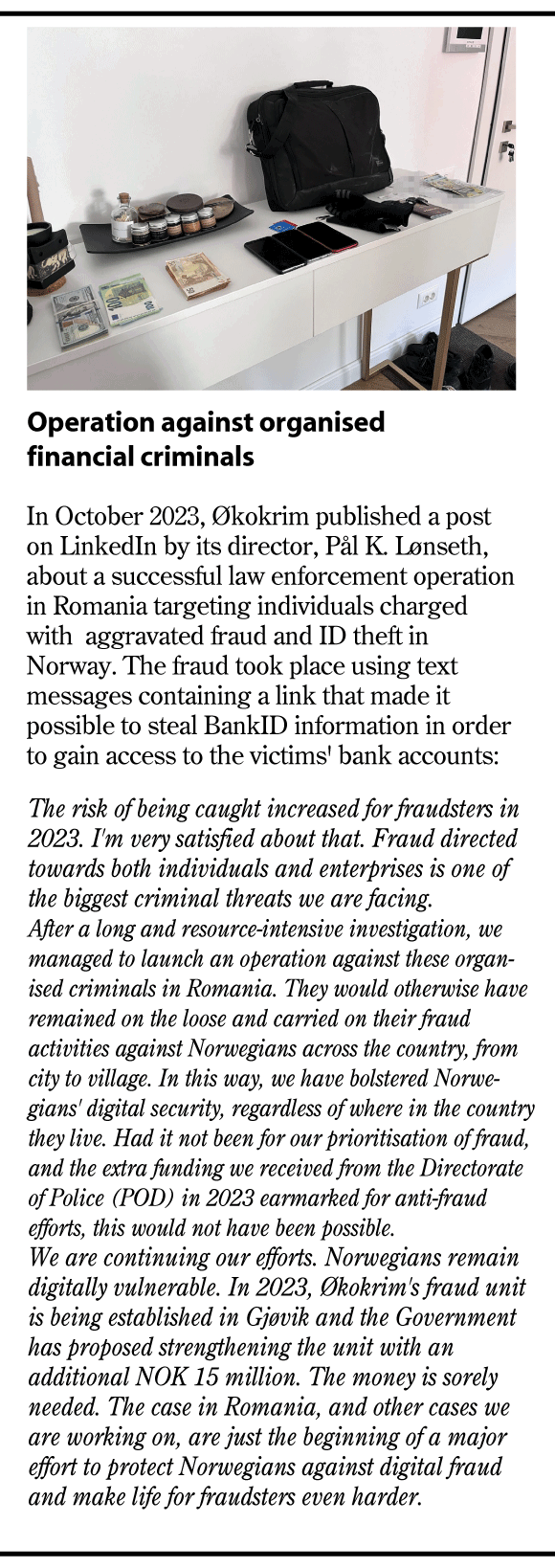
Figure 6.1 Operation against organised financial criminals
Source: Økokrim
6.5.3 Establishment of a fraud unit
As described in section 3.3, both the police and banks have registered a large increase in the number of digital fraud cases in recent years. Both private individuals, organisations and companies risk financial losses as a result of this. The police, banks, and IT security departments must also devote considerable resources to uncovering this crime. A consequence that is equally serious to financial losses may be that the public’s trust in private and public bodies, as well as in digital solutions, is weakened.
To address this challenge, Økokrim has decided to establish a national fraud unit. The purpose of the department will be to identify fraud offences that affect citizens across police districts, and/or that have international ramifications, and to bring about a more effective and structured fight against fraud, for example by implementing preventive measures in cooperation with banks and others in the business sector. These efforts will also help to strengthen the investigation of fraud that is organised and carried out systematically. In June 2023, the Government decided that Økokrim’s fraud unit will be located in Gjøvik.
The Government’s assessment
The Government is in favour of the establishment of a separate fraud unit. Ensuring the effectiveness of the fraud unit in its work to prevent fraud, including through contact with the relevant administrative bodies, fraud-prone industries and others with a role in crime prevention work, will be key.
In the national budget for 2024, the Government allocated NOK 15 million for the establishment of this. It is assumed that the work of the unit will also be able to facilitate input to the Ministry regarding proposals for regulatory changes or other needs identified in the area. The first regulatory measure that the Government already wishes to take a closer look at is the need to clarify the police’s authority to shut down websites that form the basis for digital fraud. The Ministry of Justice and Public Security will follow up the work through the ordinary management dialogue.
-
The Government will allocate funds to strengthen Økokrim’s fraud unit and consider further strengthening efforts to combat digital fraud, including considering clarification of existing legal bases for the police to prevent, stop, and avert digital fraud.
7 Recruitment and competence in the police and regulatory agencies
7.1 Competence is a fundamental prerequisite
Who is involved in the fight against economic crime and what expertise they have has a significant impact on whether the efforts pay off. Investigating economic crime has some special challenges compared to other forms of crime, partly because the evidence often involves analyses of complicated corporate structures and accounting documents.
The training of police investigators is general and does not provide investigators with special expertise in economic crime. Nor is there currently any specialised training aimed at the tasks of employees in the regulatory agencies.
For the Government, it is important that regulatory agencies, special agencies, and police districts all have access to the right expertise to combat economic crime. Furthermore, educational pathways should be facilitated that meet the need for special skills to the greatest extent possible, while at the same time facilitating a lasting and stable working relationship where competence can be built through experience. Specialised training courses for police investigators and for employees in the regulatory agencies and relevant continuing and further education programmes could contribute to this. Proper recruitment is also an important element in competence building.
This chapter discusses opportunities for strengthening competence and capacity through both recruitment and education.
7.2 Generalists and turnover in the police
The competence and prerequisites of the employees of the police to investigate and prosecute cases of economic crime depend on several factors. Education and previous professional experience are key, but colleagues’ competence, continuing and further education, access to sources and aids, personal commitment, and interest also affect the level of competence.
To work as a police investigator, one must have completed and passed the bachelor’s degree programme at the Norwegian Police University College, which is the basic education for all Norwegian police officers today. The formal competence that will provide a basis for investigating economic crime is limited to what can be extracted from general criminal law and general investigative training. In the bachelor’s programme at the Norwegian Police University College, the topic of confiscation is admittedly on the programme description, while economic crime and financial investigation are not included.
The prosecuting authority is also normally made up of generalists with no specialisation in economic crime. Legal counsellors in the police undergo training for new police advocates. This training is general and not specifically aimed at specific types of crime.
On this basis, it goes without saying that the competence acquired after basic education is important for the ability to investigate, litigate, and prosecute cases of economic crime. This is also the basis for the 2023 report What prevents the police’s investigation of corruption cases.6
Both investigators and police advocates are required to complete mandatory annual training. The topics are usually general and not aimed at economic crime. However, the Norwegian Police University College offers continuing and further education in economic crime, see section 7.6 for more on this.
Consequently, most of the specialist expertise is currently acquired through case work and transferred from more experienced colleagues. This means that experienced investigators and prosecutors are a key factor in maintaining competence.
In recent years, however, there has been a high turnover of investigators and prosecutors in the police districts. This is evident, among other things, from the Directorate for Public and Financial Management (DFØ)’s follow-up evaluation of the police reform from December 20227 and the Office of the Auditor General’s investigation of the Norwegian Police Service’s goal attainment on key tasks from 2022.8 For police investigators, the reason is often that they apply for operational service.
During 2022, the regional public prosecutor’s offices inspected the efforts against work-related crime in ten different police districts. Eight of these ten inspection reports highlight challenges with capacity and turnover of personnel resources in rural areas. Seven of the inspection reports point to challenges with a high discontinuance rate, weaknesses in investigation management, long case processing times, and long waiting times without processing the cases. This is supported by the National Police Directorate’s and the Director of Public Prosecutions’ joint report on criminal case processing in 2022, which shows that offences that were cleared up within the categories of working environment and finances in 2022 had by far the longest average case processing time, with 285 and 203 days, respectively.9
High turnover may be particularly unfortunate in police districts where there are few people who work on economic crime. The expertise is then more vulnerable than in larger and more robust environments. In addition, it is time- and resource-intensive to recruit new employees. Moreover, positions are often left unfilled for a period in connection with resignation and hiring.
7.3 Competence in regulatory agencies
It is also a challenge for the regulatory agencies that the complexity of the cases is constantly increasing. This challenges competence. There are increasing areas where cutting-edge expertise is necessary. Expertise is also, to a greater extent than before, perishable.
Each regulatory agency often has special expertise that in many cases is necessary for the successful handling of criminal cases in the field of economic crime. They know their own field of expertise and the handling of specific matters in their own agency, which is often a prerequisite for understanding criminal cases in the area. Furthermore, through their control activities, they are familiar with the preservation of evidence and trace protection. For example, the Tax Administration has good expertise in electronic trace protection and evidence preservation and good expertise in ID checks. These are areas where targeted work has been done on skills development for a number of years. In addition, the agency has expertise environments in more focused parts of the business sector and technologies such as blockchain and crypto.
Agency-specific training is available in several places, including the Directorate of Fisheries and the Coast Guard, which assist in each other’s basic training. There has also been participation from the police and prosecuting authority in these courses. This is valuable, because the police and the prosecuting authority know the special challenges associated with investigating and bringing cases before the courts. Through joint training, one can, for example, discuss how evidence should be secured by the Directorate of Fisheries and the Coast Guard so that the evidence will later have the greatest value for the police’s investigation and the prosecution’s assessments and presentation in court.
In addition, the Norwegian Police University College offers a continuing and further education programme that is also aimed at the regulatory agencies. The further education programme Interagency Combating of Economic crime is most relevant. Many employees in the regulatory agencies have completed the programme.
The further education programme Confiscation and Money Traces is offered to employees in the police and participating regulatory agencies, and is relevant for securing assets and confiscation, in addition to providing general knowledge about economic crime.
There are also courses at PHS in e.g. combating fisheries crime. The programme is specifically aimed at crime in the fishing industry, securing evidence, and control methods, and has been developed in close collaboration between the Directorate of Fisheries, the Coast Guard, and the Norwegian Police University College.
7.4 Complicated cases require special expertise
Cases of economic crime often require special expertise in the form of the ability to follow money flows, prepare financial analyses, and understand accounting and complex company structures. A professional police education alone does not provide a sufficient basis for getting to the bottom of such issues. A background in economics or knowledge of specific fields within finance and business may be important in the investigation of such cases.
Project Eco has shown that the level of competence in the police districts in the area of economic crime is often insufficient.10 The same is stated in Transparency International Norway’s and Erling Grimstad’s report What prevents the police’s investigation of corruption cases, which concludes that the investigation of corruption cases requires considerable expertise, which is called for in several of the police districts.11
This challenge applies to several types of economic crime, especially crime that requires insight into phenomena and fields, such as the securities market or money laundering through the art trade. Illustrative examples are given in Box 7.1 on corruption and 7.2 on cultural heritage crime.
Textbox 7.1 Expertise on corruption
To investigate corruption, one must understand how corruption takes place, where corruption occurs, what constitutes a ‘red flag’ for corruption, and how corruption takes place in practice.
Knowledge of the business sector is often necessary to be able to identify non-conformities that can help uncover corruption: how the business sector works, what is common practice, how industries should be understood, who has ties to each other and why, is knowledge that is required to be able to conduct targeted investigations. A new corruption case often means a new field for investigators, and it is necessary to familiarise oneself with the field in order to understand the evidence.
Corruption is difficult to prove because everyone involved often benefits from keeping the crime concealed. There is rarely a specific offender. The relationship can lie far back in time, the people involved are often resourceful, they have often coordinated cover stories, and it is difficult to get explanations that shed light on the case.
Corruption cases often require extensive money trail investigations to find the payment of a bribe, which is often concealed to give the transfer a semblance of legitimacy. Transfers of sums are concealed as loans and consideration in agreements. To uncover this, one must understand accounting. It can be extra challenging to follow the money trails when virtual currency and cash are also used to hinder traceability.
In cases that have links abroad, international cooperation is also necessary. In addition to methodological knowledge, this often requires both language skills and cultural understanding.
Textbox 7.2 Expertise on cultural heritage
In 2008, the study Working with cultural heritage by the University of Oslo pointed to the need for competence development and more training of Norwegian Customs and the police, who are primarily responsible for preventing cultural heritage crime.1
Almost 80 per cent of the respondents said that they lacked basic knowledge about cultural artefacts and did not know what to look for. The respondents from the police were generally uncertain about how such crime should be investigated. The report stated that there was a need for a general introduction to laws and legislation, visual training in the recognition of cultural artefacts, in-depth study of art and cultural history, in addition to more knowledge about cultural heritage crime and related crime areas.
The same conclusions find support in the European Commission’s report on illegal trade in Europe, more than ten years later.2 In order to remedy the lack of knowledge among various actors, UNESCO and the European Commission developed online courses aimed at customs, the police, and the judiciary in 2018 to contribute to awareness and knowledge development. A similar competence measure was aimed at the art dealer industry. Information about these initiatives was passed on to relevant agencies and actors in Norway, but it is unknown how many took advantage of the offer.
1 Jacobsen, H.M., Steen, T. and Ulsberg, M. (2008).
2 European Commission (2019).
7.5 Interdisciplinary competence is a criterion for success
The police districts’ economic and environmental departments are currently composed of special investigators with a background in economics, police investigators, and lawyers.
The special investigator often has financial expertise, in the form of a master’s degree in economics or accounting. Such a background is often necessary to understand complex accounting and catch red flags for economic crime. Money trail investigation and the ability to perform financial analyses also require such expertise. However, as new employees in the police, these special investigators do not generally have expertise in the police’s investigative methods. Interdisciplinary cooperation between the special investigator and the police investigator is therefore absolutely necessary.
PHS also offers two study programmes for civilians who have a bachelor’s degree in a field that provides relevant expertise for civilian positions in police investigations. The study programme General Introduction to Investigation – Strategies and Principles and General Introduction to Investigation Methodology are intended to equip specialists to contribute to investigative tasks in the police.
Each police district also employs one or more assistance auditors, a total of 20 people as of May 2023. The assistance auditor scheme means that auditors from the Tax Administration work on criminal cases under the authority of the Chief of Police, while retaining their employment with the Tax Administration. The assistance auditors are tasked with financial criminal cases, mainly in the area of taxation. The background for this part of the Tax Administration’s auditor assistance to the police is a desire to strengthen efforts to combat economic crime. An experienced assistance auditor has considerable accounting and auditing expertise and can contribute to better investigation and litigation. The scheme has been permanent since 1 January 1997 and is regulated in the National Police Directorate’s circular 2006/012 (with subsequent amendments).
“Interdisciplinary staffing with skilled employees” was already highlighted in the Director of Public Prosecutions’ circular 1/2006 as one of seven success criteria for a well-functioning economic and environmental department.12 However, as Table 7.1 shows, there are few special investigators with a background in economics at the eco-/environmental departments in the police districts. Developments since 2015 have been limited.13
Table 7.1 Overview of competence in the police districts from 2015 to 2023
|
2015 As of 14.9.15 Eco-/ environment |
2022 As of 30.06.22 Eco-/ environment |
2022 As of 30.06.2 Work- related crime |
2023 As of 30.06.23 Eco-/ environment |
2023 As of 30.06.23 Work- related crime |
|
|---|---|---|---|---|---|
|
Number of full-time equivalents in the police districts’ economic and environmental depts., including lawyers |
257.5 |
355.5 |
43.5 |
361.3 |
28.9 |
|
Proportion with only PHS education |
145 |
182.5 |
35.5 |
213.3 |
22.5 |
|
Relevant continuing education |
- |
- |
- |
- |
- |
|
Special investigators with other education (mainly economics education) |
50 |
58 |
2 |
64.2 |
1 |
Source: Økokrim
This shortage is exacerbated by the fact that this type of expertise is necessary, and also used, in other cases in the districts. Money trail investigations are often necessary and useful in cases of other profit-motivated crime, as pointed out in chapter 2.2. However, when employees are constantly withdrawn from the eco-/environmental departments, this necessarily affects the investigation of cases of economic crime.14
Technological development means that people are also dependent on technological expertise to an even greater extent than before. In the area of economic crime, there is a particular need for capacity and expertise to review and analyse digital evidence, including large digital seizures. The Office of the Auditor General’s investigation of the police’s efforts to combat crime through the use of ICT concluded that the police’s ability to detect and solve ICT crime had significant weaknesses.15 This is also linked to economic crime, which increasingly involves the use of digital tools.

Figure 7.1 Investigating economic crime requires different types of expertise
Photo: Leif Ingvald Skaug
The Government’s assessment
In the Government’s opinion, having enough employees with the right expertise in the police districts’ eco-/environmental departments is crucial for the police’s ability to succeed in investigating and preventing cases of economic crime. There is a need for more investigators with a background in economics in the police districts’ eco- and environmental departments. The development in the crime situation described in chapter 2 also indicates that there is a need for more investigators with the expertise and capacity to handle digital evidence, including seizures, in financial cases.
A strengthening of capacity and expertise in these areas is expected to have a positive effect on lowering the number of cases being discontinued as a result of a lack of case processing capacity. At the same time, strengthening the eco-/environmental departments will be beneficial for money trail investigations in other profit-motivated and organised crime, and contribute to greater opportunities for collaboration and assistance without necessarily stopping the investigation of major financial cases.
In the national budget for 2024, it has been decided to permanently strengthen the capacity of the police districts through earmarked positions for investigators with financial expertise and investigators with expertise in handling digital evidence.
Strengthening capacity will in itself help to make police districts less vulnerable and better facilitate the safeguarding of competent employees in the future. At the same time, this could help to create professional environments that ensure that important experience-based learning is not lost when investigators move to other positions after a short time.
-
The Government will strengthen Økokrim and existing professional environments in the police districts with new special investigators with financial expertise, as well as digital tools and expertise in handling digital evidence.
7.6 Relevant measures at the Norwegian Police University College and other research and educational institutions
As mentioned above, it is not realistic that the police will be able to solve economic crime only with the help of police graduates. Today’s crime situation requires the police to recruit specialists and provide them with investigative expertise.
However, the education should also facilitate further use of economists/auditors, computer engineers, and other specialists who can contribute to raising the analytical capacity, quality, and efficiency of investigations. The competition for civilian professionals such as economists, technologists, and lawyers is intense, and it is important to implement adequate measures to ensure recruitment and measures to retain critical expertise.
The regulatory agencies also need additional expertise to be better able to handle more cases and to prevent economic crime. Similarly, there may be a need for private actors, including those who have a role in anti-money laundering work, to strengthen their expertise. There has been a shift in recent years towards more knowledge-based work, and there have been demands for higher formal qualifications for a number of positions in both the police and in the regulatory agencies.
The Police University College has a central role in the education of those who work with economic crime. However, as previously mentioned, economic crime is not a topic covered to a large extent in the basic training for the police. It is important that employees who work with economic crime have a study programme that is perceived as useful and adequate. The requirement for a relevant and comprehensive study programme must apply regardless of what makes up the employee’s basic education.
The Government’s assessment
It is important to acknowledge that the investigation of economic crime requires a different level of expertise than that which can be acquired through today’s basic education at the Norwegian Police University College. Although experience-based learning will continue to be necessary in the future, it will provide a quite different starting point if new employees who are recruited also have a basic understanding of the field.
The Government believes that there may be reason to consider whether the curriculum of the basic degree programme and continued education programme at the Norwegian Police University College should to a greater extent facilitate specialisation in investigation. A master’s programme in investigation, with an emphasis on the specialised expertise required to investigate, among other things, economic crime, may be an option that should be explored.
Arrangements must be made for the subject curricula at the Norwegian Police University College to take into account the relevant competence needs, both in the basic degree programme and the continued education programmes. For example, knowledge of technical and tactical ID checks is not part of the curriculum for students at the Norwegian Police University College today. Basic knowledge of ID checks is an important tool in several of the police’s tasks, and could potentially be considered as part of the basic training. Similar knowledge may also be useful for the regulatory agencies.
Furthermore, provision should also be made for utilising other parts of the education system to offer relevant expertise in economic crime. One measure to strengthen the work in this area is the development of studies that tailor expertise on the topics of financial control/investigation, financial intelligence, and anti-money laundering. A number of regulatory agencies (the Norwegian Tax Administration, Norwegian Customs, NAV Control, the Financial Supervisory Authority of Norway, the Directorate of Fisheries, the Norwegian Gaming Authority, and the Norwegian Public Roads Administration) desire such expertise.
A proposal is being considered to establish an education programme on financial control and investigation as a collaboration between the Norwegian Police University College and other educational institutions. Such an offering is intended to educate people who it may be relevant to recruit both to the police and to the regulatory agencies. In the Government’s view, this is an important step on the way to ensuring that both the regulatory agencies and the police have access to people with the right expertise in the work on economic crime, who are also motivated to work in this particular field.
In the national budget for 2024, funds have been earmarked for a study on establishing an investigator degree programme at the Norwegian Police University College, possibly in collaboration with another educational institution.
This type of measure will need to be discussed further in dialogue with the National Police Directorate, the Police University College, and the Ministry of Education and Research.
-
The Government will follow up on the establishment of new training programmes in the field of economic crime for investigators and employees in the regulatory agencies.
-
The Government will establish special studies in the field of investigations, including of economic crime.
8 Staying ahead of crime: coordinated efforts to improve prevention
8.1 Prevention is profitable
It is a key goal of the Government that as many people as possible refrain from committing economic crime. Prevention is therefore key.
A review of the literature on preventive efforts shows that, compared with other areas of crime, there is limited research in the Norwegian context that deals with the prevention of economic crime.16 In the literature that exists, it is often emphasised that financial offenders are rational. In light of this, the importance of ordinary criminal proceedings as an important preventive element is emphasised. At the same time, the police and the prosecuting authority have limited resources. Moreover, there will probably be less room for manoeuvre for further strengthening the police in future national budgets.17 A broad preventive effort to counteract fraud should therefore also be prioritised for economic crime.
The police shall contribute to reduced crime and increased security for the public. The police are most useful if their combined efforts help reduce crime and unwanted incidents, reduce the harmful effects, and prevent recurrence. Prevention is therefore the police’s main strategy and must form the basis for how it completes all its duties.18 Reducing the number of offences and criminal acts can also contribute to security and stability, as well as increase people’s trust in the authorities and the justice system.
At the same time, one sees that economic crime is also largely moving into the digital space. National and international actors exploit vulnerabilities in legislation, regulations, infrastructure, and technical solutions to commit economic crime. A broad preventive effort to counteract irregularities and remediate vulnerabilities should therefore also be prioritised for economic crime. It will often be actors outside the police who have the right tools and measures.
A good overview of the threat and vulnerability situation is important for staying ahead of crime. The Government wishes to ensure that the sum of information can be utilised in the best possible way in a preventive track as well. Cooperation and information sharing and disclosure between public agencies and active involvement of the business community are important to achieve the best possible results.
This chapter discusses, among other things, measures that can strengthen prevention, including through better utilisation of intelligence and more cooperation between the police, regulatory agencies, and private actors. Rules and mechanisms that support transparency and information about beneficial ownership and identity are also important preventive factors, along with good utilisation of technology. These topics are discussed in chapters 9 and 10.
8.2 Prevention is the police’s primary strategy
The police work with intelligence and prevention of economic crime by collecting information about trends, methods, and vulnerabilities that are exploited by criminals. There is great potential in a proactive approach to this type of crime. The police will further develop their work on sharing and disclosing relevant information to cooperating agencies, superior authorities, the business sector, and private individuals in order to enable them to assess preventive measures within their own area of responsibility.
Investigation and prosecution, including confiscation of proceeds from criminal acts, have a preventive effect by highlighting the risk of detection and consequences for both individuals and the general public. However, proactive work will generally be more cost-effective than conducting reactive investigations, which often require a lot of resources and time. By preventing crime from happening, it is also possible to prevent individuals, businesses, and society from suffering financial losses and being exposed to other negative consequences as a result of crime.
Criminal actors adapt and develop new methods to circumvent the measures that are put in place. The police, authorities, and partners must therefore have good knowledge of risks and be able to initiate relevant preventive measures within their own area of responsibility.
In 2020, Økokrim established a separate department for intelligence and prevention. The police districts also have various projects that contribute to more targeted prevention of economic crime, including work-related crime. However, the overall feedback from the police is that the resources for prevention through e.g. collecting, analysing, and producing a knowledge base in the field of economic crime, are not sufficient.
8.3 The regulatory agencies’ preventive efforts
The regulatory agencies work preventively within their administrative areas. The deterrent effect inherent in the risk of being discovered, the possibility of sanctions, and the reporting of individual cases are important for preventive purposes. In addition, the regulatory agencies’ exercise of authority, license processing, data management, register management, and guidance contribute to the prevention of crime.
Part of the regulatory agencies’ preventive efforts consists of incorporating control mechanisms when developing new systems. The development towards digitalised and user-friendly services must also be balanced against the need for control and the need to avoid manipulation and abuse. System support that can help uncover and report inconsistent information between the registers is a key preventive mechanism that the agencies must develop to a greater extent.
The level of control must be sufficiently high, and controls must be carried out in a planned manner and based on risk assessments. The agencies’ preventive efforts are aimed at different target and risk groups and groups with identified problems. Prevention takes place e.g. through training and guidance. Preventive efforts depend on good access to and good quality of the agencies’ basic data, good register quality, and comprehensive ID management.
The agencies also emphasise mobilising actors outside the agency. This can be done through training, guidance, and binding cooperation agreements. For example, the Tax Administration cooperates with large public and private purchasers of services with a high risk of tax crime. The goal is to reduce the market for rogue providers and thereby reduce the potential for economic crime.
Experience from other countries and other agencies also provides useful knowledge for preventive efforts. For the Labour Inspection Authority, information measures aimed at foreign workers in Norway are an important preventive measure. The Norwegian Labour and Welfare Administration, for its part, has prepared an action plan against social security fraud and incorrect payments, which includes measures related to digital solutions, automated solutions and the use of register data as part of the preventive work. An important preventive element for the Financial Supervisory Authority is assessment of whether enterprises have sound procedures in place for the activities they are to conduct, both in the licensing process and through supervision. The Norwegian Competition Authority is carrying out important advocacy work aimed at companies to highlight the importance of competition and increase awareness of the Competition Act.19 Dialogue with industry associations, meetings, and lectures for various industries and organisations, and other forms of information sharing, are all a part of this.
In 2022, a department for the prevention of fisheries crime was established in the Ministry of Trade, Industry and Fisheries and in the Directorate of Fisheries. Regulatory tools are also important in the field of fisheries crime to prevent illegal activities.
The Norwegian Maritime Authority carries out both regular and unannounced inspections on Norwegian vessels. One of the focus areas of the Norwegian Maritime Authority’s inspections is the working and living conditions of those who work on board. In addition, reports of concern and tips about violations of the law are also processed. Through guidance on the regulations, the Directorate also wish to contribute to compliance with legal and regulatory requirements, and in this way prevent economic crime, among other things.

Figure 8.1 Prevention of fisheries crime
Photo: Jørgen Ree Wiig/Directorate of Fisheries
8.4 Intelligence: decision-making support for more targeted prevention and control
8.4.1 Intelligence within the police
Overall, the opportunities for the police and regulatory agencies to obtain information provide unique opportunities to establish a strong decision-making basis for further follow-up.
The police have an established national intelligence structure, which includes both the police districts and special agencies. The National Criminal Investigation Service is the national intelligence point. The police’s strategic intelligence products are based on the acquisition of targeted intelligence production at the district level, where the National Criminal Investigation Service has national production responsibility.
It is a goal that the police and regulatory agencies, the National Interagency Analysis and Intelligence Centre (NTAES) and the work-related crime centres can share information to be able to implement preventive activities and prioritise measures across the response options available to the police and the regulatory agencies together.
Economic crime has received increased focus in the police’s intelligence products in recent times. The police’s decision-making basis has therefore become better than before. The police’s information is particularly related to criminal networks in the areas of work-related crime, fisheries crime, foreign exchange exports, drug offences, and money laundering.
8.4.2 The regulatory agencies’ risk analyses and intelligence
Like the police, the regulatory agencies also engage in intelligence, knowledge building, and risk analysis through the collection of information and analyses in their areas. By sharing risk assessments and analyses with the police, they contribute to strengthening the data basis in the police’s intelligence production. The regulatory authorities also use information from the police to focus their control efforts and thus prevent crime by increasing the risk of it being detected.
In 2019, the Tax Administration established a separate department for intelligence. Much of the information the Tax Administration has in its own registers, and the analyses they conduct, can be of crucial importance for other agencies’ ability to uncover or follow up economic crime or other crime. The wage compensation case described in Box 8.1 is an example of this.
Textbox 8.1 The wage compensation case
In the period from March to August 2020, during the COVID-19 pandemic, a temporary unemployment benefit was established for furloughed workers (the wage compensation scheme). In May 2020, the Tax Administration discovered suspicious changes in its systems, and sent a tip-off to NAV Control about possible fictitious registration of employment relationships that could have been made to exploit the system. In parallel with this, NAV Control had begun to investigate individual actors and saw the same methods being used as the Tax Administration.
In connection with the investigation of these cases, NAV Control uncovered extensive ID fraud and registration of fictitious employment relationships using stolen and borrowed identities. The data was entered and then deleted after a short time to obtain unjustified salary compensation and make the misuse difficult to detect. Fictitious income data was also entered into the a-ordning scheme to obtain unjustified compensation for freelancers, as well as to form the basis for unemployment benefits and other support schemes. Fictitious income data has also been used in loan fraud against banks. These fraud offences have largely been carried out by people who have committed several types of crime (multi-crime offenders).
During the summer of 2020, NAV Control submitted a total of 17 criminal complaints to Oslo Police District and six reports to Økokrim. NAV Control assisted the police in the investigation. The cooperation between the police and NAV Control and the Tax Administration, respectively, was an important success factor. In parallel with the investigation, the Norwegian Labour and Welfare Administration made changes to the application system, establishing preventive measures to stop future fraud attempts.
The wage compensation case is an example of the systematic and risk-based use of register data. The Tax Administration’s analysis team assessed that payments in connection with the temporary COVID-19 schemes constituted a risk, and measures were implemented.
For Norwegian Customs’ control activities and other policy instruments to be targeted, they are dependent on intelligence as a basis for decision-making. The agency has therefore invested in technology and expertise in data and analysis, and collaborates with other agencies and actors that are relevant. Similarly, the Financial Supervisory Authority uses information from Økokrim and the police districts as an important source for its priorities.
In cooperation with the Coast Guard and fish sales associations, the Directorate of Fisheries prepares national strategic risk assessments to ensure that control resources are used where the need is greatest. In NOU 2019: 21 On the Future of Fisheries Control (Framtidens fiskerikontroll – at time of publication in Norwegian only), the Fisheries Control Committee proposed a strengthening of Økokrim’s intelligence capacity in the area of fisheries crime. In the revised national budget for 2023, NOK 5 million was transferred from the Ministry of Trade, Industry and Fisheries to the Ministry of Justice and Public Security’s budgets for this purpose. The funds will be used to build up a basic intelligence function in the area of fisheries crime. The aim is to provide the supervisory authorities and the police with a solid knowledge base for working more efficiently in their prevention and control work and, for the police, a good basis for decision-making in order to identify the right cases for investigation and prosecution. The measure is a trial project with a duration of four years, which began in the autumn of 2023, cf. Prop. 118 S (2022–2023) Additional allocations and reprioritisation in the 2023 national budget (Tilleggsbevilgninger og omprioriteringer i statsbudsjettet 2023 – at time of publication in Norwegian only).
8.4.3 Use of financial intelligence in the police and in the Tax Administration
Financial intelligence is particularly important for the prevention and combating of economic crime, but is also of great importance to other forms of crime.
In Norway, financial intelligence is mainly handled by the Financial Intelligence Unit (FIU) in the Department of Intelligence and Prevention at Økokrim. The FIU is the recipient of reports of suspicious transactions from reportable entities (STRs) pursuant to the Money Laundering Act. In addition, the FIU has the authority to obtain additional information about both reportable entities, from other countries’ FIUs and from a large number of public registers. The information is compiled and analysed and can be passed on to police districts, special agencies, and other supervisory authorities that can use it in criminal cases and in confiscation cases.
An important purpose of the reporting obligation under the Money Laundering Act is to make it easier to uncover profit-motivated crime and to prevent financial institutions and other reportable entities from being misused in the context of money laundering. The FIU is equipped with a unique legal warrant and access to sources for its analysis work. This makes it possible for valuable information that could not have been obtained in any other way to flow into the police’s preventive and crime-fighting activities.
Information received in STRs is used by the FIU in analyses that are intended to cover various purposes:
-
Strategic products
-
Thematic reports and information letters
-
Dissemination of intelligence products
-
Creation of criminal cases and self-reports in criminal cases
-
Suspension and confiscation
In 2014, Norway was criticised by the Financial Action Task Force (FATF) for making too little use of financial intelligence, because there are few criminal cases that can be directly traced back to STRs.20 In 2017, the Director of Public Prosecutions issued separate instructions on the use of information from the FIU in the police districts.21 It follows from the instructions that it is an overarching objective that the information received by the police from the FIU shall be used for the prevention and investigation of crime where there is suspicion of laundering of the proceeds of a criminal offence or the financing of terrorism, and for the confiscation of proceeds and artefacts. The police’s internal procedures must ensure that this purpose is safeguarded. The police use information from the FIU to a greater extent now than before, but there still seem to be challenges associated with the use of intelligence information from the FIU for the establishment of criminal proceedings.22
Information from STRs can also be communicated to the Norwegian Tax Administration for use in its work on tax and duties. The information is provided in written reports where the information has been processed. The STRs provide the Tax Administration with a better basis for risk assessments, as well as a better basis for dealing with serious tax crimes (related to both direct and indirect taxes) while there are still funds to secure. These reports have been important in triggering control activities by the agency, and the information has been of great importance in extensive tax cases. A cooperation agreement has been entered into to strengthen cooperation, and a secondment scheme has been established where employees from the Tax Administration work at the FIU and have direct access to information in the Money Laundering Register, to ensure an efficient and targeted transfer of information in line with the Tax Administration’s priorities.23
The supervisory authorities also receive information from the FIU where it is relevant to their control activities.
The Government’s assessment
Financial intelligence is an underutilised source of both preventive measures and crime investigations. The anti-money laundering regulations impose costly and extensive obligations on a large number of reportable actors, and it is important to ensure that the regulations are significantly effective in leading to the prevention, detection, and clearing up of crime. Shortcomings in the use of financial intelligence not only result in poorer results in crime prevention and crime fighting, but can also ultimately undermine the legitimacy of the regulations if the private sector’s increasing resource use and reporting do not lead to an adequate response by the police and prosecuting authorities; see more about this in section 8.4.4.
With analysis of STRs, there is room for improvement and further benefits relating to all of the above purposes:
-
more strategic products can be developed, which can help both the police and the regulatory agencies to have a better and more complete knowledge base for their priorities and efforts,
-
guidelines (thematic reports and information letters) can better enable those with a reporting obligation to uncover and report suspicious circumstances,
-
increased dissemination of intelligence products can provide a basis for more measures by the police and supervisory authorities,
-
the analyses can and should provide a basis for more criminal cases, and
-
more confiscation claims. With the help of the anti-money laundering regulations and the FIU’s legal basis, there is also a unique opportunity to stop transactions before or shortly after they are carried out, which provides unique opportunities to safeguard assets.
There is also considerable potential for improvement in the utilisation of financial intelligence by using more technology in the processing and analysis of such information.
As discussed above, it is important to ensure that financial intelligence leads to more criminal cases. In addition to increasing capacity in the police districts, other measures should also be implemented. There is currently no clear description of how or in what format financial intelligence should be shared. This is also not mentioned in the police’s intelligence doctrine. A standard or description of how the police can use intelligence information from the FIU to establish a criminal case could contribute to better utilisation of this information.
The Ministry of Justice and Public Security has commissioned the National Police Directorate to conduct a study of the police’s use of financial intelligence (including products produced by the FIU) and the specific results this produces, how many resources are used for anti-money laundering work nationally, and how the use of financial intelligence leads to cases of confiscation, and to identify any opportunities for improvement. It will be natural to take a closer look at solutions related to the challenges associated with the use of financial intelligence when this report is available. In this context, consideration will also be given to how the information can be shared more effectively with other agencies.
-
The Government will strengthen the police’s use of information from the Financial Intelligence Unit of Økokrim.
-
The Government will examine how financial intelligence can be shared with and utilised more effectively by other agencies, such as Norwegian Customs, the Financial Supervisory Authority of Norway, and the Norwegian Tax Administration.
8.4.4 Financial intelligence: increased reporting, but no increase in the capacity to process the reports
As mentioned in chapter 3.4, Økokrim and the FIU have in recent years noted a significant increase in the number of STRs from reportable entities in Norway, STRs from abroad, and reports on cross-border transactions with Norwegian recipients mediated by other Financial Intelligence Units (FIUs). The figure below shows the increase over the past seven years. The increase reflects the fact that those with a reporting obligation use considerable resources to prevent and make money laundering more difficult. The number of employees and available resources at the FIU and Økokrim has been relatively stable in the same period (Figure 8.2).
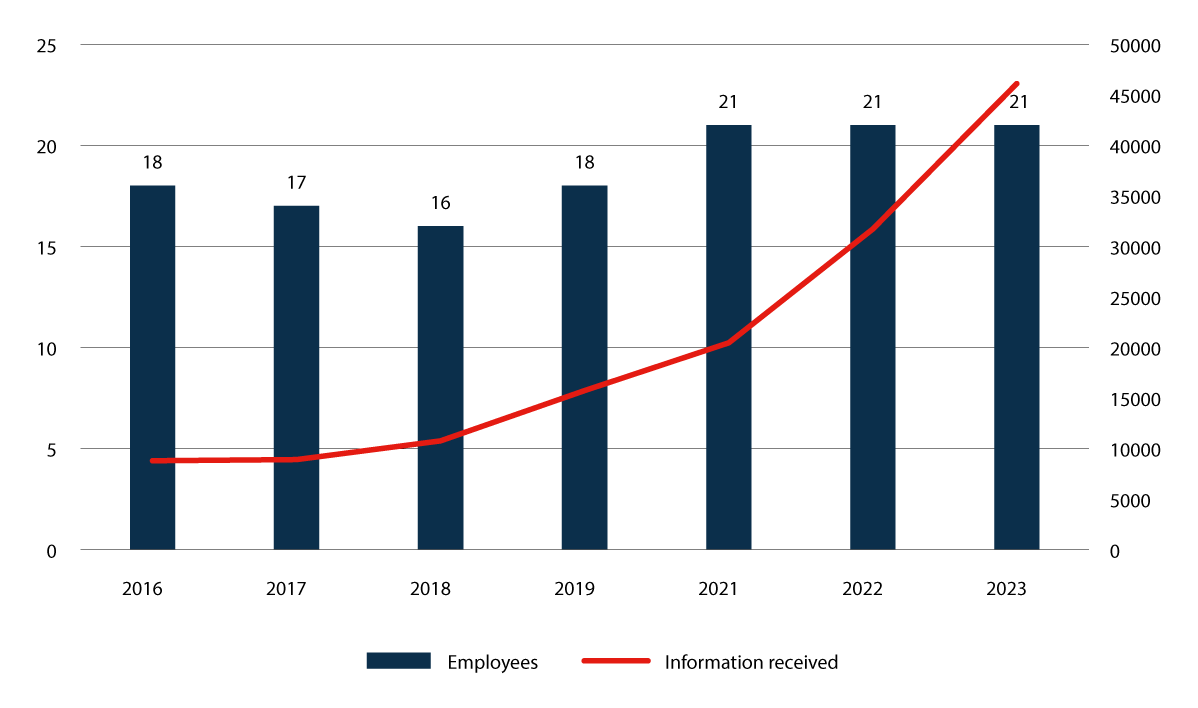
Figure 8.2 Information received vs. employees in the FIU
The increase in national STRs is largely due to increased reporting from certain reportable groups. At the same time that the number of STRs is increasing in scale, so is the content, quality and complexity of each individual report. This has gradually made it more challenging to utilise and analyse information that is reported, despite increased automated processing. Political agreement has recently been reached in the EU on a package of new anti-money laundering rules (see further discussion in section 12.4). The implementation of the new Anti-Money Laundering Directive, which is part of this package, will place additional demands on resources and systems to cover expected and new tasks resulting from the regulation.
The increased amount of data received has not been met with any change in the way data is processed, assessed, and analysed. The number of operational analyses carried out by the FIU, and the number of products disseminated for criminal proceedings and intelligence for use by the FIU’s partners have thus been relatively stable in recent years. Furthermore, the technical solutions related to software and the format of the reporting form itself have not been further developed to simplify, streamline, or otherwise promote good extractions and analyses of the actual data basis that comes in from the reporting entities. This increases the risk that time-critical information is not analysed and disseminated.
At the same time, there has been a marked increase in the number of requests for prohibitions on the execution of transactions, particularly related to ongoing fraud and international acquisitions or trades.24 In such inquiries, there is a great potential for the confiscation of illegal proceeds of crime.25
The Government’s assessment
The Government has noted that there is a major difference in the use of resources by those subject to the reporting obligation and the capacity of the police to process information from those subject to the reporting obligation. Both the police and other authorities may miss out on important information that the reportable entities have put a lot of effort into procuring. This leads to the information not being utilised well enough for preventive purposes. A lack of capacity to handle incoming information may also have consequences for the number of criminal cases concerning money laundering and confiscation of proceeds of crime.
Today, several manual processes are carried out in connection with the reception, analysis, and dissemination of information from the FIU. This is both resource-intensive and inappropriate. Even though the public sector’s use of resources cannot or should not necessarily be the same as that of those who are obliged to report in the private sector, Økokrim and the FIU must be given the capability to use automation to a far greater extent, in order to be able to fully utilise the legal basis provided for in the anti-money laundering regulation.
Implementation of the EU’s upcoming anti-money laundering package, including the new Anti-Money Laundering Directive, will require a comprehensive study (see section 12.4 for more details). It will be natural to monitor the challenges related to the FIU’s capacity and methods in connection with the implementation of the regulatory package.
-
The Government will ensure that Økokrim has better prerequisites, including increased capacity and new technology, including through the use of artificial intelligence, to deal with the increasing number of reports of suspicious transactions.
8.4.5 Cooperation to prevent and combat economic crime
Preventing and combating economic crime requires cooperation and coordination across different organisations and authorities. An important element in achieving this is the establishment of common standards and guidelines to ensure effective collaboration. As stated in chapter 4, there are several cooperation agreements and instructions between the police and various parts of the public administration that may be relevant to the fight against economic crime.
However, the cooperation has only focused on prevention to a limited extent. An exception here is the work-related crime cooperation, discussed in Box 8.2.
Textbox 8.2 Cooperation on work-related crime
The Norwegian Labour Inspection Authority, the Norwegian Labour and Welfare Administration, the police, and the Norwegian Tax Administration have established extensive cooperation at the national and regional level to prevent and combat work-related crime. Special work-related crime centres have been established in Oslo, Bergen, Stavanger, Kristiansand, Tønsberg, Trondheim, Bodø, and Alta, where the agencies are co-located. In addition, other partnerships have been established on work-related crime in regions and police districts not covered by work-related crime centres. The purpose of the work-related crime cooperation is to ensure that the agencies’ collective resources and sanctions are seen in context and utilised effectively. This will reduce the capacity and incentive of criminal actors to commit crime in working life.
In addition, the agencies cooperate to ensure that foreign workers are empowered to safeguard their rights and fulfil their obligations, and help ensure that clients and consumers do not facilitate work-related crime in the purchase of goods and services.
All the work-related crime centres have established knowledge groups whose main task is to build knowledge on trends, actors, environments, and methods. The knowledge products will provide decision-making support in order to be able to prioritise which actors and environments the interagency efforts should be directed at, select measures, and develop methodology.
A joint prevention strategy has also been drawn up for work-related crime that applies for the period 2020 to 2024, and in 2021 a joint interagency cooperation arena was established for the prevention of work-related crime.
In 2016, the Government established the National Interagency and Analysis and Intelligence Centre (NTAES) to strengthen efforts to combat economic crime, including work-related crime.26 The centre is a collaboration between the police, the Norwegian Tax Administration, the Norwegian Labour and Welfare Administration, the Norwegian Labour Inspection Authority, and Norwegian Customs (as required). The production of analysis and intelligence is regulated in regulations to the Police Databases Act and constitutes a separate police database.27
NTAES was evaluated by the Norwegian Agency for Public and Financial Management (DFØ) in the autumn of 2021, and the evaluation was assessed in a separate final report in the autumn of 2022.28 The evaluation clearly shows that there is support for the idea behind NTAES. It was pointed out that neither work-related crime nor economic crime can be solved without close interagency cooperation, which requires that the various agencies’ data sources be seen in context. The evaluation shows that there is a desire and need for expanded access to information sharing. The current legal basis prevents NTAES from sharing information about actors that would have been relevant to the police’s and control agencies’ work to prevent and combat crime.29
NTAE’s role and potential are also highlighted in KPMG’s evaluation report on the work-crime cooperation.30 In recommendation no. 7 in this report, it is stated that:
“NTAES has a unique opportunity to conduct analyses of threat scenarios and ensure professionalism and continuity in analysis and reporting on work-related crime. It is recommended that NTAES be assigned a clearer strategic role in overall knowledge building on work-related crime and economic crime.”
As part of the follow-up of the evaluation, work has been initiated to strengthen and clarify the knowledge work in both the agencies and at the work-related crime centres.
A lack of or varying legal basis for the publication of inspection reports and other material that may have a preventive effect can also be a challenge. It may be considered whether there is a need for a more uniform legal basis for the publication of reports and the like, which means that one can cooperate on preventive efforts.

Figure 8.3
Photo: Henry & co
The Government’s assessment
In the Government’s view, it is necessary for the authorities to give greater attention to and have a comprehensive approach to both intelligence and the prevention of economic crime, cf. the summary of the challenges in chapter 5.
To succeed in preventing and combating economic crime, it is a prerequisite that the agencies have a common knowledge base on threats and vulnerabilities. With a common knowledge base, it will be possible to prioritise effective threat and vulnerability reduction measures, and agree on an appropriate division of labour.
The Government believes that interagency intelligence cooperation is crucial for the preparation of a sound basis for decision-making. The interagency cooperation provides a basis for a broader supply of information, as well as the sharing of intelligence products, working methods and effective instruments.
The recommendations in the reports by DFØ and KPMG provide a good starting point for further development of both NTAES and the work-related crime cooperation. The police and control agencies’ intelligence in the field of economic crime should point to areas with particular potential for effective prevention and crime fighting. The intelligence should provide descriptions and assessments that are suitable for setting preventive objectives and developing preventive strategies and preventive measures.
It should also be possible to share intelligence to a greater extent with other public agencies and with the private sector in order to prevent crime. Section 59-7 of the Police Databases Regulations provides a legal basis for NTAES to share information in the form of national threat and risk assessments and intelligence products, but does not allow for the sharing of assessments related to individual actors with the police and the control agencies.
-
The Government will examine the need for amendments to the Police Databases Regulations in order to be able to share more information from the National Interagency Analysis and Intelligence Centre (NTAES), and also consider whether intelligence products can be used to a greater extent to establish common objectives for preventive efforts.
8.5 Need for and opportunities for information exchange between regulatory agencies and the police
The Regulations relating to the Sharing of Confidential Information and the Processing of Personal Data etc. in the Interagency Cooperation Against Work-Related Crime (the Work-related Crime Information Regulations) entered into force in June 2022. The regulations give the agencies participating in the work-related crime cooperation greater access to the sharing and compilation of information. In their joint annual report for 2022, the agencies state that work is underway on a data protection impact assessment with a view to implementing new regulations in the agencies’ common IT systems, and that this work is a prerequisite for achieving the opportunities for the increased sharing and processing of confidential information that the new regulations allow. A revised guide on information sharing has also been prepared for use by the agencies in the work-related crime cooperation.
The agencies’ assessment is that the new regulations provide a clearer and better legal basis, which will help to strengthen common situational awareness and make it easier to arrive at priorities for measures and the use of policy instruments. Continuous assessments and learning are taking place with regard to the regulations on information sharing.
There is a close connection between social dumping and work-related crime and other forms of economic crime. However, the legal basis for information sharing provided in the work-related crime information regulations for combating such crime is limited to the work-related crime and is therefore not sufficient in the efforts against economic crime in general.
The Government’s assessment
There is a need to detail the sharing and compilation needs that exist, and what may prevent the sharing and processing of information across agencies. Employees in various agencies that work to prevent and combat economic crime find it challenging to comply with the current regulations and get an overview of what is and what is not permitted. The privacy policy sets strict requirements for what personal data can be processed by whom and how it can be processed. Information collected for one purpose cannot automatically be used for other purposes.
Further development of technology and tools for analysis, control, and interaction across administrative areas, and the use of artificial intelligence as discussed in chapter 10, will require clear legislation related to the sharing, compilation, and processing of data. This can be done, for example, through regulations laid down pursuant to Section 13g of the Public Administration Act, which provide the opportunity to regulate information sharing in more detail.
The Government will assess whether there is a need for more detailed regulation of information sharing, compilation, and processing in more areas than is currently the case in order to strengthen efforts to prevent and combat economic crime.
-
The Government will examine the need for further regulation of information sharing, compilation, and processing of information across administrative areas and for specific purposes, with a view to preventing and combating economic crime.
8.6 Prevention and detection in the private sector
8.6.1 The authorities’ cooperation with the business sector
In terms of prevention, detection and investigation of economic crime, cooperation with the private sector is of great importance to the police, the prosecuting authority, and the regulatory agencies.
Most business actors wish to act in a law-abiding manner and contribute to ensuring that they can compete on equal terms in the market. Regulated sectors such as the finance industry, and also large and medium-sized companies in other sectors, have their own groups that work with compliance. These groups are often in addition to ordinary internal control work that is also crime-preventive.
Most professional service providers, such as accountants, auditors or lawyers, also want to help ensure that their clients operate within the applicable rules. From a preventive perspective, it is therefore important to establish forms of cooperation to support the enterprises’ efforts to reduce the risk of them being exposed to crime, or themselves violating legal provisions.
Several types of economic crime are rarely reported or constitute types of crime about which the police receive little information. This includes crime in businesses, such as breach of trust, corruption, and breach of licence terms. In addition to knowledge, cooperation with the private sector will also be able to support more notification and reporting of such crime.
Over time, the police have collaborated with the business community in various areas. In 2015, the National Police Directorate decided that all police districts should establish business contacts. The establishment was part of the Government’s strategy to combat work-related crime, and was justified by a need to strengthen cooperation between public agencies, private actors, and the rest of civil society. In 2022, Økokrim took over professional administrative responsibility for the business contacts.
The scheme for business contacts in the police districts and special agencies is a good measure for better interaction and information flow between the police and the business community. However, there is room for further development of the role in the fight against economic crime.
Cooperation on prevention between the police and the business sector can, for example, take place by the police communicating knowledge about methods and crime trends to the private sector so that they can remediate vulnerabilities and reduce risks. This is the model behind the public-private cooperation on anti-money laundering efforts, OPS AT (Public-Private Partnership on Anti-Money Laundering and Terrorist Financing). OPS AT was established in 2021 with participants from banking, insurance, and the public sector working together to prevent money laundering and terrorist financing.31 This is done through regular meeting places, where participants exchange experiences and trends they see in their own organisations. The work of OPS AT is still under development. The feedback from the participants in OPS AT is positive, and similar cooperation platforms with other business actors in the anti-money laundering regime should be considered.
The regulatory agencies also have contact meetings with companies and business organisations. Meetings with companies that request guidance in matters of project collaboration are a common way of cooperating.
Other examples of cooperation with the business sector can be found through the Norwegian Labour Inspection Authority’s tripartite industry programme and through the fisheries authorities’ cooperation with the fishing industry, where the purpose is to communicate specific challenges and mobilise the industry to help find good solutions that promote compliance with the regulations.
The Norwegian Tax Administration has entered into binding cooperation agreements against tax crime with 22 of the country’s largest purchasers in order to limit the freedom of action of the rogue actors, and to play on side with serious businesses. The aim of the cooperation is to prevent the partners from entering contracts with criminal actors. The collaboration gives the companies a better basis for decision-making in choosing serious players, and enables partners to carry out better internal control. Selected projects are given special follow-up. This is done e.g. through on-site inspections and monthly reporting to the Tax Administration. External evaluations of the Tax Administration’s cooperation agreements show that the cooperation contributes to a culture of seriousness in the market, as desired and expected.
Public agencies also cooperate with various organisations to prevent economic crime. The Norwegian Tax Administration and KS, NHO, Unio, LO, Virke, and YS collaborate through the Cooperation against the Black Economy (SMSØ). The parties meet quarterly for mutual experience exchanges. Measures are being developed and implemented aimed at young people, the private market, purchasers, and the construction industry. SMSØ also has regional units that work preventively and work to change attitudes.
The Government’s assessment
The Government believes that cooperation between the police, supervisory authorities, and the private sector is important for preventing, detecting, and responding to economic crime. The business community has a vested interest in preventing and combating economic crime, and has signalled a desire for closer cooperation with the authorities in this work. Though there are several good examples of cooperation that is already taking place, this area also has potential for further development. In many cases, there are actors in the private sector who have information that can give the police insight into various types of economic crime. The financial industry is one example, but lawyers who work with investigations, estate agents, and representatives of industries that are particularly exposed to economic crime may also be relevant.
For the police, increased sharing of information from private actors can provide greater opportunities to identify criminal networks and serious offences in business activities. Conversely, the police may have knowledge of vulnerabilities that, through the exchange of information, can place private actors in a better position to protect themselves, by remediating their own vulnerabilities.
For example, internal coordination and prioritisation of the police’s overall efforts in preventive work and external activities through the business contacts scheme could be more clearly structured and organised.
However, cooperation with private actors also requires resources from the police. Increased information sharing with the police will also require increased capacity in the police to receive, process, and analyse the information, as well as to establish a systematic information sharing regime. In the further work to facilitate more systematic cooperation between the authorities and the private sector, this must also be taken into account.
-
The Government will ensure more systematic and formalised cooperation between the authorities and the private sector to prevent and detect economic crime, including further developing the role of business contacts.
8.6.2 Guidance and other incentives for the business sector
Increased understanding and awareness make it easier to identify potential risks and vulnerabilities in the enterprise, and thus implement measures to prevent economic crime. In the business sector, it is particularly important to strengthen expertise and common understanding of the risk of economic crime among senior managers and decision-makers. This may include strengthening routines and procedures for financial management, auditing, and internal control. It may also lead to higher prioritisation of the prevention of economic crime, and thus ensure that the enterprise has the necessary resources and expertise to combat this type of crime. Prevention of economic crime is expressed e.g. through the company’s internal guidelines and culture of transparency.
Internationally, there has been a shift towards focusing on preventive measures aimed at the business sector (see section 8.6.3 for more details). For example, in its recommendations from 2021, the OECD Working Group on Bribery set out recommendations to encourage the business sector in the member states to develop internal controls, ethics, and compliance programmes, with the aim of preventing and detecting corruption.32
The Norwegian authorities have to varying degrees communicated what expectations the police have of the conduct of the business community and the business community’s crime prevention work. The legislation sets absolute limits, but the Norwegian legal provisions often give limited guidance compared to other countries. An example here are the rules on corruption, where other countries such as the UK, the US, and France have drawn up extensive regulations with clear expectations for how companies should prevent corruption and what they should do if they suspect that the company has participated in acts of corruption. The provisions of the Penal Code do not provide such detailed guidelines, but leave the more detailed clarifications to the preparatory works and case law.33
Business actors have called for more guidance in Norway as well. Guidance of this type can help the business sector to set the right level of risk in its preventive work. In addition, it may contribute to greater predictability in cases where possible violations of the law in the company’s operations have been uncovered and the matter is to be reported to the police. An example of this type of campaign was the launch of Økokrim’s indicator list Corruption – Typical cases and indicators that was well received by the compliance community in the business sector.34 Lists of indicators of suspicious circumstances under the anti-money laundering regulations have also been developed35, and a comprehensive guide to the Anti-Money Laundering Act has been developed by the Financial Supervisory Authority of Norway36.
Another example of guidance to the industry is the Norwegian Competition Authority’s campaigns aimed at the business sector.37 In their experience, increased attention in the media leads to more reports of possible violations of the law. The Norwegian Competition Authority has conducted two surveys among business executives (in 2017 and 2021) on their knowledge of the Competition Act and the Authority’s work. The survey in 2021 shows that knowledge of the Competition Act has increased significantly since the first survey.38
The regulations on public procurement also provide a good starting point for the prevention of economic crime. This is further developed in the so-called Norway model, discussed in more detail in Box 8.3.
Textbox 8.3 The Norwegian model
The purpose of the Norwegian model is to combat work-related crime and social dumping through a wide range of measures in public procurement.
The model is being developed in stages, and will initially be aimed at public procurements in the building and construction industry and the cleaning industry. In the first stage, provisions will be introduced requiring contracting authorities to stipulate requirements in contracts for payment via banks, mandatory occupational pensions, HSE cards, and requirements for language skills in the building and construction industry. The amendments to the regulations entered into force on 1 January 2024. As part of the first stage, the Norwegian Agency for Public and Financial Management (DFØ) published a new guide in August 2023 with best practices for contract follow-up.
The second stage of the model will particularly apply to measures related to contract follow-up, including guidance, further development of best practice, and strengthening of digital tools for contract follow-up. If contracting authorities impose stricter seriousness requirements, but do not enforce the requirements, this may lead to suppliers speculating that requirements set out in the contracts will not be checked. The contracting authorities then risk entering into contracts with disreputable suppliers, and serious suppliers who comply with the requirements may lose out in competition.
The Government’s assessment
There are already a number of good measures in place that were launched by the Norwegian authorities aimed at the business sector; it is important that they are maintained.
However, the business community has called for more guidance from the authorities, including with regard to what expectations are set for how companies can prevent corruption and what to do if they suspect that the company has participated in acts of corruption. There are various international recommendations that are also relevant to Norway, partly because we participate in international cooperation in this area. The OECD’s guidelines against bribery in international business relationships are a good starting point for further guidance on the expectations that should be placed on companies’ preventive efforts. To a greater extent than today, the authorities should clearly communicate such recommendations to Norwegian companies.
It already follows from the Hurdal platform that the Government will develop a Norwegian model for public procurement. This work is also important for preventing economic crime.
-
The Government will draw up clearer guidelines for the business sector’s anti-corruption work.
-
The Government will further develop the Norwegian model for public procurement, which will help to combat work-related crime and social dumping.
8.6.3 Prevention as part of the assessment of whether a corporate penalty should be imposed
Chapter 4 of the Penal Code regulates the use of penalties against enterprises. The corporate penalty is optional (facultative), in the sense that it is up to the courts to decide whether a corporate penalty should be imposed even if the conditions are met. Section 28 (c) of the Penal Code stipulates that preventive measures will be of importance in the assessment of whether a corporate penalty should be imposed. If the company has taken such preventive measures and the measures are good in terms of the company’s risk, this will be an argument for not penalising the company. The rules are intended to motivate people to counteract violations of the law in the enterprise through systematic measures such as organisation, training, guidelines, procedures, supervision, and control.39
In May 2018, the Ministry of Justice and Public Security tasked Knut Høivik with assessing a number of issues related to corporate penalties and anti-corruption legislation.40 In the report, which was published in May 2021, Høivik refers e.g. to the emergence of international recommendations and guidelines for responsible business conduct. Høivik points out for instance that the development and use of such guidelines for responsible business conduct indicate that the companies’ use and compliance with the guidelines are given weight in the assessment of corporate penalties. Such recommendations provide guidance on how enterprises should organise their systems to combat certain types of crime or offences. The guidelines are often the result of cooperation between nation states in the fight against crime.41 Such recommendations are not legally binding, but are intended to help business actors develop their internal control systems. In the report, Høivik proposes to abandon the optional nature of corporate punishment and introduce preventive measures as a special ground for exoneration.
Corporate penalties are imposed by the prosecuting authority issuing a fine to the enterprise, and the enterprise may then choose to accept the fine or not. Most cases of economic crime against companies are settled by issuing fines. The fine contains no further justification other than the description of the criminal offence and the sanction. As a general rule, fines are not published. Høivik proposes that fines should be both justified and made public.
The Government’s assessment
The Government is of the view that clearer and more detailed regulatory requirements and expectations for companies’ preventive work, and the weight that for instance anti-corruption programmes should carry for the imposition of corporate penalties and determining sentencing, may be important for companies’ preventive work.
To achieve a sufficient general preventive effect for this type of rule, it is also important to communicate to the general public how the preventive work is emphasised when determining a sanction, usually a fine. This can be achieved by introducing requirements for justification and publication of fines. The Høivik report’s recommendations on this point are important for all forms of economic crime. The Government will therefore take a closer look at how these proposals can be addressed.
-
The Government will assess whether the rules on corporate penalties should be amended to clarify the significance of preventive measures.
-
The Government will assess whether fines against companies should be justified and made public to a greater extent.
8.6.4 Unified transaction monitoring in banks
A strong regime against suspicious transactions must focus on having the most effective efforts possible at all levels, both in the private and public sectors. To achieve the greatest possible effect, it is crucial to be able to identify transactions that pose the greatest risk at an early stage. In this way, the overall efforts of both the public sector and those who are obliged to report in the private sector can be directed towards the riskiest objects.
Today’s monitoring of obliged entities with a large transaction volume, including banks in particular, is largely based on data monitoring of transactions, so-called transaction monitoring. A relatively large number of resources is spent on disproving matches (so-called false-positive matches) occurring with the currently entered rules in the system. Transaction monitoring takes place at the premises of the individual reporting entity that processes the transaction. The banks’ automated systems only process the transactions that they themselves have, and cannot take into account or obtain information that relates to other transactions. At a later stage, the reporting entity may obtain information about the customer and the transaction from other reporting entities, but there is no overall transaction monitoring of all transactions in the banks. The work is therefore fragmented, and it is challenging to see the big picture.
The Government’s assessment
To help ensure that anti-money laundering efforts in the private and public sectors become more targeted, the reporting entities’ transaction monitoring should be as risk-based as possible. This could be achieved through a greater degree of digitalisation and a more comprehensive approach to transaction monitoring. An overall and comprehensive approach means that all transactions are “washed” in a common system via the FIU and Økokrim. The contents of the database must be anonymised. A larger volume and data set means an optimised use of indicator lists and rules on the transactions. Digitalisation will be particularly suitable for identifying suspicious transactions, but to a lesser extent identifying other suspicious circumstances related to the customer.
Both the Netherlands and Denmark facilitate similar transaction monitoring as the one described. In the Netherlands, five major banks have joined forces and established Transaction Monitoring Netherlands (TMNL). TMNL shall identify unusual transaction patterns with the purpose of detecting criminal networks and money flows. This is in addition to the banks’ own transaction monitoring.
Establishing a mechanism for transaction monitoring as described can also be useful for us. However, even though some EU countries have established similar systems, it is essential to make an independent assessment of how such a compilation of information relates to the data protection rules. In the first instance, the legal framework must therefore be clarified in more detail.
-
The Government will consider proposals for rules that will enable the establishment of a mechanism for joint transaction monitoring of entities with a reporting obligation in the banking sector.
8.7 Raising awareness and understanding of phenomena
Awareness campaigns can also be used as part of a preventive action plan in the area of economic crime. Awareness of threats and vulnerabilities helps to limit criminals’ opportunities to commit economic crime and thus makes society’s overall ability to avoid such crime more effective. However, it is important to point out that awareness campaigns alone will not necessarily be able to solve the problem.
Awareness campaigns are often used to communicate an important message with the intention of changing attitudes and behaviours among specific target groups. The campaigns are produced based on a problem analysis. Content, form, and message are chosen based on the target group one wishes to reach. It is difficult and time-consuming to change people’s attitudes and behaviour. Therefore, it is important to know the target group one wants to reach, why and how the problem in question affects the target group, and how to orient the message to achieve a change in attitude, and thus achieve a preventive effect.
Awareness-raising campaigns also contribute to information and knowledge of regulations, which in turn promotes compliance. Box 8.4 provides examples of measures to raise awareness among foreign workers.
Textbox 8.4 Raising awareness among foreign workers
Both together and separately, the Norwegian Labour Inspection Authority, the Norwegian Labour and Welfare Administration, the Norwegian Tax Administration, and the police carry out several information and guidance measures particularly aimed at foreign workers, but also at clients and consumers. During interagency operations, the work-related crime centres provide guidance to foreign workers on rights and obligations related e.g. to the Working Environment Act with regard to employment contracts, working hours, wages, and HSE and on rights and obligations under the Tax Administration and National Insurance Acts. They also refer employees to the Service Centre for Foreign Workers (SUA), which is a collaboration between the Norwegian Tax Administration, the Norwegian Directorate of Immigration, the police, and the Norwegian Labour Inspection Authority, with five offices in Oslo, Stavanger, Bergen, Trondheim, and Kirkenes.
The Norwegian Tax Administration, the Norwegian Labour and Welfare Administration, the Norwegian Labour Inspection Authority, the Norwegian Directorate of Immigration, and the police are working together on the workinnorway.no website, which redirects users to the respective agencies’ websites.
In cooperation with the labour inspection authorities in the Baltic countries, Bulgaria, and Romania, the Norwegian Labour Inspection Authority has also prepared the information campaign “Know your rights”. The purpose is to enable foreign workers to make informed choices when they work in Norway, and in this way contribute to reduced work-related crime. An evaluation concluded that the goal attainment was good. Almost a third of those who responded to a user survey stated that they had discovered violations of the regulations in their own employment as a result of the campaign. Two-thirds of these also responded that they had either made or would make changes to their working conditions after seeing the campaign. Such changes can help reduce criminal actors’ access to labour. The Norwegian Labour and Welfare Administration and the Directorate of Integration and Diversity (IMDi), in collaboration with the social partners, have also prepared guidelines for Ukrainian refugees who are going to enter Norwegian working life.
In addition, there are several good examples of awareness-raising campaigns aimed at private individuals both by Økokrim, the Tax Administration, and Norwegian Customs, through the active use of social media and websites such as handlehvitt.no and velgekte.no. See Figures 2.3 and 2.4 that illustrate such an attitude campaign by Økokrim.

Figure 8.4 From the agencies’ joint campaign with warnings about itinerant tradesmen
Source: The Norwegian Tax Administration.
9 Transparency and quality in public databases
9.1 Transparency builds trust and prevents economic crime
Transparency is an important value in Norwegian society. We generally have great trust in our authorities, and good regulations for sharing information from the authorities to the public. Trust means that transaction costs are lower and helps us to run business and the state more efficiently.
Transparency about the identity of beneficial owners of Norwegian enterprises is important in order to make it more difficult to conceal who in reality has control and ownership of an enterprise.
Correct information about who owns what is important in the performance of tasks in many areas of authority. In addition, there is often a need for more detailed information about e.g. ownership interests, the value of ownership interests, and rights related to ownership. For example, the Tax Administration needs such ownership information in its work to uncover tax crime and for efficient collection.
In a digitalised society, correct identity information in the National Population Register is fundamental. Users of the National Population Register assume that one person has one identity, and that the person who uses the assigned identity number is the correct holder. Registration of false identities in the National Population Register or incorrect use of national identity numbers and D-numbers enables economic crime. Therefore, high-quality registers and integrated ID management are important factors in preventing and combating economic crime. The quality of information contained in public records and identity documents can have a direct impact on the ability to identify and monitor suspicious activities and transactions.
This chapter assesses various registers, databases, and systems that ensure transparency.
9.2 The register of beneficial owners
The authorities currently have access to several sources that provide information about beneficial owners of companies in Norway. Among other things, they have the opportunity to request information from entities subject to the reporting obligation under the Anti-Money Laundering Act. In addition, parts of the Act and Regulations relating to Beneficial Owners have entered into force.42 However, these sources do not currently provide a full overview of the identity of beneficial owners of enterprises that offer goods and services in Norway.
The work on developing a register of beneficial owners, in which the Ministry of Trade, Industry and Fisheries is involved as agency manager for the registrar, which is the Brønnøysund Register Centre, will be able to provide further information and easier access.
The Brønnøysund Register Centre is also discussed in more detail in Box 9.1.
Textbox 9.1 The Brønnøysund Register Centre
The Brønnøysund Register Centre is responsible for administering a number of different registers on behalf of nine ministries. The agency checks that the register notifications received are in accordance with the laws concerning the registers in question.
The Brønnøysund Register Centre does not have its own supervisory authority as such, but facilitates other actors’ control through registration and access to data. The Brønnøysund Register Centre is an important player in the simplification work, and its services have been key to the prevention of economic crime in Norwegian business and industry for 40 years. New technology, a new registry platform, and the possibility of control and analysis from several sources, in combination with adapted and up-to-date regulations, will help to ensure that data from the Brønnøysund Register Centre can be used more actively in the prevention of economic crime.
The Act relating to the Register of Beneficial Owners was adopted in 2019. Regulations to the Act were adopted by the Ministry of Finance in 2021.43 The Act and Regulations partially entered into force on 1 November 2021.44 According to this legislation, a beneficial owner is a natural person who, through his or her ownership interest or voting interest in an enterprise, controls the enterprise. The ownership or voting interest must exceed 25 per cent. A natural person who has the right to appoint or dismiss a minimum of 50 per cent of the members of the enterprise’s governing body is also considered to be a beneficial owner. Furthermore, information must be collected and registered about persons who otherwise exercise control over the enterprise.
The purpose of the Act is to ensure increased transparency concerning ownership structures of Norwegian enterprises. The legislation will help to counteract the misuse of the relevant businesses for money laundering, terrorist financing, and economic crime.
The register of actual beneficial owners and the entry into force of the rest of the Act and the Regulations have not yet been completed. A key reason is a ruling by the European Court of Justice in the autumn of 2022, where a directive provision requiring that information in such registers must be made available to the public without further conditions was declared invalid.45 The provision was deemed contrary to fundamental rights in the EU Charter. The Norwegian authorities have had to assess the significance of this decision for our regulations. Against this background, the Ministry of Finance circulated a proposal in December 2023 for amendments to the rules on access to information in the register of beneficial owners. The Ministry of Finance proposes to provide access to relevant authorities and financial intelligence entities, as well as entities subject to the reporting obligation pursuant to the Anti-Money Laundering Act. The European Court of Justice’s ruling does not deal with these groups. In addition, the Ministry proposes a regulatory authority to regulate access to other information.
The Government’s assessment
For the Government, it is important for several reasons to facilitate transparency about beneficial owners and ownership. It can be challenging to find out who actually controls an enterprise through indirect ownership, voting rights, or the right to appoint more than half of the board members. To find out who directly or indirectly controls an enterprise, one must consider the entire chain of ownership.
A register of beneficial owners could provide reduced freedom of action for criminals, which in turn would lead to increased protection of society. Completion of the register will also contribute to fulfilling Norway’s international obligations under the Financial Action Task Force (FATF)’s standards for measures to counter money laundering and terrorist financing and the EU Anti-Money Laundering Directive.
Completion of the register is relevant to the challenges described in this white paper and is therefore followed up here as well.
-
The Government will complete the establishment of a register of beneficial owners, with as much transparency as possible.
9.3 Ownership in shares and real estate
Ownership information is information about direct and indirect ownership of, and control of, shares and real estate.
9.3.1 Information about owners of limited liability companies
Th identity of the direct owner of shares or stakes in a company, or who is a member of an enterprise, is stated in overviews for which the enterprise itself is responsible. Owners of private limited companies must be listed in the company’s register of shareholders or in the company’s register of members, which is kept by a central securities depository.46
Everyone has the right to access these ownership overviews. However, except in the case of general partnerships, information on ownership must not be registered in public registers. Ownership is reported to the authorities for tax purposes, and the Tax Administration has a separate overview of share ownership as of 31 December each year.
Foreign owners can choose to have their shares in Norwegian companies with securities-registered shares transferred through a financial institution (a nominee). The nominee has no ownership of the shares. The nominee registration scheme means that the public does not have access to who the foreign shareholders are. Even if only the nominee’s name appears in the shareholder register, the company and public authorities may, however, require the nominee to state who owns the shares covered by the nominee’s assignment, and how many shares each individual owns.
It is therefore not the case that ownership of nominee-registered shares is hidden. However, in reality, it is in many cases difficult for both the company, public authorities, and the general public to learn the identity of the owners.
In Petition Resolution No. 496 of 16 June 2014, the Norwegian Parliament (Storting) requested the Government to establish a public tool with information that ensures greater transparency about owners of limited liability companies in the course of 2015.
9.3.2 Information about owners of real estate
Registered title to real estate is stated in the land register. Both natural persons and companies can be listed as title holders. In many cases, the person who has registered title as the owner of the property will also be the actual owner, but this is not necessarily the case. There is no obligation to register property, and there can be many reasons why one chooses not to register actual ownership. The registration scheme is first and foremost an offer to title-holders who wish to secure legal protection for their rights in real estate. The Land Registration Act contains rules stating that a person who is in good faith can assume that the person who has title is also the owner. In many respects, therefore, the land register functions as an ownership register of real estate in Norway. The Norwegian Tax Administration needs more precise information about who owns property in Norway and has its own property register for this purpose. This is not information that is publicly available, nor is at available to other public authorities without a warrant for such access.
One way to establish unregistered ownership of property is through the use of so-called blank deeds, which means that you do not see who the owner is. The need for better ownership information on real estate was the reason why the Storting, in Petition Resolution no. 35 (2021–2022), asked the Government to “investigate the use of blank title deeds and the obligation to register in connection with property purchases”.
9.3.3 The authorities’ need for ownership information
In 2023, on the basis of e.g. the petition resolutions mentioned above, the Ministry of Finance, the Ministry of Trade, Industry and Fisheries, and the Ministry of Local Government and Regional Development commissioned the Norwegian Tax Administration, the Brønnøysund Register Centre, and the Norwegian Mapping Authority to detail the authorities’ potential use of information on direct and indirect ownership of and control of shares and real estate. The Norwegian Tax Administration has led the work in collaboration with the Brønnøysund Register Centre and the Norwegian Mapping Authority. The purpose was to detail the authorities’ need for access to information on ownership of shares and real estate and potential solutions for this. Further work on this should also be seen in the context of the follow-up of Report St. 9 (2022–2023) National control and cyber resilience to safeguard national security.
The survey shows that ownership information is important for the performance of the social mission of many public agencies and that the information is used for various purposes. Although information about ownership can be found in many sources, there is no up-to-date authoritative source in Norway. The survey also showed that it can be challenging to obtain an overview of necessary ownership information in cases where ownership is organised in groups and various complex ownership structures, and that foreign owners are difficult to identify.
The Government’s assessment
It is often seen that complicated ownership structures are used in the case of serious economic crime. Correct information on ownership of shares and real estate is essential for the effective prevention and combating of economic crime, and for safeguarding national security interests. Lack of or difficult-to-access information about who the owner is makes it difficult for the police to investigate cases of economic crime and also makes it difficult to confiscate proceeds of criminal acts. Knowing the identity of an owner is also a necessary prerequisite for compliance with the sanctions regulations, which is now highly relevant as a result of the war in Ukraine.
A better overview of and solutions for access to information about ownership in shares and real estate could help both prevent and detect economic crime, and safeguard national security. Correct and up-to-date information on ownership of shares and real estate will also be of great value in other areas of society, as the survey has shown.
-
The Government will complete the work that has been initiated to assess the regulation of access to and transparency concerning shareholder information.
-
The Government wants to make it more difficult to hide money from taxation and launder proceeds from criminal acts by investigating mandatory registration of ownership in real estate.
-
The Government will consider how the results of the survey of the authorities’ possible use of information on direct and indirect ownership of, and control of, shares and real estate should be followed up.
9.4 Register quality and ID management
9.4.1 Registry and data quality
Many of the rights and obligations that citizens and businesses have today are based on arrangements that are largely trust-based and based on information provided by the individual citizen or business, be it the obligation to pay taxes, entitlements to benefits from the Labour and Welfare Administration, right to engage in various types of business activity, to work, etc. Trust-based schemes promote simplicity for individuals and businesses and efficiency in public administration. Registers and information are used as a basis for the allocation of rights and the fulfilment of obligations. Weaknesses in such schemes and registers can be exploited for misuse and fraud and other forms of economic crime. Examples are incorrect or inadequate reporting of income, incorrect loan applications to banks, incorrect requirements for insurance companies, failure to file for bankruptcy in the event of insolvency, bribery of employees to secure a decision on the allocation of assignments and rights, director fraud, and more.
One area for improvement has been identified in relation to the deadline provisions in the reporting of employment via the a-ordning scheme. The Norwegian Labour and Welfare Administration, the Norwegian Tax Administration, and Statistics Norway are therefore studying whether it is possible to introduce event-driven reporting of employment relationships.
The Government’s assessment
There is a need to detail the potential for misuse in schemes that can be exploited for economic crime. On this basis, relevant authorities can implement control mechanisms that can help prevent significant vulnerabilities in particularly vulnerable schemes.
With regard to the ongoing studies related to event-driven reporting of employment via the a-ordning scheme, the Government will consider how the work should be followed up, and potentially propose amendments to the Act relating to Employer’s reporting of employee information and income etc. (A-opplysningsloven, in Norwegian only) and the National Insurance Act.
-
The Government will ask relevant agencies to detail the potential for misuse in schemes that are assumed to be exploited for economic crime.
-
The Government will consider how the agencies’ study of incident-driven reporting of employment via the a-ordning scheme should be followed up.
9.4.2 ID management
In a digitalised society, basic identity information in the National Population Register is important. Users of the National Population Register assume that one person has one identity, and that the person who uses the assigned identity number is the correct holder. Registration of false identities in the National Population Register or incorrect use of national identity numbers and D-numbers enables economic crime.
Inadequate ID checks can contribute to Norwegian authorities inadvertently “laundering” false identities in Norwegian registers. This can be done by using false or stolen basic documents as the basis for the allocation of identity numbers in the National Population Register and through the issuance of documents that are accepted as proof of identity. Since regulatory agencies and other service owners do not require secure identity to a large extent in the performance of their services, including the fact that there is no requirement for the presentation of ID proof, such “money laundering” continues. In recent years, there has been increased attention to the need for security and efficiency in Norwegian ID administration, partly as a result of challenges related to work-related crime. ID management typically includes the processes related to the determination and registration of identity, the issuance of physical and electronic proof of ID, and ID checks. A number of ministries and subordinate agencies have a role to play in these processes, which are of crucial importance both for the individual’s ability to confirm and protect his or her own identity, and for society’s ability to prevent and detect crime.
In 2019, ID management was subject to an area review carried out by an external consultant on behalf of the Ministry of Finance, the Ministry of Justice and Public Security, the Ministry of Local Government and Modernisation and the Ministry of Transport and Communications.47 The Ministry of Labour and Social Inclusion also participated in the final phase. The purpose of the area review was to detail whether current ID management was designed and organised in an appropriate and cost-effective manner, and to assess measures for increased security, cost-effectiveness, and user-friendliness.
The recommended measures from the area review are broad, and also include prioritising long-term development measures that have already been initiated to increase the prevalence of secure proof of ID and strengthen the quality of the information in the National Population Register through the realisation of the status UNIK; see more about this in section 9.4.3.
The use of false identities and the registration of incorrect information enables economic crime, and especially work-related crime. ID misuse also enables evasion of taxes and duties, or that wages and social security benefits are paid to people with multiple false, borrowed, or stolen identities. ID misuse is also a recurring theme in various forms of social security fraud and loan fraud. Benefits and loans can be accumulated by a person having access to or control over several registered identities and several BankIDs (a Norwegian system for online identification).
Misuse of employees’ identities, or the purchase and sale of ID information, has been uncovered in several cases. ID misuse camouflages illegal labour, conceals the actual identity of who plays which role, and facilitates crime that is difficult to uncover. ID theft also enables other forms of crime, such as smuggling of people and goods, and terrorism. The risk associated with ID misuse is great, and measures within ID administration could help both reduce the scale of criminal opportunities, while at the same time giving everyone with a national identity number or D-number increased opportunities to protect their own identity and have their basic needs met.
Measures that make it more difficult to misuse ID will help to safeguard the rights of vulnerable foreign workers.
To counteract these challenges, it is important to have systems in place to ensure high-quality registers and ID checks that ensure that the registers are up-to-date and accurate, and that the identity documents are secure and reliable. This can include everything from technological tools, such as biometric authentication and digital signatures, to manual verification processes and training of personnel involved in verifying identities and data. The systems and processes that have been developed in recent years through the improvement in quality for passport and ID administration, the launch of the national ID card, and the introduction of the police’s ABIS (Automated Biometric Identification System) are examples of modernisation that can provide development opportunities and synergy effects for other agencies’ control work as well. Furthermore, good register and data quality is a prerequisite to being able to share information and practice transparency.
Good register quality and ID management can help strengthen the ability to identify and combat economic crime. Supervisory authorities and other actors must be granted access to accurate and reliable data and identity documents, and they must be able to request secure identity where this is proportionate and necessary. It is important that individuals can only operate with one identity. The use of biometric data is necessary to ensure that a person is only registered with one unique identity in the National Population Register. Biometric checks are also important to determine that it is the right person who is presenting an ID document. The police have developed a status service for checking the authenticity of passports and ID cards, as well as the status of missing Norwegian documents. The service has quickly become very widespread. Work is underway in the National Police Directorate with a view to further developing the service to check the link between document and person using biometrics. The work is based on digital checks by a person in physical attendance.
9.4.3 The establishment of UNIK
Many of the challenges associated with ID misuse and identity theft are related to the inability to prove one unique identity in Norway. A challenge is that one person might be registered with several identities in the National Population Register, and several people might use the same identity number. There is a need to make it visible who owns which national identity number and D-number assigned from the National Population Register, and to make it possible to prove the person’s assigned identity in a credible manner. The establishment of the status UNIK and the issuance of robust ID documents are also important prerequisites for the realisation of the recently adopted strategy for electronic IDs (e-IDs) in the public sector.
Integrated national identity management is important in reducing economic crime. The Norwegian Tax Administration, the National Police Directorate, the Norwegian Directorate of Immigration, the Norwegian Labour and Welfare Administration, and the Norwegian Digitalisation Agency have established the Coordination Group for Identity Management (KoID), which shall work for a comprehensive and strengthened national identity management and ensure that one person only has one UNIQUE identity in the National Population Register.
In order for users of the National Population Register to be completely confident that one person is operating with just one UNIK (unique) identity registered in the Register, it must be possible to register the identity status “unik” in the National Population Register. A prerequisite for this is that biometric comparison searches have been carried out across biometric registers in the justice sector. The status UNIK thus means that a person is only registered with one unique identification number in the National Population Register. Without the opportunity to make visible who is who in Norway, there is a risk of reuse of registered identities in that people can be inserted into other people’s identities and exposed to misuse. This creates challenges both for people who are exposed to ID theft and for employees whose rights are not being safeguarded.
The Government’s assessment
The quality of the register should be improved with the aim of achieving secure physical and digital identification. The expansion of the national ID card scheme, which was introduced for Norwegian citizens in November 2020, and the establishment of the UNIK status in the National Population Register are measures that will contribute to achieving these goals.
The work to facilitate biometric searches and the establishment of the status UNIK in the National Population Register is ongoing and must be followed up further.
-
The Government will follow up on the ambition of the status UNIK in the National Population Register, i.e. one person, one identity in the National Population Register.
9.4.4 Offer of a national ID card to foreign citizens with an identity number in the National Population Register
Foreigners in the Norwegian labour market need better opportunities to protect their own identity from misuse. The opportunity to be issued an identity card that also confirms ownership of one’s own national identity number or D-number will reduce the opportunity to reuse identities in workplaces, where vulnerable people, such as people without legal residence, are inserted into genuine national identity registers, and exploited.
Being able to prove one’s assigned identity number through a secure ID is also key to having one’s basic needs in society met. According to the plan, the offer of national ID cards will be expanded to also include foreign citizens by the end of 2024. Work on facilitating the launch is ongoing. Through the offer of national ID cards, service providers will in the long term be able to consider requesting a national ID card where this is proportionate, in order to have certainty on the accurate identity of people.
The Government’s assessment
The Government sees the expansion of the national ID card scheme as an important contribution to efforts to strengthen society’s and individuals’ ability to protect themselves against identity misuse. Through a broad offer of national ID cards that facilitates high prevalence, criminals’ opportunities to succeed with deliberately manipulated reporting and ID misuse will be reduced.
-
The Government will initiate the issuance of national ID cards to foreign nationals with an identity number in the National Population Register.
10 Technology
10.1 Increased compliance through good technological systems and tools
As mentioned in chapter 2, digitalisation and globalisation provide new opportunities for camouflaging and committing economic crime. At the same time, the extensive digitalisation of society also provides great opportunities to generate compliance and data quality in new ways. Modernisation of regulations, the establishment of digitalised processes, and the use of data across actors will help to ensure that the framework for the authorities’ compliance work can move from the agency’s internal service production to increasingly influencing compliance outside their own services in collaboration with users, their interest organisations, and other agencies.
The Government is committed to utilising the societal benefits that technology makes possible related to simplification and streamlining of the agencies’ performance of tasks, while at the same time strengthening compliance. Efforts to combat economic crime are currently under-digitalised and under-automated. The agencies do not have sufficient access to digital tools to support the work of analysing, uncovering, controlling, investigating, and combating economic crime. Cooperation is a key word here as well. Through common solutions, challenges can be solved and problems taken into account in a comprehensive way, while at the same time making better use of the opportunities offered by the use of technology.
However, there is also a risk when systems are made efficient for users with the aim of simplifying and making data more accessible. The systems are increasingly based on mandatory disclosure. For the Government, it is important that privacy considerations and respect for private life are properly safeguarded in these processes.
This chapter discusses the opportunities that lie in technology and how these can be particularly useful in the prevention of, and fight against, economic crime.

Figure 10.1 New technological solutions: both simplifying and vulnerable.
Photo: Shutterstock
10.2 The use of artificial intelligence
The use of artificial intelligence (AI) can be a very potent tool in the fight against all crime, including economic crime. AI technology and machine learning can be used to analyse large volumes of data in a short period of time and uncover patterns and deviations from the norm that may indicate suspicious activities or transactions.
For example, AI analysis of large volumes of data from different sources can help identify connections between people, companies, and transactions that would otherwise be difficult to discover. AI analysis can identify networks of individuals or companies that may be involved in economic crime, or uncover unusual transaction patterns that may indicate money laundering or fraud.
Another benefit of AI technology is that it can help to automate parts of an investigation, which can lead to more efficient use of resources and faster case processing. For example, automated analysis of large volumes of documents can help uncover information that would otherwise be time-consuming to find manually. Translation, image recognition, speech-to-text, etc., are typical areas where this technology can be used to streamline work.
Furthermore, there is potential in using artificial intelligence to better choose from whom to collect more information in order to prevent economic crime.
AI technology is just a tool. There is still a need for human insight and experience to interpret and assess the results that AI analyses provide. Requirements must be set for proper organisation, administration, and expertise in order to achieve good results from the use of technology. It is also important to ensure that AI technology is used ethically, and that the requirements for data quality, documentation and traceability, transparency, human oversight, and robustness are followed, as well to ensure that privacy and other fundamental rights are safeguarded. These topics are addressed in the national strategy for artificial intelligence from 2020.48
Thorough risk assessment is important when AI performs tasks that were previously performed by professionals. Nor are the applicable legal provisions authorising the processing of personal data by public authorities necessarily designed to allow the personal data to be used for machine learning in the development of artificial intelligence.
The authorities have a responsibility to ensure that AI can be used in a safe manner. Improper use of AI in prevention and investigation can lead to increased distrust of the police and other authorities. At the same time, it may be considered a weakness if recognised technology is not used in ways that can effectively contribute to the fight against crime.
If artificial intelligence is to be an effective tool for preventing, detecting, and investigating economic crime, the first step is to process existing data from police databases and other computer systems so that they are suitable for learning, integration, and AI, in addition to establishing new data sets for the areas of responsibility that are unique to the police.
Norwegian Customs has carried out a pilot project on the use of AI models to detect customs declarations with a high risk of error, through the implementation of algorithms, originally developed by the World Customs Organization (WCO).49 Good results led to the agency now working to enter into a cooperation agreement with SINTEF, NORCE, and Sigma2 through the Norwegian Competence Centre for High Performance Computing. The purpose of the project is to strengthen Norwegian Customs’ ability to detect suspicious changes in the flow of goods. Similarly, the Tax Administration has for several years used static models/algorithms to risk-orient its efforts. Models are in use for the selection of control candidates.
In the police, AI will be useful in many areas. The Police IT Unit (PIT) is the premise provider of technology for the entire police service. The work carried out there is not limited to specific areas of crime. This work will therefore also be relevant to the prevention and combating of economic crime. PIT’s strategy emphasises the need to have a professional environment at the national level that will develop methods and solutions in AI. PIT’s work is aimed at both the development of the technology and the use of AI.
When it comes to the use of AI, it may be appropriate for the agencies’ various professional groups to collaborate to make use of the existing solutions.
10.3 Compliance by design
Compliance by design (CbD) is an approach that involves integrating compliance with rules and standards into the design of a company’s systems and processes. In short, compliance by design is a tool for the public administration when formulating regulations and requirements imposed on an industry, to ensure that the industry is run within the statutory framework. The key is that the regulations facilitate the compliance mechanism being “designed” into relevant system solutions, or into the way the reporting regime is designed. This is highly relevant for combating economic crime, as CbD can help identify and prevent risks and weaknesses at an early stage.
In order to prevent both conscious and unconscious errors and omissions, it is essential that the public administration is organised in a way that makes it less vulnerable to exploitation, for example in the form of incorrect payments from the Labour and Welfare Administration or non-payment of taxes. Compliance by design is based on the idea that it should be easy to do the right thing. Some actors will always have criminal intentions. Others commit crime because it is easy or convenient. Still others are negligent. The last two categories are categories that can be guided – often by making it easy to do the right thing or by simple “nudging”; see below.
CbD can also help raise awareness of economic crime within an organisation. By integrating a focus on compliance into the design of systems and processes, one can help create a culture of compliance and accountability in the organisation.
CbD is not a substitute for necessary controls and measures that must be taken to combat economic crime. But CbD can be a useful approach to integrate measures into the organisation’s systems and processes in a more efficient and systematic way. CbD has been used in the fishing industry, for example, and is described in more detail in Box 10.1.
Textbox 10.1 CbD in the fishing industry
In the Fisheries Control Committee’s report NOU 2019: 21 The future of fisheries control (Framtidens fiskerikontroll – at time of publication in Norwegian only), the main proposal is a systems approach to compliance (compliance-by-design). The Committee proposes the introduction of an automated documentation system for the Norwegian fishing industry, based on a digital infrastructure for the collection and exchange of relevant data between the administrative authorities and the industry.
The goal is for the industry to meet various documentation requirements, while at the same time reducing the room for manoeuvre for actors who seek undue gain through deliberate misreporting, and strengthening the quality of registered data.
Position reporting with the vessel monitoring system (VMS) is the first data element in such a documentation system, providing information directly from a reliable, independent third party. The VMS tracking documents the fishing vessel’s movements at all times and in this way prevents so-called black landings, i.e. unregistered and thus illegal sales. The tracing also ensures compliance with geographical restrictions in fishing – that the catch is reported by the vessels that has actually fished it and that it takes place at an approved receiver.
Catch reporting from the sea using electronic reporting systems (ERS) is also an important preventive measure. By reporting what is on board before landing, the scale for inaccurately reporting the catch at landing is reduced.
The next step in the work is new requirements to document the catch that is landed and sold at Norwegian receivers. In this connection, the Directorate of Fisheries and the Norwegian Metrology Service (Justervesenet) have proposed requirements for the use of automatic scales and automatic weighing systems when receiving fish. Today, catch quantities are reported manually, and there is no requirement to document weighing results. In the future, information about the catch will be retrieved directly from the weighing systems without the possibility of manual correction.
The catch reporting ERS is currently also based on manual self-reporting, and therefore provides the room for adapting the reporting. In order to obtain reliable documentation on what and how much is harvested, the Directorate of Fisheries has established the Catch-lD programme, which will stimulate the development and implementation of new technological solutions on board fishing and hunting vessels. The goal is to ensure correct registration of resource extraction and a reliable basis for traceability throughout the value chain. The Directorate of Fisheries is also considering investigating third-party solutions for collecting data in the value chain after the time of landing that are linked to recordkeeping requirements, bookkeeping requirements, electronic consignment notes, and catch certificates.
The Labour and Welfare Administration’s action plan to counter social security fraud and incorrect payments includes measures aimed at IT development with built-in control mechanisms in case management systems. It is a stated goal that instances of misuse and incorrect payment shall be prevented and uncovered through integrated automated controls in the case management tools, in the form of increased and more efficient use of register data, and other available information. Preventive control work through the implementation of risk modules, i.e. integrated control measures that identify risk cases, is a contribution towards detecting attempts at social security fraud and economic crime at an early stage.
10.4 Nudging in technological solutions
Nudging is small measures that aim to influence people’s actions in the desired direction without the use of coercion, punishment, or financial reward.
Nudging is based on insights from behavioural economics, i.e. the intersection between psychology and economics, which shows that the way choices are presented has a major impact on the decision we make. Nudging is often used to encourage people to choose, for example, the healthiest, most environmentally friendly or most financially beneficial alternatives. A nudge must be simple, not involve coercion and be virtually cost-free. The tax return is an example of how nudging can be used in technological solutions that way help people provide correct information in a simple. This is described in more detail in Box 10.2.
Textbox 10.2 Nudging in the tax return
In the electronic tax return, the Tax Administration has built in technological functionality for individual guidance and nudging of taxpayers based on basic data and information the agency has about the individual. For the 2020 and 2021 income years, the functionality was used to carry out just over 200 different types of nudges, and for the 2020 income year, approximately 25 per cent of the taxpayers were nudged.
An experiment conducted by the Norwegian Tax Administration shows that nudging in connection with filling in the tax return gets more people to report correctly, and increases self-reported income by 100 million kroner. When checking and completing the tax return, the taxpayer will get a message on the screen that says, for example, “We see that you have acquired a second home since last year. Have you rented this out? Click Yes / No” This nudge is very simple, and the question only appears for those who have had a second home listed in their tax return since the previous year. In this way, taxpayers who have, through a mere oversight, failed to declare rental income are reminded to do so. Those who thought it was easy not to do so are reminded that someone is “watching” which can prompt them to obey the rules. Nevertheless, this does not imply any form of coercion. With simple steps, nudging can help more people increase compliance.1
1 The Norwegian Tax Administration (2021).
10.5 The use of automated solutions
Simplification measures can contribute to better and simpler risk-adapted control. In particular, digitalisation and coordination between public agencies can provide easier reporting and more accessible and more easily comparable information. This strengthens the opportunities for control and reduces the regulatory bodies’ use of resources.
With increased digital dialogue with the business sector, the authorities can obtain more information in real time, and case processing can take place faster, simpler, and with higher quality for both companies and the public sector. This is done e.g. through digitalised reporting solutions and the implementation of the ‘only once’ principle, i.e. that the private sector should not have to report the same information several times to the public sector.
Some regulatory agencies have used automated solutions to simplify and streamline tasks. This can include automated monitoring of financial transactions and the use of advanced algorithms to detect patterns and anomalies in data, the use of facial or product recognition technology, and other tools to identify people and products, and compile data from different sources.
Automated solutions are valuable tools that can handle large volumes of data and identify suspicious activities more quickly and more accurately than humans. This can help identify and expose criminal acts at an earlier stage.
The use of automated solutions can also be challenging, as it can be difficult to develop technology that takes into account the complex aspects of economic crime. The balance between the need to detect and prevent crime and the consideration of privacy and the rule of law is also a challenge.
To address these challenges, it is important to develop robust and flexible automated solutions that can be adapted to different situations and challenges, and that are in line with applicable privacy and data security laws and regulations. Examples of various automated solutions are described in Box 10.3.
Textbox 10.3 Examples of automated solutions
In 2022, the Norwegian Competition Authority procured a machine learning platform that was put into operation in the spring of 2023. The platform is able to analyse both quantitative and qualitative data from a number of internal and external sources. Collection and analysis of data from public procurement processes will constitute an important part of this effort with a view to uncovering signs of illegal tendering cooperation.
In some areas, the Financial Supervisory Authority has also developed its own monitoring tools that trigger notifications on the basis of circumstances that may warrant further follow-up.
Through Digitoll, Norwegian Customs has developed digital solutions for information gathering and assessment in the movement of goods before crossing the border.1 Transports, goods and shipments with potential risk are subject to further assessment by customs officials.
1 Digitoll consists of digitising and developing a new main route for the import of goods for the business sector. The goal is a seamless and, to the greatest extent possible, automated border crossing, in combination with compliance with the regulations.
10.6 A joint approach to technology development and sharing of data
As can be seen from the sections above, the use of technology is playing an increasingly important role in the prevention and investigation of economic crime. Automated and digital solutions will be able to contribute to more targeted crime prevention and facilitate investigations. Such solutions will also in themselves contribute to people refraining from committing crime to a greater extent.
Technology can be used e.g. to monitor and analyse large volumes of data online to detect and prevent criminal activity. This can include using advanced algorithms and artificial intelligence to identify patterns and trends in the data stream, which in turn is used to identify potential risks and threats.
Sharing data among different actors can be valuable in the prevention of economic crime. When information about suspicious activities and transactions is shared across borders and sectors, it can help detect and prevent criminal activities at an earlier stage. Sharing data can also help identify and stop criminals who use digital tools to carry out criminal activities. When different organisations share information about suspicious activities and cyberattacks across sectors and borders, it can help identify the threats earlier and prevent them from spreading further.
An important step in being able to collect and share data will be to have technological solutions that support this in the individual agency and across the agencies. There is a need for a comprehensive approach to technology, how and what data should be included, how data is quality assured, made available, compiled, refined and published; all with the necessary compliance with the purpose and rules for information sharing, data processing, and publication.
The Tax Administration, the police, and other relevant agencies have several tools and technologies through which the agencies can benefit from sharing knowledge, methodology and experience. Increased collaboration will contribute to a common professional understanding and perception of the law. An informal collaboration has been established between several authorities for the collection of information from open sources on the internet, etc. The purpose is to exchange experiences and knowledge about techniques, methods, tools, and legislation related to the collection of data from open sources. The Open Source Intelligence (OSINT) collaboration is led by the Norwegian Tax Administration. The forum meets about twice a year, and includes participants from the Armed Forces, Norwegian Customs, the police, the Directorate of Immigration, the Immigration Appeals Board, the Norwegian Public Roads Administration, the Norwegian Labour Inspection Authority, NAV Control, HELFO, the Norwegian National Security Authority, and the Norwegian Civil Security Clearance Authority.
A pilot project led by the Brønnøysund Register Centre has also been carried out with regard to the sharing of data between monitoring authorities and with private individuals. A significant issue identified in this work is the legal basis for such sharing.
The Government’s assessment
The Government will work to promote a common approach to professional innovation, development, and implementation of technology and methodology. This includes securing and analysing electronic evidence and digital threats and blockchain technology, as well as concepts for sharing data, further developing necessary security systems, and mechanisms to protect privacy and ensure that data is not misused or compromised.
A data-driven police service and the use of self-service analysis are important elements for achieving desired results and making the best possible use of technological opportunities, including when it comes to economic crime. For the police, it is natural that it is the Police IT Service (PIT), which represents the technological expertise in this area, that is responsible for the development of such solutions.
The police, the prosecuting authority, and the regulatory agencies should contribute their special expertise when it comes to analyses of identified needs and clarifications of how, for example, AI can be used in the prevention and combating of economic crime.
With regard to technological solutions for sharing data, a comprehensive knowledge and experience base should initially be established for further scaling of sharing and collaboration solutions in the fight against economic crime. The need for regulatory development, guidelines and agreements on how data is to be shared, what information is to be shared, and how this information is to be used to combat economic crime must also be detailed.
-
The Government will examine the possibilities for more effective data sharing and interaction in interagency cooperation on crime fighting, including considering regulatory changes, technical solutions, agreements for data sharing and new forms of cooperation. The work-related crime centres will be central to this. The report should be seen in the context of the study of the need for information sharing in chapter 8.
11 Administrative sanctions or criminal penalties?
11.1 Compliance effect and utilisation of the total resources
Penalties against economic crime are traditionally imposed by the police and prosecuting authority for criminal cases. However, many breaches are subject to final decision by various regulatory agencies, including the Norwegian Tax Administration, NAV Control, the Norwegian Labour Inspection Authority, and the Norwegian Competition Authority, which can impose administrative sanctions such as fines or additional tax. Since the 1990s, an increasing number of laws have provided for the use of administrative sanctions, in particular for fines, as an alternative to criminal penalties.50 There are also examples of administrative sanctions replacing criminal penalties in some areas. In the event of a violation of the Competition Act, there is no longer a legal basis for penalising undertakings with corporate penalties, though undertakings may be subject to administrative corporate sanctions. In recent decades, there has been increased public attention on the use of administrative sanctions, particularly following the adoption of a new chapter on administrative sanctions in the Public Administration Act.51 At the same time, this means that the division of labour between the police and the prosecuting authority and the regulatory agencies has changed.
A key objective when considering whether to impose administrative sanctions or criminal penalties is to achieve a sufficient compliance effect. Compliance effect means that the sanction/penalty has actually had an individual preventive effect in that the person on whom it has been imposed complies with the regulations following the sanction/penalty. At the same time, it is important to ensure that the sanction/penalty has a sufficient general preventive effect.
For the Government, it is important that cases of various forms of economic crime are decided by the entity that has the best prerequisites for effective goal attainment, including that violations are actually met with a sanction or penalty, and that the processing does not take an unnecessarily long time, while at the same time ensuring legal certainty. Some cases should also be resolved by the police, since there may be a need to use the police’s methods and to ensure a sufficiently strict sanction/penalty.
This chapter reviews the overarching principles that form the basis for the legislator’s assessment as to whether to impose administrative sanctions or criminal penalties. Furthermore, the chapter points to the development of administrative sanctions and takes a closer look at statistics that are available to determine the extent of the use of the various sanctions and whether we achieve a sufficient compliance effect within the current regulations and practice. Finally, measures are proposed to establish a better knowledge base on both scale and effect, with a view to achieving a balanced distribution of responsibility between the police and the regulatory agencies.
11.2 Legal starting points and principles: efficiency and legal certainty
The principles for which acts are to be punishable are set out in the preparatory works to the Penal Code, Proposition to the Odelsting no. 90 (2003–2004), which states that penalties should be reserved for serious offences. Furthermore, there are three principles in particular that are relevant for whether an act should be met with a penalty. This is the principle of resulting harm, which indicates that only actions that lead to harm or risk of harm should be punished. The principle of alternative sanctioning, which indicates that penalties should only be used if other types of sanctions will not be sufficient or are not available. Finally, the principle that penalties should only be used if they provide greater benefit than harm.
Administrative sanctions are in Proposition 62 L (2015–2016) Amendments to the Public Administration Act, etc. (administrative sanctions, etc.) (Endringer i forvaltningsloven mv. (administrative sanksjoner mv.) – at time of publication in Norwegian only) defined as negative sanctions that can be imposed by an administrative entity, that are directed against a violation of a law, regulation or individual decision, and that constitute a penalty under the European Convention on Human Rights (ECtHR).
The assessment of whether the legislator should sanction an infringement with an administrative sanction or criminal penalty is a trade-off between what is most effective and what best safeguards legal certainty for the individual. Proposition 62 L (2015–2016) states that “efficiency” in this context is what provides the best possible goal attainment with the least possible use of resources in enforcement. The purpose is to ensure future compliance with the regulations by ensuring that the sanction or penalty has an individual and general deterrent effect. This applies to both administrative sanctions and criminal penalties.
It is further stated in Proposition 62 L (2015–2016) that the consideration of efficiency in isolation argues in favour of the use of administrative sanctions.52 In principle, the supervisory bodies are better placed to achieve the goal of a deterrent effect in a more resource-efficient manner than law enforcement and prosecution agencies, as long as they have better access to factual information about the case and have the best knowledge of the relevant regulations. As a starting point, it may also be more efficient to process a violation in the administrative track only rather than transferring the case to the police/prosecuting authority through a criminal complaint. These factors argue in favour of administrative sanctions as the preferred form of penalty, as the same use of resources will be able to penalise multiple violations. However, this presupposes that the regulatory agencies have sufficient authority to sanction violations of the law in their areas.
However, in Proposition 62 L (2015–2016), legal certainty is highlighted as being equally important to efficiency in the assessment of which penalties or sanctions the individual law should provide for. The criminal process is in a better position to safeguard the rule of law than the administrative bodies. Penalties are normally imposed by the courts. The courts are independent and without ties to the prosecution. This organisation ensures that there are different bodies that stand for prosecution and judgment. In addition, the public administration’s criminal complaint has first been assessed by the police and the prosecuting authority, who have assessed e.g. whether the evidence indicates a decision to proceed with prosecution (normally in the form of an indictment).
This indicates that the most serious cases with the greatest consequences for the individual should be met with processing, and potentially also a penalty, in the criminal process. Considerations of legal certainty are particularly relevant when it comes to imposing penalties on natural persons.
11.3 Differences in administrative sanctions and in the filing of criminal complains
As mentioned in several places in this report, the activities of the regulatory agencies constitute an important part of the authorities’ overall efforts to combat economic crime. The possibilities for each regulatory agency to impose administrative sanctions are regulated in the regulations administered by each agency.
The various legal basis for administrative sanctions have been drawn up at different times, partly based on EU law and partly inspired by any similar provisions in other special legislation. The use of administrative sanctions has been expanded and assessed on a sector-by-sector basis. The fact that the need for legal bases for administrative sanctions and the design of these should be assessed specifically for each sector is in line with the principles in Proposition 62 L (2015–2016). This means that the agencies have various options for imposing sanctions on natural persons and enterprises, as well as for using other administrative measures to deter future violations, including enforcement fines for breaches of correction orders, the imposition of quarantines aimed at individuals, revocation of licences/permits, etc. At the same time, it is not desirable that there are unfounded differences that lead to unintended differences in which cases are prosecuted administratively, and which are prosecuted under criminal law.
The regulatory agencies submit criminal complaints based on their own internal instructions, among other things. Differences in the types of offences, legal bases, and other factual circumstances mean that the practice for what is reported to the police will also vary from sector to sector. This is related e.g. to the other sanctions, including administrative sanctions, to which the agencies have access, and how such sanction powers are designed. In addition, the type of case and the nature and scale of the offence will come into play, as well as differences in the facts, including who are typical obligated parties. Circumstances at the regulatory agency are also important, including the resources and expertise of the agency in question. The police’s discontinuance of cases, discussed in chapter 3, may also affect the agencies’ propensity to file a complaint. This may mean that the relatively most serious cases are not reported and handled as criminal cases, in violation of the overarching principles for the choice of form of sanction or penalty mentioned above.
When assessing whether a case should be reported to the police, or followed up in the administrative track, it should also be taken into account that the regulatory agencies and the police have different prerequisites for obtaining evidence and solving a case. In this context, the police’s access to various methods and means of coercion, including covert investigations, are key. Cases where police methods are necessary will often be cases involving violations of several provisions, including provisions in the Penal Code. Such cases occasionally also involve elements of organised crime, which, in addition to access to methods, requires a good overview of the threat picture and the relevant environments. A penalty in the administrative track alone is unlikely to have a sufficient individual deterrent or general deterrent effect in such cases.
An example of a case where it was necessary to use methods other than those available to the regulatory agencies are the so-called “king crab cases”, described in Box 11.1. It is important to ensure that such cases are identified at an early stage so that they are set on the right track from the start.
Textbox 11.1 The king crab cases
A 46-year-old Swedish citizen was sentenced in Romerike and Glåmdal District Court to seven months in prison for aggravated theft for having received 970 kilos of illegally caught king crab on several occasions.1 The court also ordered the confiscation of NOK 235,000 from the convicted person.
The judgment is the first legally enforceable judgment among cases that are part of a larger series of cases in which Økokrim, in cooperation with Finnmark and several other police districts, uncovered an extensive network for the illegal catching and sale of king crab. As stated in the judgment, it was a covert investigation and monitored communications that led to information about the convicted person’s involvement. The investigation revealed that the defendant had a Swedish phone number at his disposal. In addition, surveillance was used in the investigation. As a result of the surveillance, the Norwegian police had the Swedish police stop the defendant in a car in Sweden and document that the car was full of frozen king crab.
1 Romerike and Glåmdal District Court’s judgment of 25 November 2022, case 22-076576MED-TROG/TLST
11.4 Inadequate statistics and little knowledge about the effect
There are no overall statistics that show the development in the use of administrative sanctions and the number of cases that led to criminal complaints in context. However, the number of cases reported to the police by the regulatory agencies has fallen sharply, especially in tax and duties.53 Whether a case is handled by the regulatory agency itself, or whether it is reported to the police, varies between different sectors, as well as from year to year and from region to region.
The most recent overview of the use of administrative sanctions is a survey of available statistics by Statistics Norway from 2023.54 The survey provides a comprehensive overview of existing legal bases for infringement fines, but not of all types of administrative sanctions. Furthermore, the survey shows that there are statistical overviews of most types of administrative sanctions. However, the overviews are not complete, and there is great variation in how different agencies publish statistics.
The survey shows, among other things, that additional tax is the most widespread administrative sanction against private individuals. The use has decreased in recent years, but it is not clear from the report whether this is due to increased compliance or changed monitoring procedures.
Most administrative sanctions within economic crime are aimed at companies. Administrative sanctions are more commonly used here than criminal penalties. Infringement fines against companies can also be of a considerable size.
Statistics Norway’s survey uses both data collected from administrative agencies and from the Norwegian Tax Administration through the Norwegian National Collection Agency (SI). The data from SI provide the most comparable figures, and show some clear trends with regard to who is issuing sanctions and the size of the sanctions. However, the figures are incomplete, since the different agencies use SI in different ways. Not all agencies have an agreement with SI, and not all agencies with an agreement use SI for all claims. For example, the largest fine imposed by the Norwegian Competition Authority – NOK 788 million – is not included in SI’s figures. Since they are incomplete, the statistics are not reproduced in this white paper.
As stated in chapter 15, there is also a lack of knowledge about the effect of administrative sanctions compared to criminal penalties. Internationally, there is research literature on the effect on compliance with the regulations after monitoring.55 In Norway, the Norwegian Tax Administration has investigated the effect of checks among different groups of taxpayers.56
Overall, there appears to be a need for a better overall overview of the use of administrative sanctions and the effect of these sanctions.
11.5 The goal of a more uniform approach to which cases are followed up by regulatory agencies and the police, respectively
This chapter points to the emergence of administrative sanctions in different administrative areas and different thresholds for which cases are reported to and administered by the police. There are no statistics or analyses that provide a basis for assessing whether the differences are deliberate and justified, or whether they are unintentional. Even though it is a requirement that there must be a dialogue between the regulatory agencies and the police before a case is reported, due to inconsistent and non-systematic practice there may be cases where there is a special need for the use of police methods and the imposition of penalties to achieve a sufficient compliance effect, but which nevertheless are not followed up in a criminal law track. At the same time, it is clear that some cases are most effectively followed up by the public administration. The goal is not for the police to follow up on more cases, but for cases to be followed up in the “correct” track, so that the combined resources are utilised in the best possible way.
The Government’s assessment
The use and enforcement of administrative sanctions have evolved over time and without an overall knowledge base on the effects of the various sanctions. The question of what type of action actually creates the best compliance is an empirically open one. Thus, it is not clear whether the established principles for choosing between the administrative and criminal law tracks work as intended.
As discussed above, several regulatory agencies have both legal authority and sanctioning practices that indicate that a fine under the provisions of the Penal Code would not have yielded any more correct result than an administrative non-compliance penalty. On the other hand, there may be cases that to the regulatory agency appear less serious based on the access to information they have, but where there may be indications that people in and around the enterprise have links to serious crime. This is often the case in cases of work-related crime where, for example, the Tax Administration only sees tax crimes (related to both direct and indirect taxes) and the Labour Inspection Authority sees violations of the Working Environment Act. In such cases, the police will be in better proximity to investigate all aspects of the case. Certain violations, particularly related to so-called multi-crime offenders, may also give rise to situations where the enterprise should be subject to an administrative sanction (non-compliance penalty and/or loss of license/permit), but where the case should still be reported to the police because individuals should be prosecuted with a petition for a prison sentence. In such cases, it is important that the administrative and criminal prosecutions are coordinated; something which is specified in both Section 47 of the Public Administration Act and Section 229 of the Criminal Procedure Act.
Better knowledge of the effect of the various sanctions and penalties may be important to the legislator when assessing whether there is a need for other legal bases than those at hand, including whether there are areas where sanctions and penalties are not necessary or appropriate. A mapping of effects will also help to assess whether the available legal bases are being used well enough and correctly, including whether there is a basis for clarifying the principles that should be used as a basis for choosing between administrative sanctions and criminal penalties in specific cases.
-
The Government will study the use and effect of administrative sanctions and criminal penalties in the fight against economic crime, with a view to achieving a more uniform approach to which cases are followed up by the regulatory agencies and the police and prosecuting authority, respectively.
12 Money laundering, handling proceeds, and money trails
12.1 Money laundering – more reporting, few criminal cases
Money laundering is actions that in various ways help to secure the proceeds of criminal acts by concealing where the proceeds go or who has control over them, or that conceal the illegal origin of income or assets.
Almost all profit-motivated crime has a money laundering element to it. In order for criminals to enjoy the benefits of illegal proceeds without arousing suspicion, the proceeds must be integrated into the legal economy. The money laundering can either be carried out for others, or to ensure the proceeds of one’s own criminal acts (self-laundering). Money laundering increases profitability and limits the detection risk of all profit-motivated crime. Preventing and combating money laundering is therefore a good method for limiting all profit-motivated crime.
The work against money laundering in Norway today is largely about the prevention of crime.
As a member of the Financial Action Task Force (FATF), Norway is bound by the FATF’s standards. Through our membership of the EEA, we are obliged to implement the EU’s anti-money laundering directives that have been incorporated in the EEA Agreement. In 2018, the Norwegian Parliament (Storting) adopted a new Anti-Money Laundering Act that implements the EU’s Fourth Anti-Money Laundering Directive and a number of FATF’s standards. Entities subject to the reporting obligation under the Act have a duty to investigate if they uncover circumstances that may indicate that funds are linked to money laundering or terrorist financing, and a subsequent duty to report suspicious transactions to Økokrim at the National Financial Intelligence Unit (EFE). The fight against money laundering is closely linked to financial intelligence. The private sector – both the financial sector and non-financial enterprises, such as lawyers, estate agents and gambling operators – have an important role to play in this work. This is described in more detail in chapter 8 on prevention.
Although the number of reports of suspicious transactions from those subject to the reporting obligation to the FIU has increased, the number of cases of money laundering under the provisions of the Penal Code is low. It may be questioned whether this may mean that the relevant penal provisions are less effective than what was intended by the legislator, cf. the description of the problem in chapter 5.
This chapter assesses whether money trail investigations and the application of the provisions on racketeering and money laundering in the Penal Code can provide scope for more effective combating of economic crime and other profit-motivated crime.
12.2 Money trail investigation – methods for mapping proceeds
12.2.1 Description of analyses and sources of information
Money trail investigation is a collective term for an investigation that involves following the money flows and detailing funds and unexplained increases in wealth. Money trail investigations are relevant for uncovering economic crime, proving a criminal offence, and for justifying confiscation claims. Information from financial intelligence is important in such investigations, but other financial traces may be just as relevant, such as information from the currency register, overviews of account transactions, card use, asset registration, etc. Money trail investigations and financial intelligence can also help to uncover threats to national security, including mapping the scale of money transfers57 and ensuring a better overview of foreign ownership in Norway.58
In cases where the police investigate persons with unexplained wealth, various forms of financial analysis (cash flow analyses, transaction analyses, and private consumption calculations) are used to document overspending and access to unknown sources. These analyses are carried out by investigators with special expertise in economics.
There are a number of sources of information for detailing assets. Much of this information is held by various public authorities and private actors. There is therefore a potential for the coordination of registers and databases and digital solutions based on data that already exists.
The police’s cooperation with other agencies, especially the Tax Administration, and private actors, especially banks, is important. Unexplained increases in wealth that appear in tax returns is an indicator of potential economic crime. The police and the Tax Administration must therefore work together, not only on specific investigations, but also in identifying and selecting cases according to a risk-based approach. This is described in more detail in chapter 8.
An example of money trail investigations in cases other than those of economic crime is provided in Box 12.1.
Textbox 12.1 Money trail investigations to identify perpetrator in cases of direct order abuse
Sexual abuse by live streaming (direkteoverførte bestillingsovergrep –DOBO) is a very serious sexual offence committed by, among others, Norwegians against children in poor countries. The Norwegian police have developed a method in which the money trail is very central to uncovering buyers in Norway and Europe, as well as networks of sellers abroad.
The main principle of the methodology is the collection and analysis of information from ongoing and settled Norwegian DOBO cases where all accounts, including accounts linked to payment intermediaries, are analysed to find links between the different accounts abroad. This information, seen in the context of STRs and collected financial information, is very important in order to be able to take action against buyers in Norway and Europe, apprehend sellers abroad, and prevent children from being exposed to ongoing and future abuse.
Little academic literature has been written in the field of money trail investigations. Much of the competence building therefore takes place through the transfer of experience. There is a need to structure and make this knowledge available for better understanding and combating in both the public and private sectors.
12.2.2 Special challenges related to cross-border transactions
An increasing number of cases of economic crime involve cross-border transactions.
Digitalisation increases the ability to move money quickly and limits the companies’ ability to examine transactions before they are carried out. In addition to banks and mortgage lenders, payment institutions and e-money institutions can also carry out cross-border payment transactions. Securities are also traded across national borders. The EU regulations allow companies with a licence from EU countries to conduct cross-border activities in Norway without establishment. These companies will not be subject to the reporting obligation to the Norwegian authorities under the Money Laundering Act. This increases the need for international cooperation.
EFE routinely receives reports that other European Financial Intelligence Units have received from companies abroad, if there is some connection to Norway. With ever-improving reporting of financial data between countries, there is a need for tools that can operationalise money trail investigations and facilitate dialogue about the investigation in a secure and digitalised form. A lack of collaboration technology hinders important exchanges of information. There is therefore a need for a closer and more secure electronic dialogue between government bodies in different countries, see more about this in chapter 14.
Of Norwegian banks, a minority have their own international correspondent connections. The majority of Norwegian banks use other Norwegian banks to carry out international transactions. However, the volume of total domestic and international transactions is large. Preliminary analyses of the cross-border transaction flow indicate that there are also large volumes that cannot be explained naturally through trade, investments, etc.
As of 1 January 2023, there were seven registered Norwegian payment institutions that only provide the payment services of sending and receiving money without an account agreement, also referred to as “money transfers”. These enterprises exclusively offer cross-border transactions. According to reported figures from 2021, they carried out a total of NOK 1 billion worth of inbound and outbound transactions. In practice, the transfers have taken place by collecting smaller amounts from several senders and sending them together as a larger sum (a “bulk transaction”) through banks. However, several banks have stopped accepting the execution of bulk transactions, and as a result, the money is being withdrawn in cash in one country and physically transported to another country, either directly to the destination or through a “transit country”. The exclusion of payment institutions by banks is an issue that has also attracted attention elsewhere in Europe, including from the European Banking Authority (EBA).59 In June 2023, the European Commission presented a proposal for new regulations on payment services that are intended to help payment institutions obtain and maintain bank accounts in order to provide their services; see the proposal for a new regulation on banking services, paragraphs 35 and 36 and Article 32.60
Inspections of actors engaged in money transfer services show that the companies have significant deficiencies in their anti-money laundering work.
Securities trading is also global, and the proportion of foreign trading on the Oslo Stock Exchange is high. This means that it can be challenging to uncover insider trading that takes place from abroad. To a large extent, investment fraud also takes place from abroad. Market warnings, which are issued through the European supervisory authority, ESMA, or produced by the Financial Supervisory Authority of Norway, are published on the Financial Supervisory Authority of Norway’s website on an ongoing basis.
12.2.3 Cryptocurrency
Exchanges and storage services of virtual currency are subject to the anti-money laundering regulations, and under the supervision of the Financial Supervisory Authority of Norway. Virtual currency is vulnerable to exploitation by criminals. Cryptocurrency has no upper payment limits, while the payment solution offers varying degrees of anonymity. The recently adopted Regulation on information accompanying money transfers and certain crypto-assets, which in the EU entered into force on 30 December 2024, will contribute to better traceability. On 1 March 2024, the Ministry of Finance circulated a consultation document prepared by the Financial Supervisory Authority of Norway on the incorporation of the Regulation into Norwegian law. The consultation deadline was 1 June 2024.

Figure 12.1 Virtual currency is vulnerable to exploitation by criminals
Photo: courtesy of Økokrim.
Cryptocurrency can be used as payment in connection with a number of types of crime, such as drugs, sexual abuse of children, terrorist financing, and the illegal trade in arms. In addition, cryptocurrency can be used for investment and laundering of proceeds from criminal acts.61 The rise of decentralised financial services makes a variety of traditional offerings such as borrowing, deposit rates, and real estate investments available through cryptocurrency. Combined with the ability to pay with a debit card or wallet on a mobile phone, this creates an opportunity to establish personal finances apart from one’s own home country. This is particularly relevant for countries with poor economic management and high inflation. Methods of cryptocurrency investigation are described in Box 12.2.
Textbox 12.2 Methods in cryptocurrency forensics
In the case of cryptocurrency, obtaining information through the FIU system is an important source of information. An example of this is the tracking of proceeds in cases with a financial motive.
The use of blockchain makes it possible for the police to follow the flow of proceeds in real time.1 By freezing service accounts that receive the proceeds and collecting information in through intelligence work, this increases the likelihood that the police can confiscate them. Some of the largest services on the blockchain are willing to share information as intelligence, either by directly contacting the service or using the FIU system. There is great potential in more active intelligence gathering against the largest foreign services on the blockchain.
When investigating, intelligence gathering is important in order to get answers from the service more quickly and to be able to track activity in real time. Requests for judicial assistance require cooperation with other countries. This is time-consuming and it can take years before one receives the requested data. Intelligence gathering prior to a request for judicial assistance can in many cases ensure that the police can more quickly secure the seizure of the proceeds, follow money trails, and clear up cases.
1 A blockchain is a decentralised and distributed digital “ledger” that makes it possible to record, track, and visualise all digital transactions. (Store norske leksikon).
12.2.4 Checking of customs warehouses and cultural artefacts
Cultural artefacts are used as a means of payment or as a means of laundering dividends. Researchers have found little evidence that antiques are used for money laundering. On the other hand, it is often the cultural artefact itself that is laundered, and there are illegal proceeds from criminal activities related to the sale of cultural artefacts.62
Challenges related to the fact that the art and antiques market has been linked to organised crime led the EU to introduce requirements for the art industry within the EU area in its fifth anti-money laundering directive in 2020. The EU also introduced a requirement that free ports and those who provide storage services for art shall report suspicious transactions to the authorities. On 1 December 2023, the Ministry of Finance circulated for consultation a proposal to expand the scope of the Anti-Money Laundering Act to include more specifically defined actors who trade, mediate, or store works of art above a certain value. The consultation deadline was 12 January 2024.
Changes in customs procedures where a customs declaration is required for entry into a customs warehouse will give Norwegian Customs a better opportunity to uncover this type of crime. When it comes to more expensive cultural artefacts that have been illegally acquired, it is a problem that these are often stored for a very long time in customs warehouses before they are released to the market. The discovery of cultural artefacts linked to criminal activities, including in Geneva Freeport, in connection with the “Panama Papers” case, and leaks from other tax havens, have led to more people now wishing to introduce stricter requirements for customs warehouses and free ports.63 For goods that are already in customs warehouses, Norwegian Customs can use post-control resources and carry out customs warehouse inspections with a view to detecting crime. The agency is focusing on this, and an inspection was conducted at a large warehouse in Gardermoen in 2023.
12.2.5 Trade-based money laundering
Trade-based money laundering is a form of over- and under-invoicing and takes place by embezzling or over-reporting the price, quantity, or quality of imports or exports.
Attractive goods used for trade-based money laundering are goods that are difficult to assess the value of, such as gold items, jewellery, art, and collectibles, but also building materials. The increasing export value of Norwegian seafood can make the industry particularly attractive to players who want to engage in crime as an extension of their business operations. Both the species and the amount of seafood are difficult to control when exporting. To the extent that cultural artefacts are used for trade-based money laundering, the researchers maintain that the money laundering regulations in Europe and the US are not very effective due to the high value thresholds that have been given.64 In general, it is easy to circumvent value limits.
Illegal cross-border transactions are often carried out as an extension of business operations. By channelling money through business accounts, the origin of large amounts is concealed and legitimised to a greater extent than by using a private account.
Norwegian export businesses can be used for money laundering through the payment of goods with proceeds from crime. In the fishing industry, Norwegian fish exporters receive settlements from foreign companies that are registered in secrecy jurisdictions. Some of the addresses have been found in various document leaks such as the “Offshore Leaks” or the “Panama Papers”.
Trade-based money laundering takes place for instance through the declaration of too low or too high a customs value. Customs value checks can help to uncover trade-based money laundering and illicit financial flows.65
Textbox 12.3 Export Finance Norway
Export Finance Norway (Eksfin) is a government agency that offers financing of Norwegian exports of capital goods. Eksfin considers its work on the prevention of money laundering, the fight against corruption, and compliance with sanctions to be part of the company’s overall corporate social responsibility. Corruption, money laundering, terrorist financing or sanctions violations expose both individuals and companies to risk, undermine legitimate business activities, lead to distortions of competition, and can lead to loss of reputation, and large financial losses. Eksfin shall not finance transactions that pose an unacceptable risk in order to contribute to this.
12.2.6 Cash
Every year, very large sums of cash and other liquid means of payment in different currencies enter and leave Norway. While many of the transactions have perfectly legitimate purposes, many also include the proceeds of criminal acts. It is important to emphasise that the use of cash in itself is not illegal, and for various reasons, such as emergency preparedness, it is important that cash is still available and can be used by those who wish to do so. Nevertheless, cash poses a significant vulnerability in the fight against economic crime, since the use of cash is less traceable than electronic transactions.
Økokrim has recently prepared the report Cash in the Illicit Economy which provides an overview of the amount of cash in circulation and shows how this is transported out of the country. One finding in the report is that the authorities have little overview of cash. Many players are involved in the handling of cash, there are varying amount limits for deposits and withdrawals, there is no licensing obligation for the operation of cash machines, and neither money transporters nor dealers of valuables are obliged to report under the Anti-Money Laundering Act. Overall, this means that the knowledge base on cash use is inadequate. The report recommends for instance that one considers expanding the reporting obligation to include those who operate cash machines, money transporters, and retailers of valuables. It is also proposed that there should be a licence requirement for the operation of cash machines and fixed limits for withdrawals and deposits from cash machines.
Figure 12.2 Cover of Økokrim’s report “Cash in the Illicit Economy”
Source: Økokrim
A special way of transferring cash out of Norway is through so-called Hawala activities, described in Box 12.4.
Textbox 12.4 Hawala
Hawala is an alternative system for cross-border money transfer outside the traditional banking system. The payment system is based on trust and Islamic traditions, and is widespread in Asia and Africa. Since 2010, Hawala activities have been legal in Norway, provided that a licence is granted by the Financial Supervisory Authority of Norway. At the same time, Hawala can help to obscure transfers that are proceeds from crime. As a result of the tightening of anti-money laundering regulations and the withdrawal of the licences of several payment companies engaged in illegal Hawala activities, several of the companies began exporting significant sums of undeclared cash in 2019.
There is now a large decrease in the declared physical export of cash. There is reason to believe that the decline is due to Hawala operators smuggling cash out of the country instead of declaring the physical exports.1 According to the National Criminal Investigation Service, in 2022 and 2023, several large sums of currency were seized on lorries, both from Norway and abroad.
In May 2022, a network of money changers was convicted in Sweden of exporting NOK 170 million, of which about NOK 39 million was in Norwegian cash.2 Among examples of Norwegian cases, a Hawala actor was charged with money laundering of around NOK 455 million in 2020.
Hawala actors and other traditional money transfer providers are highlighted in the police’s Operation Criminal Network (KN) as critical resources for organised criminals.
1 Økokrim’s national risk assessment (2022).
2 Judgment of 18.08.2022 from Attunda District Court with case no.: B 4852-22.
Individuals who cross the border with a currency worth more than NOK 25,000 are obliged to declare this by completing a manual form pursuant to the Movement of Goods Regulations. The information is then registered in the Currency Register by Norwegian Customs. However, the traveller is not required to describe or document the origin of the funds, who is the rightful owner of the funds, what the funds are to be used for, or the reason for import/export. The declaration is made directly at the border, and no prior notice is required. There may be good reason to carry out more than NOK 25,000 in foreign currency, especially to countries with poor financial infrastructure. In many cases, however, the export of large amounts of currency may appear suspicious, in light of today’s digital economy.
In the event of a breach of the duty to declare, Norwegian Customs may impose an infringement fine and withhold as much of the means of payment as is necessary to cover the infringement fine. If there is a suspicion that the means of payment are subject to money laundering or theft pursuant to the Penal Code, it may be appropriate to confiscate the funds pursuant to Section 206 of the Criminal Procedure Act and instigate further follow-up by the prosecuting authority.
The foreign exchange register was established in 2005 and replaced the former BRAVO register (Bank Report Currency Statement) in Norges Bank. The register is an important source of information for the regulatory agencies and the police.66 The purpose of the foreign exchange register is to prevent and combat crime and to contribute to the correct payment of taxes and duties, by giving the regulatory agencies and the police access to information on currency exchanges and physical or electronic transfers of means of payment entering and leaving Norway.
The Government’s assessment
Figures from the Currency Register show that the difference between what is declared leaving Norway and what is declared entering Norway by cash, amounts to billions of NOK. At the same time, the responsibility for and monitoring of cash handling is spread among many actors, both private and public actors. This in itself implies a vulnerability. A more uniform national monitoring of, and a good overview of, cash handling is of great importance for reducing this vulnerability. Measures to counter the export and import of cash of illegal origin are particularly important in order to target cash-intensive types of crime, including drug offences and other organised crime. This includes operational measures at Norwegian Customs and the police to prevent and detect cash smuggling, but also measures to give the authorities better opportunities to uncover whether funds that are being applied for declaration at the border are suspicious. There is much to suggest that the legitimate reasons one may have for carrying out large cash exports from Norway are so limited that it will be less burdensome to require advance declaration. Such a pre-declaration will give the authorities some time to assess whether the declaration gives grounds to suspect that the funds are linked to crime.
Although cash handling is associated with a high money laundering risk, not all relevant players are subject to the anti-money laundering regulations. Who should be subject to the reporting obligation depends on specific assessments of risk compared to burdens for the business sector, in addition to international obligations. Money transport is subject to some requirements in the security company regulations, which are less suitable for preventing and detecting potential crime. The operation of cash machines is not subject to requirements suitable for preventing and combatting crime. There are many examples of money laundering through extensive abuse of deposits and withdrawals on a variety of bank cards.
Since 2017, there has been a ban on dealers of goods receiving cash payments of NOK 40,000 or more – the so-called cash ban. The cash ban was introduced as a national option under the Anti-Money Laundering Directive, as an alternative to subjecting dealers to a reporting obligation under the Anti-Money Laundering Act. The effect of the rule change has not been evaluated.
-
The Government will consider whether there should be a requirement that the person who imports or exports means of payment must provide information about the origin of the funds, as well as documentation of this, in advance of the journey.
-
The Government will consider whether money transport activities and the operation of ATMs should be subject to the anti-money laundering regulations, in whole or in part. The Government will also evaluate the effect of the 2017 cash ban. Any changes to the reporting obligation under the anti-money laundering regulations must be seen in the context of the upcoming anti-money laundering package from the EU.
12.2.7 DSOP Control Information
The Public-Private Digital Collaboration (DSOP) was established in 2016 by the Brønnøysund Register Centre, Finance Norway, and the Norwegian Tax Administration. In 2018, the Norwegian Labour and Welfare Administration and the police also became part of the collaboration. DSOP’s focus is on digitising important processes in society and streamlining the exchange of information that one or more parties need in accordance with the regulations. The DSOP Control Information (DSOP-Kontroll) project has developed a machine and automated lookup service for collecting specified categories of information from banks and other financial institutions’ systems for the Tax Administration, the Labour and Welfare Administration, and the police.
DSOP-Kontroll is a lookup service for disclosing transaction data and communication with Norwegian banks and other financial institutions. The purpose is to streamline the disclosure of information in accordance with the authority and requirements held by the agencies, as well as to strengthen notoriety. The service streamlines and structures the collection of financial statements.
There has been some ambiguity as to whether the DSOP control solution could be used by the police without regulatory amendments. At the request of Finance Norway, the Law Department of the Ministry of Justice and Public Security issued an interpretative statement regarding the legal basis for the use of DSOP control. Here, the general framework for automated disclosure that follows from the Constitution, the ECtHR, and the General Data Protection Regulation that must be safeguarded by such a lookup service was highlighted, as well as an assessment of Section 210 of the Criminal Procedure Act. The weaknesses highlighted in the interpretative statement have subsequently been followed up in various ways.
The police have prepared an adjusted IT solution for use in DSOP-Kontroll. In the lookup service, it is only technically possible to conduct lookups of persons who are covered by an extradition order issued by the prosecuting authority pursuant to Section 210 of the Criminal Procedure Act, while at the same time procedures have been established that address previous weaknesses that were highlighted in the lookup service. In the view of the Ministry of Justice and Public Security, the adjusted solution is a significant change in the nature of the scheme, so that no changes to the regulations are necessary for the solution to be used.
12.3 The Penal Code’s provisions on money laundering and receiving proceeds of crime
12.3.1 Effective crime fighting through the provisions on money laundering and receiving proceeds of crime
Through its anti-money laundering directives, the EU assumes that investigating money laundering, including deprivation of proceeds, is an effective tool in the fight against all profit-motivated crime. A similar approach is taken by the Financial Action Task Force (FATF) in its 40 recommendations and methodology for evaluating the effect of member states’ efforts to combat money laundering and terrorist financing. The FATF’s methodology is based on the premise that an effective fight against profit-generating crime is measured through efforts to combat money laundering. The background for this approach is that it is often more effective to investigate the receiving of proceeds of the criminal act than to investigate the so-called predicate offence that has generated the proceeds.
In Norway, however, the proportion of money laundering cases is relatively low. The police are still investigating the predicate offence, rather than the subsequent act of money laundering, despite criticism of this approach in the FATF’s country report on Norway from December 2014 and the associated recommendation to change course. In this context, a predicate offence may be, for example, corruption or various forms of organised crime, which are difficult to investigate. This may indicate that there is an untapped potential in the provisions of the Penal Code on receiving proceeds of crime (heleri) and money laundering.
Receiving proceeds and money laundering have been separate provisions in the Penal Code since 2009.67 Prior to this, the offences were regulated in the same provision. The legislator believed that special provisions would simplify each of them and help clarify what characterises receiving proceeds and money laundering, respectively.68 While receiving proceeds is characterised by receiving or acquiring the proceeds of criminal acts, money laundering is a collective term for actions that are intended to help secure the proceeds of criminal acts and acts that conceal or obscure where the proceeds are located, originate from, who has control over them, etc. Both presuppose that a predicate offence, such as theft or embezzlement, has been committed.
Cases involving several people will often present considerable challenges when it comes to determining the individual defendant’s role in dealing with the proceeds. Cases that are based on what can be called inexplicable wealth, or where the accused has dealings with money or valuables that are likely the proceeds of criminal acts, but where the origin is unknown, will often tie up considerable investigative resources until it can be established that legal acquisition has been ruled out. In the case of money laundering offences, it is sufficient to prove that it can be ruled out that the funds in question may originate from legal sources such as winnings, dividends, wages and salary, gifts, inheritances, or loans. In complex cases, it may therefore be more time-efficient to reduce the investigation to focus only on the money laundering offence. By its very nature, such an investigation will more easily contribute to identifying assets, so that it will be possible to seize and place a charge on property at an early stage to ensure that there are actually assets to be recovered in the event of a confiscation judgment, see chapter 13 for more details. Money laundering investigations can therefore be assumed to have a particularly preventive effect. One can investigate more quickly and thus handle more cases, one can identify and secure assets and make it less profitable to be a criminal, and one will be able to help prevent new crime – both through deterrence and by restricting the financing of new criminal acts.
The following discusses relevant measures that may improve the police’s ability to carry out effective and more concentrated investigations into receiving proceeds and money laundering, particularly in cases associated with organised profit-motivated crime.
12.3.2 The relationship between the predicate offence and racketeering/money laundering when the predicate offence cannot be proven at the time of the indictment
A significant motive for many criminal acts is to obtain a profit. In the preparatory work for the provision relating to receiving the proceeds of crime, it is stated: “Receiving proceeds represents, so to speak, the keystone of the criminal relationship and must be considered to be just as punishable as the previous links in the operation”.69 Directing the investigation towards the proceeds thus appears to be an effective and appropriate way to combat profit-generating crime.
Norway is internationally obliged to combat money laundering and has, as mentioned, been criticised for having too few cases relating to these offences.70 In this context, it is important to note that the definition of money laundering that is often used internationally includes both receiving proceeds and money laundering.71
Receiving proceeds and money laundering were, as mentioned above, previously combined in one provision. While the liability for receiving proceeds affects the person who receives or obtains a share of the proceeds from a criminal act (the predicate offence), the money laundering provision affects the person who provides assistance in securing such proceeds, either for someone else or from criminal acts that he or she has committed. Nor is there any basis for interpreting into the provision a condition that the proceeds must originate from someone other than the defendant himself.72
In criminal cases, the prosecuting authority is often in a situation where it is clear that one is dealing with the proceeds of a criminal act, but where it is also unclear what the predicate offence was or who was behind it. Even when it may be the defendant himself who is behind the predicate offence, a charge of receiving proceeds or money laundering in such situations may be relevant.
However, in the legal precedent of the Supreme Court, it is assumed that it is not possible to convict someone of receiving proceeds, if the court finds that it has been proven beyond any reasonable doubt that the person in question has committed the predicate offence.73 If the court finds it proven based on the criminal law’s standard of proof that the defendant himself has committed the predicate offence from which the proceeds originate, he cannot be convicted of receiving proceeds. If a person who has been arrested has stolen goods in his or her possession, but it is uncertain whether he or she has stolen them or is guilty of stealing the proceeds, he or she may be convicted of theft if there is no reasonable doubt that he or she has been guilty of either one of the offences.74
This means that if the prosecuting authority, at the time of the indictment, believed that there was only a basis for bringing charges of receiving proceeds, but the court, in its consideration of the case, nevertheless finds it proven beyond any reasonable doubt that the defendant has committed the predicate offence, the defendant shall be acquitted. The court is bound by the criminal offence specified in the indictment and cannot choose to convict for the predicate offence instead.75
In some cases, this situation can be counteracted by the prosecuting authority bringing charges in principle for the predicate offence, and alternatively for receiving proceeds. This is described in the Director of Public Prosecutions’ guidelines on receiving proceeds and money laundering, which state the relationship between predicate offences and receiving possessing proceeds:76
An offender who has appropriated proceeds may be convicted of receiving proceeds even if he most likely committed the predicate offence himself; cf. Rt-2008-1074 (paragraph 16) with further references. Since the predicate offence and the receiving of proceeds will normally be separate criminal offences, it is established practice that in the event of doubt of evidence in such cases, an indictment be brought in principle for the primary act, alternatively for receiving proceeds.
The typical example is cases where a person has been caught with stolen goods, and there is doubt as to whether the person is the thief or the party receiving proceeds. In that case, the charge is principally theft, alternatively receiving proceeds.
In major cases of economic crime, the evidentiary situation is often far more complicated. In such cases, it is often very demanding to investigate the case so that the prosecuting authority has a sufficient basis for bringing charges for the predicate offence. At the same time, in these cases, there are often sufficient grounds for bringing charges of receiving proceeds, which in many cases will have a lower maximum sentence than the predicate offence.
As the law stands today, the defendant will be able to seek acquittal for receiving proceeds by arguing in court that he has committed a more serious predicate offence for which no charges have been brought. The situation cannot simply be remedied by a new indictment for the predicate offence, since this will normally necessitate a new and time- and resource-intensive investigation of what has then become an old case, and which may also be time-barred. The offence will thus be able to go unpunished.
At the same time, the state of the law may lead to the prosecution feeling compelled to seek to prove the predicate offence, even if it involves a very resource-intensive investigation, in order to avoid ending up in a situation as described above in court. This is an unsatisfactory use of the resources of the police and the prosecuting authority. The requirement of good prosecution practice also limits the prosecuting authority’s ability to “protect itself” at the time of the indictment through principal and subsidiary indictments in order to take into account the fact that there is sufficient evidence of the predicate offence after the presentation of evidence in court. For example, it may be problematic to prosecute someone principally for corruption and alternatively for receiving proceeds when the prosecuting authority’s assessment at the time of the indictment is that the most appropriate offence is receiving proceeds.
The Government’s assessment
In view of international requirements for combating money laundering, there is a need for a review of how the relationship between predicate offences and receiving proceeds/money laundering is to be resolved in the future. In cases involving multiple crimes, an approach in which criminal liability for receiving proceeds or money laundering is not excluded, even if the court were to conclude that it has been proven that the accused is the primary offender, could contribute to the investigation being more focused on and limited to the receiving of the proceeds.
From a resource perspective, it also appears appropriate to facilitate further use of the provisions on receiving proceeds and money laundering to a greater extent, if such a delimitation of the indictment is based on a well-founded assessment of the evidence situation at the time of the indictment.
The Government believes that there will initially be a need for a more detailed analysis of the situation described. Based on such an analysis, specific measures may be proposed to ensure that criminal cases that have generated a dividend can be resolved as efficiently as possible, even where it is later stated that the defendant is the primary offender. The analysis will have to be seen in the context of the measures described below in chapters 12.3.3 and 12.3.4.
-
The Government will ensure that an analysis is carried out of challenges related to the relationship between predicate offences and receiving proceeds/money laundering. The analysis will result in proposals for concrete measures that can ensure that criminal cases that have generated proceeds can be resolved as efficiently as possible.
12.3.3 The relationship between the provisions on receiving proceeds and money laundering
In practice, there have also been some challenges with regard to the relationship between the provisions on receiving proceeds and money laundering.
The receiving proceeds provision only affects those who receive or obtain a share of the proceeds of a criminal act. The money laundering provision, on the other hand, also affects assistance in the storage of proceeds from other people’s criminal acts.77 If a person undoubtedly stores or possesses the proceeds in his own interest, he will therefore not be punishable for the possession or storage itself. In a case in the Court of Appeal, the defendant, who had been in possession of proceeds, including in the form of a ring on his own finger, was acquitted because this possession did not meet the content of the offence in the receiving proceeds provision.78 It is unfortunate that the criminality depends on what will often be an unknown circumstance in receiving proceeds cases, i.e. how the person in question ended up gaining possession of the proceeds.
In a letter to the Ministry of Justice and Public Security in the autumn of 2022, the Director of Public Prosecutions addressed the need for a renewed assessment of the provisions on receiving proceeds and money laundering.
The Government’s assessment
Based on the example of possession of proceeds explained above, there may be reason to consider whether the provisions on receiving proceeds and money laundering are appropriately delimited as they stand today. Often, it will only be nuances that distinguish receiving proceeds from money laundering.79 The boundary between the two penal provisions should therefore be considered more closely.
-
The Government will consider whether the provisions of the Penal Code on receiving proceeds and money laundering are appropriately delimited, including whether there is a need to amend the provisions with regard to cases relating to the storing of proceeds.
12.3.4 Introduction of a penal prohibition on commercial money laundering
The use of money mules, i.e. people who make their accounts available to others for money laundering, is a growing problem, not least in cross-border organised crime.80 There are several examples of people over time making their account available, and subsequently having what are likely proceeds from several different fraud offences transferred abroad. The money is then transferred further. However, the individual amounts transferred are too small to justify spending resources on a comprehensive investigation of the origin of the money in order to clarify whether a legal origin can be completely ruled out.
In such cases, it is often clear early on that the money that is passed on is likely the proceeds of criminal acts. Neither is it uncommon for the perpetrator to understand that the money he or she is conveying is probably wholly or partly the proceeds of criminal acts, but nevertheless accepts the use of the account, and then preferably in return for payment. This is also a well-known problem for the Supervisory Council for Legal Practice in connection with the use of lawyers’ client bank accounts.
In relation to otherwise serious financial institutions, a non-compliance penalty issued by the Financial Supervisory Authority of Norway may be an appropriate penalty in such cases. For smaller players where a lack of customer due diligence virtually constitutes the business idea itself, such fines are not a sufficient penalty.
To target such unacceptable and reprehensible risk behaviour in commercial activities, a separate penal provision has been introduced in Sweden on so-called “commercial money laundering”.81 The Swedish penal provision, Section 7 of the Act relating to penalties for money laundering offences, affects anyone who, in the course of business or trade, commits or contributes to acts that are likely to have a money laundering purpose, for example by making his or her account available to others and using it to pass on money that is likely to be the proceeds of criminal acts. It does not have to be proven that it is actually a question of the proceeds of a criminal act. The offender is punished for his reprehensible risky behaviour, and the penal provision is applicable even if the offender has not perceived it as likely that he is involved with the proceeds of criminal acts. This has now been clarified in a ruling by the Swedish Supreme Court from 17 February 2022.82 It is therefore also not decisive whether it should later turn out that the proceeds had a legal origin.83
The Swedish penal provision applies, inter alia, to persons who pass on money to others under the guise of a commercial activity, provided that there is objective evidence to assume that the transactions have a money laundering purpose. This is not an uncommon situation, for example, in work-related crime cases.
A penal provision on commercial money laundering may also be applicable in cases where payment institutions systematically violate their obligations to carry out customer due diligence pursuant to the Money Laundering Act and where a lack of customer due diligence makes it difficult to determine whether the money being conveyed is of legal or illegal origin. In addition, persons who contribute to such activities by making their bank account available will be encompassed by the provision.84
The Government’s assessment
In cases where money laundering takes place systematically or as part of a business, the key factor for criminal liability should be whether the person or enterprise is aware of the risk that the money originates from criminal activity, but still contributes to its commitment. A fine issued by the Financial Supervisory Authority of Norway will not be an effective penalty in these cases. Rules on so-called industrial money laundering, as introduced in Sweden, may have a better effect and be worth considering in Norway as well.
-
The Government will consider whether there is a need to introduce a provision on commercial laundering.
12.4 The significance of the EU’s anti-money laundering package
On 20 July 2021, the European Commission presented a package consisting of four regulatory proposals with the aim of strengthening the EU’s rules and efforts against money laundering and terrorist financing (AML/CFT). The aim of the regulatory package is to improve the ability to detect and stop suspicious transactions and suspicious circumstances, and to close the loopholes in existing regulations that are exploited by criminals to launder illicit funds or to finance terrorism through the financial system.
The regulatory package consists of the following four proposals for new legal acts:
-
Proposal for a Regulation to establish a new, supranational anti-money laundering agency – the AMLAR Authority
-
Proposal for a Regulation on the prevention of the use of the financial system for the purposes of money laundering or terrorist funding (AMLR)
-
Proposal for a Directive on arrangements to be put in place by Member States to prevent the use of the financial system for the purposes of money laundering or terrorist funding, and repealing Directive (EU) 2015/849 (AMLD)
-
Proposal for a Regulation of the European Parliament and of the Council on information accompanying transfers of funds and certain crypto-assets (recast) (FTR II recast)
The core of the proposed regulatory package is the establishment of a new EU Anti-Money Laundering Authority (AMLA), which in turn will contribute to more uniform AML/CFT supervision in the EU/EEA and strengthen cooperation between member states’ financial intelligence units (FIUs). This agency will have the authority to supervise selected actors in the member states, in addition to generally contributing to coordination between the countries’ authorities. As part of this, the agency can prepare recommendations and guidelines. The agency will also prepare drafts of further, more detailed rules that are proposed in the other regulations.
A number of provisions that have currently been adopted in the form of directives are proposed to be implemented in a new regulation to ensure legal harmony in all EU member states. The proposal also specifies the rules that apply to customer due diligence measures and beneficial owners, and introduces a ban on cash payments of more than EUR 10,000, with the possibility for countries to set lower limits. The proposal for a new directive will replace the EU’s Fourth Anti-Money Laundering Directive, and new provisions are proposed to strengthen the member states’ anti-money laundering supervisory authorities and FIUs. The proposals cover both how the national institutions are organised and how they are to contribute to better interaction and cooperation with the authorities of other member states.
The proposal for a recast/reissue of a regulation that would allow for the tracking of transfers of certain crypto-assets was adopted in May 2023. It was thus separated from the process of negotiating the other regulatory proposals. The regulation will apply in the EU from 30 December 2024. On 1 March 2024, the Ministry of Finance circulated for consultation a consultation document prepared by the Financial Supervisory Authority of Norway on the incorporation of the Regulation into Norwegian law. The consultation deadline was 1 June 2024.
Since the proposals are still being considered by EU bodies, it has not been clarified what the final rules and requirements will be. However, there is no doubt that the regulatory package will impose new requirements on entities with a reporting obligation and on the authorities. For entities subject to the reporting obligation, the main elements of the regulations will remain unchanged, but more details and various amendments to the requirements set out in the regulations are likely.
The new directive will presumably require the establishment of new, or the further development of existing, registers (e.g. property registers), databases, and systems for sharing information across national borders, including frameworks for joint analyses and a legal basis for sharing information. It is already clear that the new obligations arising from the directive will entail a number of new obligations and an increased workload for the Financial Supervisory Authority of Norway and the Financial Intelligence Unit of Økokrim. It is therefore important to make a thorough assessment of the need for resources, including the need for digital competence (and equipment) and analysis capacity.
The establishment of AMLA could also have a major impact on the FIU’s work, both in terms of prerequisites for participation in joint analyses, a greater degree of sharing of information, and requirements for the use of new technology. AMLA will also be able to draw up reporting standards that must be used to ensure uniform practice.
The proposals also entail the introduction of new and detailed legal bases to suspend transactions and freeze bank accounts, including at the request of FIUs in other countries. The proposed directive also contains strict deadlines and, in some cases, requirements for court proceedings.
Furthermore, FIUs are required to provide feedback to entities with a reporting obligation who report suspicious circumstances. The reporting entities must also inform the FIU about how financial intelligence received from the FIU is being used.
In December 2023 and January 2024, it was announced that political agreement had been reached on the proposals. The press releases about the agreements at the political level provide some information about what will be adopted. Formal adoption of the legal acts is expected to take place during April 2024. It is uncertain exactly which requirements will apply in the EU, and also when and how the legal acts will become part of the EEA Agreement.
The Government’s assessment
The upcoming anti-money laundering package in the EU is assumed to be EEA-relevant. It will therefore be expected that it will be incorporated into the EEA Agreement, as has been the case with the previous anti-money laundering directives and regulations. The Government is committed to strengthening the fight against economic crime. It is also an advantage for Norway that the EU’s efforts to combat money laundering, terrorist financing, and related crime are intensified. In order to benefit as much as possible from this, the regulations and measures in the anti-money laundering package should become part of the EEA Agreement and be implemented in Norway. Particular reference is made to the importance of globalised and cross-border crime, which is reflected in several parts of this white paper, including cross-border transactions.
The Government believes it is important to ensure a good and rapid implementation. To achieve this, the work of assessing the need for amendments to Norwegian law and systems should start as soon as possible when the final legal acts are available from the EU. The Government considers it natural that several of the measures mentioned in the previous chapters related to anti-money laundering work should be considered in connection with this work.
-
The Government will appoint a working group to assess the implementation of the EU’s upcoming anti-money laundering package.
13 Confiscation and collection of confiscation claims
13.1 Crime must not pay
For the Government, it is a basic starting point that crime must not pay. Confiscation of proceeds from criminal acts is therefore an important tool in the fight against all profit-motivated crime. An effective confiscation regime can remove a key incentive for committing many forms of profit-motivated crime. For economic crime where the potential for profit is great, confiscation can be just as effective as punishment. Another important purpose of the confiscation rules is to be able to compensate for the victim’s losses.
In a number of policy documents to the police and prosecuting authorities in recent years, it has been expressed that confiscation must be prioritised and strengthened. Such signals are based on the fact that smaller amounts than desired are being confiscated based on e.g. calculations of the extent of the black economy. This is also something the media has been concerned about.85

Figure 13.1 Confiscation of assets and objects removes an important incentive for committing profit-motivated crime
Photo: Shutterstock.
PHS has conducted a survey among participants in the continuing and further education course on confiscation to identify possible reasons why the confiscation figures in the police districts are persistently low. The feedback has been analysed by PHS in its report Confiscation: an initiative without results? What works and what doesn’t?86
The report’s main findings can be summarised as follows:
-
No statistical improvement in imposed confiscation claims from 2014 until today.
-
Confiscation is not expected to affect serious profit-motivated crime to any great extent, as just under one per cent of the value of confiscation claims apply to amounts above NOK 2 million.
-
It is challenging for the Tax Administration at the Norwegian National Collection Agency to collect imposed confiscation sums, especially in big cases.
-
Compensation is a more important tool for depriving criminals of their assets than confiscation.
-
Less than half of the respondents feel that criminal cases with a potential for confiscation are followed through.
-
An apparent statistical improvement in terms of securing assets during the investigation.
-
Prioritisation, competence, and capacity stand out as three key success criteria for strengthening the confiscation work.
Several of these challenges, including questions about capacity and competence in the police districts, have been followed up elsewhere in this white paper.
In the Hurdal platform, the Government has stated that it will introduce non-conviction based confiscation, i.e. confiscation with a lower standard of proof and a looser connection to a criminal offence. The background for this is a desire to streamline the confiscation regime and simplify the possibility of confiscating proceeds of criminal acts. In the context of streamlining, it is natural to also take a closer look at the rules on provisional protection and limitation of confiscation claims.
The Norwegian Tax Administration is responsible for the collection of confiscation claims. The Tax Administration’s work and use of instruments to combat economic crime related to the collection of claims other than confiscation are not discussed here.
The following provides an overview of potential instruments that, in the Government’s view, could contribute to streamlining the confiscation and collection of confiscation claims.
13.1.1 Statistics on the confiscation and collection of confiscation claims
Confiscation statistics are complicated – and the figures are not complete for all years. Neither is it easy to have a clear idea of how much you should confiscate each year. In addition, confiscation is not the only way to deprive criminals of the proceeds of a criminal act. Amounts that are collected outside of criminal proceedings, for example in connection with the payment of compensation to the victim, are not included in the confiscation statistics.
Another example is that confiscation initiated by Norwegian authorities, but carried out by foreign authorities, is also not included in the statistics. A single criminal case with major proceeds in one year can boost the numbers, so that the amounts will vary and do not reflect the number of cases.
Even though confiscation should be prioritised, the statistics show that the police’s confiscation figures have decreased. In the years 2014 to 2017, 1,027 claims were imposed on average per year, while in the period 2018 to 2022, an average of 918 claims were imposed per year.
The statistics also show that too few legally enforceable confiscation claims are actually paid. From 2014 until the end of October 2023, more than 4,000 confiscation claims that had been imposed were sent to the Tax Administration at the Norwegian National Collection Agency. The claims totalled around NOK 1.9 billion. Of this, only NOK 343 million has been paid.
From 2018 to 2022, arrears have increased from NOK 760 million in 2018 to NOK 1.6 billion at the end of 2022. The increase is due to a single claim of NOK 825 million from 2020. On average, NOK 81 million was written off per year, of which most (NOK 77 million) is due to the fact that the claims were time-barred. See Table 13.1 for a more detailed overview.
Table 13.1 Statistics on the collection of confiscation claims
|
2018 |
2019 |
2020 |
2021 |
2022 |
|
|---|---|---|---|---|---|
|
Number of confiscation claims |
964 |
987 |
941 |
916 |
782 |
|
Amount to collect in new claims (in NOK million) |
126 |
166 |
977 |
142 |
171 |
|
Accumulated outstanding amount at the end of the year (in NOK million) |
760 |
803 |
1 587 |
1 563 |
1 604 |
Source: The Norwegian Tax Administration
In the past, it has been challenging to register and extract actual confiscation figures from each police district. The data basis has also been inadequate. The police are now in the process of implementing better systems for registration that make it possible to follow developments in each district in a more appropriate way. It is now possible to gain an overview of both how much is secured by confiscation and charges on property at the securing stage and what confiscation amounts are imposed when the case is completed. Furthermore, it is possible to see in how many cases assets have been secured, and in how many cases confiscation has been ordered in the district. It is also possible to extract the figures for compensation, for example where a victim has been awarded compensation after being the victim of fraud.87
13.1.2 Confiscation under the provisions of the Penal Code
Confiscation under the provisions of the Penal Code means that the state permanently takes over an asset, an amount of money or an object, as a sanction to or to prevent an offence. The main purpose of the Penal Code’s rules on confiscation is to restore the criminal’s financial situation to the situation before the offence.88 Confiscation for this purpose is not to be regarded as punishment under Section 96 of the Constitution. The question of whether confiscation should be considered a punishment under the European Convention on Human Rights (ECtHR) has been considered several times by the European Court of Human Rights (ECtHR).89 Even according to the ECtHR’s case law, the purpose of the confiscation seems to be crucial. If the purpose is restorative or preventive, confiscation is not considered a punishment. An overview of the provisions in the Penal Code is reproduced in Box 13.1.
Textbox 13.1 The provisions in the Penal Code
The key provision on confiscation in the Penal Code is Section 67 on the confiscation of proceeds. This provision states that proceeds from criminal acts shall be confiscated. The provision entails both a duty for the prosecuting authority to file a claim for confiscation and a duty to the courts to confiscate proceeds, and assets that represent proceeds, of criminal acts.
Furthermore, Section 68 of the Penal Code contains a provision on extended confiscation. Extended confiscation means the confiscation of proceeds of criminal acts without it being demonstrated which criminal act the proceeds originate from. In the event of extended confiscation, one, several, or all of the offender’s property may be confiscated if the offender does not substantiate that the property was acquired legally.
Section 69 of the Penal Code provides a legal basis for confiscation of the product, subject or tool of a criminal act that has been committed, typically the robbery weapon. Prevention of future offences is a key purpose behind confiscation under this provision, but restitution is also part of the justification.
Finally, Section 70 of the Penal Code provides a legal basis for the preventive confiscation of property for which there is an imminent risk that it will be the subject of or used to perpetrate a criminal offence.
13.1.3 The Norwegian Tax Administration’s collection of confiscation claims
The Tax Administration is responsible for collecting all confiscation claims and fines issued by the police.
Good and effective collection of these claims is important in order to influence the motives of criminals, reduce the actors’ capacity and prevent their ability to build capacity, as well as to hinder, prevent, and penalise economic crime.
In order to achieve the best possible collection, it is crucial that there is interaction as early as possible between the group that controls and determines claims and the collection group in the Tax Administration. The Tax Administration’s collection group is particularly important before a case is identified as belonging to the criminal case track, but can also be central to cooperation with the police in cases that go through the criminal case track. In many cases, the police and the Tax Administration’s instruments can supplement or replace each other in order to achieve the best possible result. This is effective and can also be resource-saving.
The Tax Administration’s collection work is a prerequisite for confiscation to have an effect. As the figures in Table 13.1 show, confiscation claims are difficult to collect. Proceeds of crime are “perishable”, and the longer the time that passes, the better the criminals are able to evade and hide assets from the authorities. It takes time from the investigation is opened until a legally enforceable judgment is available and collection can begin. It is therefore important that the police prioritise securing the assets through seizure and charges on property early enough in the investigation. Otherwise, the confiscation claim may be of little value.
If the assets are not secured early in the investigation stage, tracing the assets after a confiscation claim has been imposed is a challenge Securing assets early is also important to ensure that the proceeds/assets cannot be used to maintain or increase criminal activity or conceal the proceeds through an increase in wealth for the offender or his or her close associates.
In practice, it has proved particularly challenging to collect assets that are subject to a confiscation order from other countries. This is discussed in more detail in chapter 14.
13.2 Previous studies and implemented measures
13.2.1 Studies commissioned by the Ministry of Justice and Public Security
As a follow-up to the Action Plan on Economic crime 2011 – 2014, the Ministry of Justice and Public Security commissioned two studies with a view to more effective confiscation. The first of these aimed “to investigate new forms of cooperation between the police and the prosecuting authority and the regulatory authorities with a view to confiscation and seizure of proceeds of economic crime”.90 The work was led by Økokrim, with participants from various regulatory agencies and the Norwegian National Collection Agency. In the working group’s report from December 2014, it was proposed that a national interagency unit be established with the overall purpose of ensuring the confiscation of proceeds. The unit was to be established as a separate department under Økokrim and consist of employees from the police, the Tax Administration, Norwegian Customs, the Labour and Welfare Administration, and the National Collection Agency. In the group’s opinion, the unit should also have special responsibility for international confiscation.
At the same time, the Ministry of Justice and Public Security commissioned Professor Jon Petter Rui to study possible reforms in the confiscation regulations based on experience from other countries that had introduced confiscation under civil law rules.91 In the report from 2015, Rui proposed a concept for possible legal regulation of non-conviction based confiscation aimed directly at property. Non-conviction based confiscation of a property was relevant when it was likely that the property wholly or partly represented the proceeds of an offence.92
According to the proposal, civil forfeiture could only be used where confiscation in criminal proceedings was not possible or significantly hampered because the defendant was deceased, the claim was time-barred, the defendant had been acquitted, or because the standard of proof for confiscation as a criminal penalty was not met. The proposal for a separate law was justified by the fact that it was important to clarify that it was a question of something qualitatively different from punishment. It was also proposed that a separate nationwide unit outside the prosecuting authority be established to enforce the regulations. The unit was to be staffed with personnel from the police, the Tax Administration, the Norwegian Customs, and the Norwegian Labour and Welfare Administration. From a procedural point of view, the rules of the Dispute Act, not the Criminal Procedure Act, were to be used. Rui also discussed, as an alternative, the possibility of the proposed rules being incorporated into the Penal Code and the Criminal Procedure Act. In such a case, he proposed that the asset recovery office be subordinated to the Director of Public Prosecutions and regulated in more detail in the Prosecution Instructions.
The report has been circulated for consultation and has been commented on in the Penal Code Council’s reports mentioned below, but has not been followed up by the Ministry beyond this.
13.2.2 The Norwegian Penal Code Council’s report in NOU 2020: 10
In addition to the reports discussed above, in 2020 the Penal Code Council examined the issue of amendments to the Penal Code to make confiscation a more effective tool for combating gang crime.93 The Council’s main conclusion was that the current rules generally provided a sufficient legal basis. The challenges were largely due to factors other than the regulations. Among other things, knowledge, tradition, and culture, lack of resources, and lack of prioritisation were pointed out. Nevertheless, there were considered to be some challenges in the regulations related to the evidentiary requirements that applied to various elements of the provisions and principles for calculating the proceeds. With reference to Rui’s report, the Council pointed out that there was likely a need for a rule whereby the standard of proof when assessing whether a case applies proceeds from a criminal act shall be a balance of probabilities, with no requirement that the criminal act needs to be specified.94
Among other things, the Council proposed a new provision that, in its opinion, would make it easier to confiscate dividends in cases where it was not known from which criminal offence the proceeds stemmed. The proposals met with criticism in the consultation round, and in the subsequent proposition to Parliament, Prop. 241 L (2020–2021), the Ministry proposed only minor amendments to the Penal Code’s provisions on confiscation. In the proposition, the Ministry also expressed the view that it might be appropriate to have a legal basis for confiscation that relaxed the standard of proof for the underlying criminal offence, for example in cases where legal acquisition was very unlikely but could not be completely ruled out, but assumed that such a provision would in any case have to be circulated for consultation before it could be adopted.95
The Penal Code Council was then asked to study the possibility of separating confiscation that had a punitive purpose in a separate chapter of the Penal Code.96 This proposal received little support in the consultation round, partly because, in the view of the consultative bodies, such a proposal could contribute to making the regulations even less accessible than the current regulations. The report has not yet been followed up by the Ministry.
13.2.3 Measures implemented in recent years
In parallel with the Ministry’s studies of regulatory amendments, the National Police Directorate, in cooperation with the Director of Public Prosecutions, has in recent years prepared an overall plan to strengthen the work on the confiscation of proceeds. Several of the measures have been implemented.
A national centre of expertise for confiscation has been established at Økokrim. The unit consists of six employees who work full-time on confiscation issues, as well as an associated public prosecutor. One of the focus areas of the unit is competence development. The unit has held full-day seminars on confiscation in the individual police districts. Other priority tasks are assistance in specific cases and the handling of confiscation issues across national borders. The Asset Recovery Office also cooperates with Økokrim’s Financial Intelligence Unit (FIU) in order to be able to secure assets for confiscation more quickly (see Box 13.2).
Textbox 13.2 Financial intelligence as a basis for confiscation cases
Over time, there has been a focus on the police’s inability to confiscate proceeds from criminal acts. Økokrim has recently decided to implement the project “From freeze to confiscation”. Økokrim’s Financial Intelligence Unit shall identify and prohibit the execution of transactions where there is reason to believe that the funds have an illegal origin, which means that reportable entities stop/freeze transactions.
The FIU’s prohibition is of a preliminary nature and limited in time, and it is therefore essential that the police can quickly initiate an investigation and secure the funds in the event of a seizure or charge on property. This requires close cooperation and a coordinated effort between the FIU and the police so that cases with significant confiscation potential can be jointly identified and selected and where the funds are retained. Relevant cases may be cases where inexplicable sums are found, and where the funds are assumed to originate from criminal acts.
The investigation is conducted with a view to excluding legal acquisition without the predicate offence being investigated. In this way, a methodology can be developed that will entail a more resource-efficient investigation. The anti-money laundering regulations can be very useful and practical to use in cases with a potential for confiscation, and where the predicate offence is unknown. The methodology has been tried and tested and works well where the police prioritise resources for this.
Økokrim also heads the professional group for financial trace protection, which is part of the police’s professional development system. The expert group has a particular focus on confiscation, and responsibility for developing methods in the area, competence enhancement, and technological improvements. There is close cooperation between the professional group and the Asset Recovery Office.
Another measure is the introduction of confiscation specialists in each police district. The Asset Recovery Office in Økokrim is responsible for the training and professional follow-up of the confiscation specialists.
A new part-time study programme on confiscation and money trails has also been introduced as continuing and further education at the Norwegian Police University College (PHS). The programme is open to the police, the prosecuting authority, and regulatory agencies.
It is currently difficult to measure the effects of the implemented measures, but the feedback from police districts that have implemented such measures has so far been positive.
13.3 Need for further efficiency improvements through amendments to the legislation
13.3.1 Evidentiary requirements for the confiscation of proceeds
As explained above, confiscation is currently closely linked to criminal proceedings. Although the confiscation of proceeds is not necessarily considered a penalty, it is currently assumed that the standard of proof that proceeds have been obtained through a criminal act is in any case close to the strict standard of proof – proven beyond any reasonable doubt – that applies to punishment. If there is reasonable doubt about the criminal offence, not only will the perpetrator evade punishment, but the person who has ended up with the relevant proceeds from the act will also be allowed to retain them.
It is a growing problem that proceeds of criminal acts are channelled to a country other than that in which the criminal acts were committed. This also creates special evidentiary challenges, especially if the perpetrator of the predicate offence is located abroad. Since proof of the origin of the funds must be obtained from abroad, such cases are rarely investigated, unless they involve large sums of money. The reason is that foreign investigations can take several years, and often have uncertain results, especially if a separate investigation is not opened in the country where the predicate offence was committed, or where this is unknown.
In such cases, there will be a need to be able to seize and confiscate dividends as the sole penalty. The evidence obtained in the initial phase of an investigation will often be sufficient to substantiate that proceeds have been obtained through criminal acts. This is sufficient to secure the proceeds through confiscation. However, it will be difficult to prove beyond any reasonable doubt that the money is the proceeds of a criminal offence, which is necessary for a criminal case concerning money laundering and a claim for confiscation. An example of such a case is given in Box 13.3.
Textbox 13.3 Case example
As an illustration, a case is here mentioned where a Russian citizen living in Russia had NOK 75 million transferred to his accounts in Norway. The case was uncovered through the system for reporting suspicious transactions. The Russian citizen was charged with receiving proceeds, and the money was seized from the Norwegian account.
In 2014, when examining whether the seizure should be maintained, the district court concluded that the money was likely the proceeds of criminal acts. But it was not until 2022, i.e. eight years later, that the prosecution found that there was enough information in the case for the confiscation issue to be decided. The reason was that the evidence of the origin of the money had to be obtained from other countries with which it was difficult to cooperate.
In the case concerning the confiscation, the district court found that it had been proven beyond any reasonable doubt that the proceeds originated from one or more criminal acts and issued a judgement containing a confiscation order.1 An appeal against the judgment was submitted for consideration, but rejected in a judgment by Agder Court of Appeal on 18 January 2024.
1 Vestfold District Court’s judgment of 3 January 2023 in case TVES-2022-88497.
There may also be a need to confiscate seized proceeds on the basis of a lower standard of proof than the criminal law, not least in the case of cash seizures.
In order to facilitate increased use of confiscation as the sole sanction, a new legal basis for independent confiscation has been proposed in Sweden where seized proceeds from unknown criminal acts can be confiscated.97 According to the report, the standard of proof for the proceeds to be linked to a criminal activity is proposed to be somewhere between a clear balance of probabilities and beyond any reasonable doubt.98 The assessment shall take into account the circumstances in which the proceeds are encountered, as well as the holder’s financial and personal circumstances. Since the purpose is to neutralise the proceeds of crime, the Swedish report assumes that the provision should be included in the Penal Code.
On the basis of international guidelines, an increasing number of countries have introduced various forms of confiscation of proceeds on the basis of a balance of probabilities. In the preparatory works to the Swedish provision, reference has also been made to a number of international regulations that require a legal basis for confiscation without a direct connection to the conviction.99 Norway is also bound by several of these obligations.
The Government’s assessment
The Government will ensure that the police and the prosecuting authority are as well-equipped as possible to effectively confiscate the proceeds of crime. This requires a number of measures that must work together, including measures that ensure better competence and capacity, as discussed above.
In addition, the Government will ensure better legal bases where necessary. This perhaps particularly applies when it comes to confiscation from multi-criminal groups and when the perpetrators are located abroad.
In the Hurdal platform, the Government has said that it will introduce non-conviction based confiscation. This means provisions for confiscation with a lower standard of proof and a looser connection to a specific criminal offence than what the current confiscation provisions in the Penal Code envisage.
A working group has been appointed to draw up proposals for new provisions in this area, which can then be sent out for consultation. The working group must consider different models for the introduction of provisions for non-conviction based confiscation, based on experience from other countries and international developments in recent years. Alternative models would be purely civil provisions placed outside the Penal Code, or provisions on non-conviction based confiscation placed within a criminal justice system. In choosing a model, the working group shall emphasise that the rules must be functional and effective, including ensuring the necessary access to information and working in an appropriate manner together with the applicable confiscation provisions. The provisions must also be adapted to the Norwegian legal system and be compatible with Norwegian legal tradition. Based on its reasoned choice of model, the working group will draw up a concrete proposal for legislation. The working group will also take a closer look at the need for organisational changes as a result of its proposal, including the need to establish a designated asset recovery office.
The legislative work is intended to ensure that Norway complies with international obligations and shall be adapted to the ECtHR and the Constitution’s limits on what is considered punishment.
-
The Government will prepare a proposal for provisions on non-conviction based confiscation that can be circulated for consultation in the course of 2024.
13.3.2 The securing and time-barring of confiscation claims
To carry out effective collection of confiscated funds, the assets must normally be secured at the investigation stage. This is done through the provisions on seizure and charges on property in chapters 16 and 17 of the Criminal Procedure Act. Simply put, seizure is used when it is possible to identify the specific proceeds from the criminal act, while a charge on property is used if this cannot be identified.
The Criminal Procedure Act’s rules on seizure apply both to seizures to secure evidence and to secure future confiscation claims.100 Historically, police seizures of property, boats, vehicles, and other expensive items that require maintenance and follow-up have largely been done to secure evidence. Seizures of such expensive items have been used to a lesser extent to secure future confiscation claims, with the exception of vehicles. The background is that several practical problems arise when the police seize expensive objects.
The seizure rules basically assume that the owner is deprived of disposal of the seized property. However, in the case of seizures to secure future confiscation claims, there is often no need for the police to not permit the owner to have access to the asset during the investigation. On the contrary, it will be in the interest of both the police and the owner that the owner continues to have access to the asset, to prevent its value from deteriorating (for example, due to lack of maintenance). In this regard, it is worth noting the decision in Supreme Court judgment HR-2013-2642-U. The Supreme Court outlines a solution where a restrictive clause is registered rather than the owner having to vacate a seized property.
The process related to securing by a charge on property, which means that the accused can maintain possession, is in turn more difficult and time-consuming.101 In addition to the fact that the case must be heard in court, the requirement for a grounds for injunction means that one is dependent on specifically proving that the accused has carried out or will carry out actions such as hiding or selling off assets, or presenting evidence of several circumstances that together indicate that enforcement of the claim will be difficult. Presenting evidence of such dispositions or circumstances can be resource-intensive and challenging. This may make it more difficult to file a charge on property, especially in an early phase of the investigation.
Considering that a charge on property is less intrusive than seizure, it is a contradiction that more is required to have a charge on property brought than to conduct a seizure.
In addition to the lack of securing funds, the statistics show that a number of confiscation claims lapse as a result of the statute of limitations. The statute of limitations for a confiscation claim is normally 10 years.102 A judgement containing a confiscation order will often be combined with a longer prison sentence. While serving a sentence, confiscation will rarely be collected through attachment of earnings as the convicted person does not receive salary or benefits. It is also rare for convicted persons to acquire (or dispose of) assets while serving their sentence in a manner that the authorities can trace.
Time-consuming foreign investigations can also lead to claims becoming time-barred. Both Økokrim and Kripos have case examples where proceeds are hidden abroad, and where it has taken more than 10 years to find and later bring the proceeds to Norway. It appears unreasonable that an offender who succeeds in concealing the proceeds should be protected by an absolute limitation period of 10 years. When confiscation has an absolute limitation period, it gives the convicted person, contrary to the intention behind the confiscation rules, an incentive to try to conceal the proceeds of criminal acts, so that collection of the funds is evaded. At the same time, it is important to take into account that the offender should be able to close the case and move on.
When a confiscation claim is time-barred, the collection authority has no right to seize the funds, regardless of the reason why the funds have been unavailable.
The Government’s assessment
The Government believes that it is important to ensure that future confiscation claims can be secured to the greatest extent possible at an early stage of the investigation. Securing is often crucial for the claim to be collected at a later date.
There may be reason to consider a revision of the rules on seizure in the Criminal Procedure Act by distinguishing between seizures to secure evidence and seizures to secure a future confiscation claim. The relationship between seizures and charges on property should also be assessed, with a view to achieving more uniform rules for securing future confiscation claims. Consideration must be given to the need for effective securing of confiscation claims early in the investigation, as well as practical matters, including costs associated with the police having to assume obligations that come with taking possession of an asset.
Finally, the Government believes that the limitation period for confiscation claims must be considered. Even though the convicted person may have both income and property in which the claim can potentially be secured, the limitation period will sometimes mean that it is not possible to execute the confiscation claim in time.
In connection with the work on the study of the provisions on non-conviction based confiscation, it will also be natural to assess the need for, and make specific proposals for, simplifications in the regulations on securing confiscation claims in the event of seizure and a charge on property, and for the working group to consider the need for amendments to the provisions on the limitation period for confiscation claims.
-
The Government will examine proposals for simplifications to the provisions on securing assets in the event of seizure and a charge on property, and will consider the need for amendments to the provisions on the limitation period for confiscation claims.
13.3.3 The handling of seized assets
As explained above, it is resource-intensive to administer seizures that are not purely monetary. Handling seized property and covering the costs of storage, common expenses, and insurance is challenging, and makes the police reluctant to seize or file a charge on property.
An example from Økokrim concerned a case where the proceeds from embezzlement of large sums were used to buy a lorry, several tractors with trailers, and other expensive farm equipment and machinery. After the seizure, the farm equipment had to be transported and stored with a private actor as the police did not have suitable storage space. The cost was approximately NOK 300,000 for two months’ storage rent.
Neither is it easy to sell seized goods. Section 213, first paragraph, second sentence of the Criminal Procedure Act states that “[i]f there is a risk that an object seized with a view to confiscation will be quickly destroyed, the court may allow the police to dispose of the object.”
The provision may, for example, be applied to inventories of fresh fruit or fish, but does not allow for sale with reference to fluctuations in value or that storage is expensive.103 In such cases, any sale is conditional on the consent of the defendant.
Previously, there has not been a uniform practice for handling seizures in the police. A district can thus spend time and resources on issues with which other districts have experience. There is also a risk that there will be different practices between the police districts.
As a solution to these challenges, a national framework agreement was signed in April 2023 on, among other things, the storage of movable property seizures. The individual police district can make use of the agreement by calling a 24-hour manned hotline. As the framework agreement has only been in force since April 2023, it is difficult to say what practical consequences it has had for the police districts.
The police, in cooperation with the Director of Public Prosecutions, is currently carrying out broad development work related to the field of seizure. The work will ensure proper and legally secure handling of seizures and more efficient use of resources. Clear and updated standards shall be developed for the entire value chain in the field of seizures, improvements shall be made in terms of IT support, including for logistics management, training and competence building, steering and management shall be strengthened, including through the establishment of a management function for follow-up of the field of seizure in the police.
The Government’s assessment
The current provisions mean that the more the police secure, the more administration and costs are incurred. The police must bear these costs. Expanded opportunities for the sale of assets that have been seized and encumbered before a legally enforceable judgment has been handed down could simplify this process. This may be relevant for several types of assets, such as expensive cars that rapidly lose their value and assets that are subject to fluctuations in value, such as cryptocurrencies and securities.104
The Government is aware that the EU has proposed that member states should be required to establish their own so-called Asset Management Office (AMO) to deal with seized assets.105 Such an office will also be able to administer central agreements and ensure that more value is realised at an earlier stage through voluntary sales. Similar models can also be considered in Norway in connection with the ongoing work on seizure management in the police.
-
The Government will consider the possibility of simplifying the rules for the realisation of seized assets.
-
Based on the effect of the framework agreement for the storage of movable property seizures, the Government will consider the possible establishment of a national office for the handling of seizures.
13.3.4 Assessment of the possibility of establishing an asset recovery fund
One measure that has been recommended by several international organisations, and which has also been proposed in the round of input to the white paper, is to establish a so-called asset recovery fund. The establishment of a asset recovery fund means that funds confiscated from crime are earmarked for specific socially beneficial purposes. The idea is that such earmarking could motivate more use of confiscation and thus contribute to better confiscation results in Norway.
Because the purpose of confiscation is not primarily to generate revenue for the state, but to deprive criminals of the proceeds so that they cannot benefit from them, while at the same time removing an important motivation to commit the crime, these are funds that are well suited to be channelled directly into projects that deal with fighting crime. This could be, for example, major investigations that are dependent on the supply of resources to ensure that they are solved. Other purposes may be socially beneficial projects that contribute to the prevention of crime, such as work directed towards young people or other groups that are vulnerable to being drawn into a criminal career.
Several other countries, including the UK, Italy, New Zealand, Australia, and the US, have established various types of asset recovery funds, and the scheme has been recognised by the United Nations Office on Drugs and Crime (UNODC), among others. Such a special fund is usually regulated to manage and account for deposits and transfers received. It must be clear what the funds can be used for, and/or mechanisms for allocating funds must be developed. It is also possible to set conditions that compensation to the victim must be covered first, and that the excess amount goes to specified purposes. Oversight, transparency, and reporting are essential to maintaining the fund’s integrity and accountability for its content. It is also important that an asset recovery fund is organised in such a way that it does not make the police dependent on the funds to maintain necessary operations.
The establishment of asset recovery funds has been recommended by the Financial Action Task Force (FATF) and the Council of Europe, among others. Following amendments to the FATF’s standards in autumn 2023, countries are now required to consider establishing an asset recovery fund.106 Such an assessment is therefore included here.
The Government’s assessment
On the basis of the above, the Government has considered whether a more comprehensive study should be carried out on the establishment of an asset recovery fund in Norway. The Government sees that the establishment of an asset recovery fund is a measure that can potentially contribute to a larger share of the proceeds from crime in Norway being confiscated.
However, in the Government’s view there are several weighty considerations that argue against the establishment of an asset recovery fund. Among other things, such a solution could set a precedent, and an expectation that other forms of financial penalties and fines will also be used for various specific purposes. Such an arrangement could also provide unfortunate incentives in that the police become “overzealous” in their work with confiscation in order to generate income for the service. Furthermore, it could lead to less efficient and less democratically controlled use of resources by not prioritising the most important objectives through the national budget. It can be demanding for the police if it risks having to increase and downsize in line with the amount of confiscation. Nor will this contribute to stable professional environments, effective efforts over time, or secure workplaces.
Even if clear guidelines are laid down for supervision, transparency, and reporting, the Government is concerned that this will not be sufficient to counteract the negative aspects. The question of establishing an asset recovery fund in Norway should therefore not be further studied at this time.
14 International cooperation
14.1 Why is international cooperation important?
In an international economy and a digitalised society, where policy instruments and threat actors are not limited by national borders, Norway is dependent on international cooperation to effectively prevent and combat economic crime. International police and judicial cooperation are also a prerequisite both for identifying the proceeds of criminal acts that are located abroad, and for being able to secure and confiscate such proceeds.

Figure 14.1 Economic crime occurs across national borders
Photo: courtesy of Økokrim.
International cooperation contributes to the development of norms and the development of common standards. Participation in international cooperation provides positive benefits through the exchange of experience and knowledge sharing, and contributes to useful insight into best practice across national borders and common solutions where possible.
New international sets of regulations are constantly being developed that aim to facilitate the exchange of information, secure evidence, and simplify the use of judicial requests. The Second Additional Protocol to the Council of Europe Convention on Cybercrime (Budapest Convention) and ongoing negotiations on a new cyber convention in the UN are examples of this.107 Further development of both regulatory work and organisational adaptation nationally takes place on the basis of evaluations and guidelines from international bodies such as the EU, the UN, the OECD, the Council of Europe, and the FATF. The fight against corruption and money laundering are examples of areas where our national legislation is largely based on international legislation.
This chapter takes a closer look at how international cooperation can contribute to combating economic crime, and points to the need or potential for strengthening international cooperation.
14.2 Norway’s participation in international forums
Norway participates in a number of international organisations and forums that are relevant to the fight against various forms of economic crime. The UN (including UNODC for corruption, organised crime and drugs, UNESCO for culture, and the International Labour Organization (ILO), which is the UN’s specialised organisation for labour), the OECD (especially for tax and corruption), the FATF (money laundering and terrorist financing), the World Customs Organisation (WCO), the Council of Europe, and the EU are major and important premise providers when it comes to policy and regulatory development.
In order to combat crime across national borders, Norway is also a party to multiple conventions and agreements that allow the authorities to collect or share evidence and information, interrogate, extradite, or have persons extradited, etc.
14.3 Cooperation on prevention and the exchange of information
14.3.1 The regulatory agencies’ international cooperation
Norway has entered agreements on the exchange of information with a number of states, including with regard to tax. Such agreements on the exchange of information and assistance with collection are usually included as an incorporated part of the tax treaties. However, Norway has also entered a number of exchange agreements that exclusively apply to information. Obligations related to the exchange of information and assistance with collection also follow from the Nordic Assistance Agreement and the OECD/Council of Europe Agreement on Mutual Administrative Assistance in Tax Matters.
The OECD is also developing standards for information to be exchanged automatically. One example is the Common Reporting Standard (CRS for reporting financial account information. The standard has been in force in Norway for a few years and consists of specific rules on customer due diligence measures for the identification of foreign account holders, rules for reporting to local tax authorities, and an agreement on the automatic exchange of such information to other countries’ tax authorities. In 2022, the OECD adopted a new standard for reporting and exchanging information on cryptographic assets (CARF). At the same time, important amendments to the CRS standard were adopted. Both the amendments to the CRS and the new crypto standard were supported by the G20 in July 2023. It is planned that Norway will accede to these standards.
The VAT agreement between the EU and Norway provides for instance for participation in the Eurofisc cooperation, a network for the rapid exchange of targeted information in various risk areas related to VAT evasion. This makes it possible to detect VAT evasion at an early stage.
Norwegian Customs’ cooperation with international organisations and other countries’ customs authorities also contributes to the fight against economic crime. Through free trade agreements, agreements on mutual assistance in customs matters and other international conventions, Norway has undertaken obligations to assist the customs authorities of other countries in a number of areas. On the basis of these agreements, Norway may request similar assistance from other countries. The World Customs Organization (WCO) cooperates through the exchange of experience and information and the development of common tools and strategies for combating counterfeit goods and piracy, customs fraud and smuggling, among other things.
Through participation in the Electronic Exchange of Social Security Information (EESSI) initiative, the Norwegian Labour and Welfare Administration exchanges social security information with other European countries.108
The Norwegian fisheries authorities also have extensive monitoring cooperation with other countries through bilateral monitoring agreements and regional fisheries management organisations of which Norway is a member. With regard to fisheries crime, Norway has taken the initiative for the International Declaration on Transnational Organized Crime in the Global Fishing Industry (the Copenhagen Declaration). Based on the BarentsWatch platform, the Norwegian Coastal Administration has developed the “Blue Justice Community”, which is a secure, digital platform for collaboration in the work against cross-border fisheries crime. The platform is administered by the United Nations Development Programme (UNDP) and has been developed to meet the needs of developing countries for monitoring their own coastal areas. The platform is now being further developed so that it can also be used for Norwegian fisheries monitoring purposes. Norway is also a member of, and secretariat for, the North Atlantic Fisheries Intelligence Group (NA-FIG), which largely finances its Nordic activities with funds from the Nordic Council of Ministers. The political platform for this work is a Nordic ministerial declaration against fisheries crime, which was adopted by the Nordic Council of Ministers in Ålesund in 2017. International efforts to combat fisheries crime are discussed in more detail in Box 14.1.
Textbox 14.1 The international fight against fisheries crime
International efforts to combat fisheries crime are largely aimed at preventing economic crime. In 2018, Norway, together with eight other countries, took the initiative for an international declaration on transnational organised crime in the global fishing industry: the Copenhagen Declaration. One of the purposes of the Copenhagen Declaration is to stimulate interagency cooperation nationally and internationally. The declaration also discusses corruption, tax, excise and customs crime, money laundering, fraud, and document forgery in the global fishing industry.
In 2023, the declaration had the support of 61 countries. The countries that support the Copenhagen Declaration are predominantly states in the Global South. This includes a number of secrecy jurisdictions with which it is important to establish bilateral contact, both for their own protection of marine resources and for other countries’ need for cooperation in understanding global fisheries companies’ corporate structures and cash flows.
The Copenhagen Declaration also constitutes the political framework for the Norwegian Blue Justice Initiative, which assists countries in following up the Declaration. In September 2023, a global ocean monitoring programme was also launched under the initiative. The Ministry of Trade, Industry and Fisheries is responsible for the secretariat function for the Declaration and the Blue Justice initiative.
The Government’s assessment
International cooperation and the exchange of information between regulatory agencies are important for the prevention, detection, and sanctioning of economic crime. Various forms of cooperation are taking place both globally and at the Nordic level. It is important that this is maintained.
As one of the world’s largest exporters of fish, it is particularly relevant for Norway to contribute to strengthening international cooperation on cross-border fisheries crime. Monitoring of illegal capital flows is a key issue for the prevention of cross-border fisheries crime. The Copenhagen Declaration recognises this challenge.
The Government believes it is important to support Nordic cooperation against fisheries crime within the framework of the Blue Justice Initiative and the Nordic Ministerial Declaration against Fisheries Crime. Since one of the objectives is the prevention of various forms of economic crime, it is also relevant to discuss this in this white paper.
-
The Government will strengthen the Blue Justice initiative’s work on satellite monitoring and illicit capital flows in the global fishing industry.
14.3.2 International police and judicial cooperation
Good cooperation with other countries is often crucial for effective crime prevention and evidence gathering across national borders. For the police and the prosecuting authority, Interpol, Europol, and Eurojust are key international arenas for such cooperation.
There are several conventions that regulate international cooperation in criminal matters, including by the UN, the Council of Europe, and the EU. In particular, Nordic police cooperation, as well as cooperation with the EU and EEA countries, the United States, and the United Kingdom, is important for Norway in its work in investigating cross-border economic crime. For Norway, the key convention for judicial cooperation in Europe is the Council of Europe Convention on Mutual Assistance in Criminal Matters of 20 April 1959 (the 1959 Convention). This is a general convention, which is not linked to a specific type of crime as, for example, the UN conventions are.
International judicial cooperation is particularly important in the fight against cross-border organised crime and cybercrime. Other cases of economic crime also often have international ramifications that necessitate cross-border cooperation. For corruption cases, the OECD’s Working Group on Bribery is a useful operational cooperation and a meeting arena for people from the police and prosecuting authorities who work on such cases.
In the police’s work against profit-motivated cybercrime, participation in international police cooperation is crucial, among other things to secure trace locations and collect evidence. Relevant specific arenas for cooperation in the field of profit-motivated cybercrime are Europol in particular, including the Joint Cybercrime Action Task Force (J-CAT), Eurojust, and Interpol. Within Europol, there are also targeted initiatives that e.g. seek to make it more difficult for criminals to use cryptocurrencies that originate from profit-motivated cybercrime. Experience from J-CAT shows that closer ties and integration with Europol gives Norway access to important information from the EU.
A major part of the regulations that make international cooperation more effective are EU regulations. In police cooperation and in participation in Europol and Eurojust, there are currently considerable limitations to Norway’s cooperation with the EU countries. It is still a challenge that obtaining evidence abroad takes a long time.
As the EU countries are key partners in many matters, it will be of great importance for Norway, as a so-called third country, to optimise international cooperation through association agreements with the EU’s most important legal instruments. Norway has an association agreement with the EU Convention on Mutual Assistance in Criminal Matters with an additional protocol (the 2000 Convention). This agreement simplifies and streamlines assistance in criminal matters in relation to the 1959 Convention.
To remedy the problem of time-consuming processes for handing over evidence, the EU adopted the European Investigation Order (EIO) in 2014. The provisions of the EU regulations on which Norway’s parallel agreement to the 2000 Convention are based have therefore now been partially replaced by EIOs within the EU. Norway does not currently have an affiliation agreement with the EIO.109
Since 2017, the EIO has allowed EU countries to decide on investigative steps to obtain evidence in another EU country, including bank account details.110 The EIO is based on the principle of mutual recognition, similar to the European Arrest Warrant. The starting point is that the implementing state must accept the decision without any further review of the decision. Each state must recognise and execute an investigation warrant issued by another EU state, with few grounds for refusal and within short deadlines for carrying out investigative steps. If Norway is given the opportunity to join this cooperation, it could contribute to faster investigations of cases of economic crime.
It is also relevant that the work on the EU’s AML package discusses the possibility of interconnecting bank account information systems that will give the authorities, at least the countries’ financial intelligence units, faster and easier access to information about bank accounts. If this is adopted as part of the package, it will be included as part of the work in connection with the implementation in Norway.
Digital evidence is often stored outside of Norway’s borders, where we do not have the opportunity to exercise jurisdiction. The EU has long been working to simplify cross-border access for the police and the prosecution authority to such evidence. The regulations – E-evidence – cross-border access to electronic evidence – have now been adopted in the EU and partially entered into force in August 2023.111 The core of the scheme is that it will be possible to issue an order to freeze and hand over data directly to the provider of services in another country.112 The relevant party is obliged to respond within short deadlines.
These regulations will create an effective possibility for freezing and gaining access to electronically stored evidence in EU countries. Today, it can take a long time before the police receive a response after requesting data from well-known and large providers of e-mail accounts. For the newly established Fraud Unit in Gjøvik, and the rest of the police service in Norway, the possibility of being able to contact telecom providers in another country directly will be very timesaving.
The Government’s assessment
The Government recognises that international cooperation is essential to be able to effectively combat economic crime. Crimes that affect Norwegian citizens is not necessarily committed on Norwegian soil, and the evidence may in any case be located in other jurisdictions.
In the EU, processes are continuously underway that may also be of great importance to Norwegian criminal proceedings. It must be considered whether there may be tools here that may be relevant for us to join, particularly in view of the fact that our most important partner countries largely find common solutions through EU legislation that is neither relevant to the EEA nor Schengen.
-
The Government will examine the possibility of Norway joining relevant EU instruments to improve the effectiveness of the work of the police and prosecuting authorities in combating cross-border economic crime.
14.4 Easier securing, confiscation and collection across borders
The proceeds of financial and organised crime are often invested abroad, where it is difficult to trace, secure, and confiscate the assets. The challenges apply in particular to third countries with which it may be difficult to cooperate, but also to some EU countries.
In some cases, it may be difficult to gain access to the evidence necessary to confiscate funds (see section 14.3.2). Furthermore, it can be difficult to cooperate with countries that do not have sufficient resources to carry out an effective confiscation of funds. Another challenge is differences in cultural norms and practices for how economic crime is handled and punished. There may be different expectations as to how much evidence is needed to confiscate funds, and what is considered sufficient evidence.
The police’s cooperation with other countries on the temporary securing of cross-border proceeds takes place on the basis of the 1959 Convention113, the Anti-Money Laundering Convention (ETS. 141)114 and the 2000 Convention115. Within Europe, the cooperation on temporary securing of probable dividends is part of ongoing investigations.
Cooperation with other countries on securing and confiscating assets takes place both in the intelligence track and through judicial requests. Through the FIUs’ Egmont cooperation, it is possible to gain relatively quick access to bank information in other countries for intelligence purposes, along with assistance in freezing bank accounts. To map other assets, the police can make use of the CARIN collaboration. CARIN is an informal network funded by Europol, and consists of people who work with confiscation in different countries. The network has a secretariat in Europol. The Asset Recovery Office in Økokrim is the contact point for CARIN in Norway.
Investigations and any freezing of funds in the intelligence trail are followed up by a judicial request for seizure and confiscation. Requests for legal action can be sent directly to foreign authorities in the EU countries in line with the Accession Agreement to the 2000 Convention and directly to most other European countries under the 2nd Additional Protocol to the 1959 Convention on Mutual Assistance in Criminal Matters. For countries outside the EU and the Council of Europe, the request must be sent via the Director of Public Prosecutions to the Ministry of Justice and Public Security for forwarding to the competent authority.
Particular challenges in cooperating with other countries are that it can take a long time to get responses to inquiries, and there may be restrictions on the use of information obtained in the intelligence track. It can also be difficult to secure confiscation claims on foreign assets, as many countries require that the proceeds of the criminal act can be traced to the asset in question abroad. Even if the police are able to secure confiscation claims on foreign assets, it is a challenge for the effective collection of the confiscation claim that the Tax Administration at the Norwegian National Collection Agency has limited opportunities to process legally enforceable asset confiscation claims outside the Nordic region.116
From December 2020 onward, a confiscation order issued in one EU country must be recognised and enforced in other EU countries in accordance with Regulation 2018/1805 of 14 November 2018 on “mutual recognition of freezing orders and confiscation orders”. The regulation also makes orders on the confiscation of assets handed down in one EU country grounds for enforcement in connection with the collection of the confiscation claim in connection with the realisation of assets in another EU country.117
Adherence to this cooperation could help to ensure that assets that have been ordered to be confiscated are actually confiscated, and make it more difficult to evade claims for confiscation by locating assets abroad.
.When it comes to the collection of confiscation claims, the challenges are partly related to the fact that a Norwegian criminal conviction is not normally grounds for enforcement in other countries. There are examples of processes that involve the collection of confiscated proceeds, which are temporarily secured abroad, can take many years after a legally enforceable judgment has been issued in Norway. It is easy for a convicted person to evade payment of a confiscation claim by placing assets that could have served to cover the claim abroad.
The Tax Administration, as the collection authority, cannot exercise coercion in other countries. In order to collect confiscation claims abroad, which are not voluntarily settled in Norway, the agency is dependent on:
-
that there is an agreement on the collection of confiscation claims with the country,
-
that the country itself has the opportunity to secure the claim,
-
that there is sufficient information about assets in the country,
-
that the country in question can prioritise cooperating with other countries’ authorities to ensure the collection of confiscation claims that are not settled voluntarily.
For confiscation claims, a joint Nordic law has been established on the enforcement of Nordic criminal sentences.118 On the basis of this Act, confiscation claims can be submitted for collection in other Nordic countries. However, the common Nordic law is the only possibility for the Tax Administration at the Norwegian National Collection Agency to request the collection of confiscation claims in other countries.
In order to ensure legally certain, efficient, and appropriate handling of these cases, the agency responsible for collecting the claims should also have the authority to request assistance with collection from other countries. When entering into new agreements, it should therefore be ensured that the collection authority in the Tax Administration has the authority to request assistance with collection in other countries.
The Government’s assessment
The Government recognises the importance of having good tools to be able to combat crime that is committed across national borders. The fact that the proceeds of crime are located in other countries should not give criminals an opportunity to evade confiscation. International cooperation is therefore crucial to ensure that proceeds of crime that have been taken out of the country can be secured, confiscated, and collected.
In the first instance, it may seem necessary to review and clarify existing regulations. Accession to relevant international instruments and the conclusion of several international agreements may also be relevant.
-
The Government will consider the need to clarify the current regulations on international cooperation in criminal matters with regard to security, confiscation and collection.
-
The Government will consider the extent to which it would be possible to better facilitate cooperation with other countries on securing, confiscation, and collection in individual cases, including through accession to relevant EU instruments and by entering into future agreements with other countries.
15 More knowledge-based policy development
15.1 Introduction: need for more knowledge and better statistics
For the Government, it is a goal that policy development be knowledge-based. The most targeted management of the agencies also requires a good overview of the challenges, as well as knowledge of, the effect of the policy instruments.
Economic crime is often concealed, and therefore difficult to research. Nevertheless, there is a need for better knowledge about the scale of different types of economic crime in order to understand the extent of the problem. The use of randomised controlled experiments is key to gaining better knowledge about what works and what does not.
All the input to the white paper has pointed out that there has long been a need for more research on and knowledge about economic crime. Much of what has been written about economic crime, and which has formed the basis for policy development in this area, is based on descriptions of methods and assumptions about trends and increasing complexity. The situation has long been that there is relatively little empirical research documenting changes, scale, and effects.
Still, the knowledge base has improved considerably in recent years, especially with regard to the scale of economic crime directed at private individuals, businesses, and municipalities. These are cases where there is a specific offender, and where surveys of representative samples provide good knowledge of the extent and shadow figures, see more on this in chapter 3.
However, the overall picture is that there are large knowledge gaps, and there is a great need for more research. Fundamentally, the need for knowledge is about understanding financial behaviour, more specifically why some people choose to comply with the regulations, while others do not.
In this chapter, the topic is which measures can strengthen the knowledge base for policy development in the field of economic crime.
15.2 Varying registration practices affect the statistics
Statistics ideally provide a good picture of overall trends in registered crime. However, in the area of economic crime, the statistics are not detailed or precise enough to answer several of the key questions raised in this white paper. There is therefore a need for better register quality that can enable more accurate analyses. In the long term, there is a need to modernise the police’s IT infrastructure, so that the police can become more data driven.
The need for better analyses applies in particular to the statistics on economic crime that have been reported by the regulatory agencies. The crime statistics are based on offences as they appear in the Penal Code, but do not show e.g. which agency has reported the offence. This means that the statistics do not show the clear-up rate for all cases from the various regulatory agencies.
Within work-related crime, the Tax Administration, the police, the Labour Inspection Authority, and the Norwegian Labour and Welfare Administration work together to prepare a common statistical basis. According to the joint reporting, the clear-up rate between 2020 and 2022 is relatively high. Between 78 and 89 per cent of the cases reported by the Tax Administration are decided through criminal prosecution, while the figure is between 91 and 92 per cent for the Labour and Welfare Administration. However, there is some uncertainty associated with these figures, partly because the number of cases can be registered in different ways. There have been different registration practices in the different police districts with regard to whether a criminal complaint results in the registration of one or more offences. The remaining criminal offences in the criminal complaint are only registered if charges are issued for these offences. The criminal offences in the report that are not registered when the complaint is received, and which do not subsequently result in charges, are then not recorded in the police databases. The clear-up rate will thus appear to be better than it would have been with a registration practice that had included more offences.
At the same time, the police’s investigations often result in “additional reports”, where, for example, a report of fraud from the Norwegian Labour and Welfare Administration or a tax fraud case from the Tax Administration also results in a report for incorrect explanation or document forgery. This indicates that the clear-up rate appears to be lower than it would otherwise have been.
Another example is when there are multiple offences in one case. For example, the Tax Administration files a criminal complaint against a taxpayer for tax crimes (related to both direct and indirect taxes) over three tax assessment years. From a legal point of view, each tax assessment year may constitute one criminal offence, which may be registered as three cases. Sometimes, however, such complaints are registered as a single case.
Overall, these are factors that mean that the police’s crime statistics and the regulatory agencies’ own overviews of the number of cases are not always consistent.
In this way, the ministries receive inadequate management information about the actual development of the scale of reported crime. This also makes it challenging to assess the overall effect of the efforts of the police and the regulatory agency. The National Police Directorate and the Tax Administration have agreed on a more uniform registration practice in the future.
A survey of whether fisheries crime is penalised also showed that the police’s register data was not suitable for carrying out good analyses, due to difficulties in obtaining information about the criminal proceedings.119
As mentioned, fraud accounts for an ever-increasing share of registered economic crime. However, the police’s registration practice makes it challenging to extract good background figures on fraud. The police must register the methods used by distinguishing between whether the fraud has occurred on the internet or not. One estimate indicates that about 70 per cent of the fraud offences are digital. However, the functionality for registering is not optimal. There are several incorrect entries, the distinction is not absolute, and there are several other possible methods of fraud.
Furthermore, it is possible to register amounts, but registration is not compulsory beyond the limits on amounts for minor, ordinary, or aggravated fraud. Økokrim has reported losses of more than NOK 250 million related to fraud in 2022. Being able to register the amounts that the victims lose is necessary to map how much financial benefit the offenders gain. In Sweden, the proceeds of fraud are estimated at over two billion Swedish kronor annually, equivalent to the proceeds from drug sales at street level. Mapping the amount lost per method will also provide the police with answers as to which methods are the most ‘successful’ and which should be prioritised in the fight against fraud.
Available statistics on administrative sanctions are discussed in chapter 11. As stated there, it is not possible to assess the development in the number of cases in the criminal case track and the administrative track, respectively. Since the police do not register who files a complaint in the case, it is not possible to look at the development of the number of cases reported by the various regulatory agencies. Inadequate registration of amounts and other indicators that can say something about seriousness means that we do not know whether it is the police or the regulatory agencies that deal with the most serious cases. An overall statistic from the agencies’ handling of economic crime could have been a knowledge base that contributed to better management and prioritisation, and to an increased focus on the most serious offences.
The Government’s assessment
In the Government’s view, improved statistics on the agencies’ handling of economic crime will be an important knowledge base for both prioritisation and management, and for understanding more about the scale and development of different types of economic crime. It is particularly important to have better knowledge of criminal proceedings and the police’s results in this area.
Comparable reporting and management systems and defined data quality are also important in order to be able to carry out common knowledge-based prioritisation and management across sectors. The joint reporting from the police, the Norwegian Labour and Welfare Administration, and the Norwegian Tax Administration has shown the benefits of working with a common knowledge base, but also that there is a need for a more structured approach.
The Government believes that it is important that the work that has been initiated to achieve better practice for registering criminal cases is followed up on by the agencies. The National Police Directorate is a key player here. It will be necessary to look at both the technical solutions and the practice for registration, including which offences it should be possible to register in the police’s systems and how to ensure consistency between the registration of a case as reported and solved, respectively. This is closely linked to the long-term need to upgrade the police’s IT infrastructure.
-
The Government will monitor the National Police Directorate’s work on improving the registration of data on criminal cases, so that the statistics shed more light on the development of offences reported to the police.
15.3 Proposals for new research
In connection with the preparation of this white paper, the Ministry of Justice and Public Security commissioned a knowledge summary to obtain a systematic overview of what we know and do not know about different types of economic crime and the use of policy instruments.
The knowledge summary showed that the number of publications in European research on economic crime has increased fivefold from 2012 to 2022, from 35 to around 170 articles annually. Most research is on tax and tax crimes (related to both direct and indirect taxes): 42 per cent of European research on economic crime deals with tax, including estimates of the size of the black economy and presumed tax crimes (related to both direct and indirect taxes) in individual countries, as well as tax evasion and planning. Norwegian research indicates that it is the richest who evade taxes the most. There is also some research on fraud (15 per cent) and money laundering (13 per cent). Research on different types of economic crime overlaps, for example there is an overlap on research on money laundering and corruption.
It also appears that there is more research on ‘harsh’ measures such as control than on trust-based instruments. The knowledge summary found little European research on the effects of policy instruments in general. The knowledge summary was limited to peer-reviewed research, and did not include effects that the agencies’ analysis environments themselves have documented.
The knowledge summary also found that research on the use of artificial intelligence, and in particular machine learning as a method, has made strong progress in recent years. It appears that the opportunities to control and monitor various forms of economic crime have increased considerably. Countries with high-quality information and communication technology are more likely to reduce tax crimes (related to both direct and indirect taxes). This increase must be seen in the context of how technological development has given criminal actors greater room for manoeuvre.
The knowledge summary has identified several knowledge gaps. Thematically, there was little or no research on embezzlement, wage theft, criminal prosecution, and the socio-economic consequences of economic crime. Furthermore, there was little research on trust-based measures and on the effects of specific measures to combat economic crime.
The Government’s assessment
The Government will strengthen research on economic crime in order to obtain a better knowledge base in this area. The Government will therefore continue to fund the National Security Survey and the National Scope Survey of Economic Crime, which are surveys of representative samples of the Norwegian population and Norwegian businesses and municipalities, respectively.120
The Government also sees a need for more knowledge about the relationship between administrative sanctions and criminal penalties. As stated in chapter 11, both administrative sanctions imposed by the regulatory agencies and penalties imposed by the courts or the prosecuting authority must have a preventive effect. However, there is a lack of knowledge about the effect of administrative sanctions compared to criminal penalties. There is international research literature on the effect on compliance with the regulations after control.121 In Norway, the Norwegian Tax Administration has investigated the effect of controls among different groups’ compliance.122
The Government also sees a need for increased knowledge about the influencing factors, drivers, and barriers to economic crime and work-related crime, including the consequences this has for those affected and for society, as well as about methods for measuring the development and effects of measures both in terms of preventing and combating crime.
There is also a need for more knowledge about the situation of foreign workers in Norway, who may experience a particularly vulnerable situation and have an increased risk of being exploited by criminal actors, and, in serious cases, be exposed to forced labour and human trafficking.
These are among the relevant topics for the Research Council’s Welfare and Education portfolio. The knowledge needs are also followed up by the relevant ministries and agencies through their own research assignments and analyses. In 2024, the Ministry of Labour and Social Inclusion, in collaboration with the Ministry of Justice and Public Security, among others, will carry out an external R&D project to map the scale and characteristics of workers in the grey zone between social dumping and forced labour/human trafficking.
From 2023, the Ministry of Finance and the Norwegian Tax Administration will fund two new tax research centres at the University of Oslo (Norwegian Fiscal Studies (NFS)) and the Norwegian University of Life Sciences (NMBU). The centres will contribute new research in areas where more knowledge is needed, for example in the area of impact measurement of the Tax Administration’s policy instruments and how we can influence taxpayers’ behaviour. Furthermore, new knowledge will emerge about the risks of non-compliance as a result of hidden ownership in and outside Norway, the use of tax havens, and the extent of this type of tax evasion. In some of the projects, the centres will work closely with the Norwegian Tax Administration and use the agency’s data as a basis for their research.
Sustainable fisheries management is greatly important for value creation in the fishing industry and coastal communities. If value creation is to be maintained, resource extraction must be regulated, and the regulations must be complied with both in Norway and in the countries with which we share stocks and markets. In comparison, there is little research and innovation on how the regulations are complied with and on the instruments that prevent cross-border fisheries crime, including through technological development. In the Blue Justice initiative, the Norwegian authorities are working together with other countries to strengthen compliance in the global fishing industry. In September 2023, the Government launched the Blue Justice Ocean Surveillance Programme, which helps to ensure that Norwegian technology can be used to detect and prevent fisheries crime worldwide. The launch shows that Norwegian technology is a world leader in ocean surveillance, and that there is a need to gather and strengthen the knowledge base on this and other important instruments that prevent cross-border fisheries crime.
The knowledge base on the prevention of cross-border fisheries crime is important for value creation in the fishing industry and for Norway’s reputation as a responsible export nation. The public administration’s knowledge base on cross-border fisheries crime, including through control methods and technology, will be strengthened by prioritising research and innovation projects in this field and in collaboration with existing measures. The projects will be developed and implemented in collaboration with the public administration within the Blue Justice initiative, so that they meet the public administration’s knowledge needs to the greatest possible extent.
The Government will:
-
continue to carry out regular scope surveys of economic crime, possibly with a focus on specific areas or types of economic crime. The next scope survey to be initiated will be on work-related crime and wage theft.
-
investigate the use and effect of administrative sanctions compared to criminal penalties, cf. the discussion in chapter 11.
-
strengthen knowledge about the situation of employees who are at risk of being exploited and exposed to work-related crime.
-
continue to support research in the field of tax and duties in order to gain increased knowledge about tax crimes (related to both direct and indirect taxes), the effects of the use of policy instruments, and taxpayer behaviour.
-
support research and innovation projects within the Blue Justice initiative that meet the administration’s need for tools and knowledge that strengthen the prevention of cross-border fisheries crime.
16 Financial and administrative consequences
Prevention, investigation and penalising economic crime are resource- and cost-intensive, and the measures proposed in the white paper may entail financial costs for the agencies. At the same time, failure to combat economic crime will have major social and economic consequences.
As described in this white paper, the prevention and penalising of economic crime does not take place in the justice sector alone, but also in other relevant sectors, such as the Norwegian Labour and Welfare Administration, Norwegian Customs, and the Norwegian Tax Administration. The work against economic crime must be an integral part of the ordinary management in each individual sector. If the risk and vulnerability picture changes, it is important that the measures and the policy instruments be adjusted accordingly.
The Government’s ambition is to strengthen efforts to combat economic crime in a number of key areas. The white paper refers to a number of measures. In connection with the preparation of this white paper, the Government has allocated a total of NOK 50 million to the fight against economic crime in the national budget for 2024. Of these, NOK 20 million will go to special investigators with financial expertise in the police districts, NOK 11.5 million to investigators with expertise in digital seizures in the police districts, NOK 2 million to a study on non-conviction based confiscation and NOK 1.5 million to study the effects of the regulatory agencies’ and the police’s tools to counter economic crime. In addition, NOK 15 million has been allocated to strengthen the new fraud unit in Gjøvik.
The Government has also increased funding of the established work-related crime cooperation in Innlandet County by NOK 15 million, which will be distributed equally between the police, the Tax Administration, the Labour Inspection Authority, and the Labour and Welfare Administration, cf. Proposition 1 S (2023–2024).
To strengthen the work against serious fisheries crime in Økokrim, the allocation was increased by NOK 5 million annually from 2023 through a framework transfer from the Ministry of Trade, Industry and Fisheries.
The Government will address other measures that may entail expenditure that exceeds the current budget framework in connection with the annual budget proposals. Measures will not come into force until there is budgetary coverage for them.
Prevention of economic crime also currently entails major costs for the private sector, particularly for those who are obliged to report under the Anti-Money Laundering Act. The measures proposed in this white paper are not expected to result in increased costs for the private sector.
Footnotes
The Norwegian Agency for Public and Financial Management (DFØ) and the Directorate for public Administration and ICT (Difi) (2017).
KPMG (2022).
DFØ (2022).
NOU 2016: 24 (chapter 5.4).
See e.g. the report on special agencies, NOU 2017: 11.
See discussion in chapter 7.4 and associated footnote.
The Norwegian Agency for Public and Financial Management (DFØ) (2022).
The National Audit Office of Norway (2022).
The Police Directorate and the Director of Public Prosecutions (2023)
Project Øko is discussed in chapter 5.
Transparency International Norway (2023). The study is based e.g. on interviews with key persons in the police and prosecuting authority who are responsible for investigating corruption cases.
The Director of Public Prosecutions (2006).
Note that the figures in the table have been collected through manual registration and only include resources that are organisationally connected to eco- and environmental departments in the districts.
Money trail investigations are discussed in further detail in chapter 12.
The National Audit Office of Norway (2020–2021).
Runhovde and Skjevrak (2018).
Report. St. 1 (2023–2024), chapter 5.3.
The National Police Directorate (2020).
The Norwegian Competition Authority (2022).
FATF (2014).
The Director of Public Prosecutions (2017).
FATF 2019.
The Police Databases Act. (2013). See chapter 52.
The Anti-Money Laundering Act. (2018). See section 27.
See item 11.4.5 is the use of the rules relating to money laundering as a basis for cases with confiscation potential.
Further information is available on NTAES’ website.
The Police Databases Regulations. (2013), chapter 59.
The Norwegian Agency for Public and Financial Management (DFØ) (2021).
Chapter 59 of the Police Records Regulations only provides access to the database for persons who serve at the National Interagency Analysis and Intelligence Centre. Information is not disclosed from the database, unless it takes the form of national threat and risk assessments and intelligence products.
KPMG (2022). See recommendation 7.
More information on OPS-AT is available on Bits AS’s website.
OECD (2021b).
The Penal Code. (2005). Sections 387-389
Økokrim has published a list of indicators on its website.
Økokrim has published a list of indicators on its website.
The Financial Supervisory Authority of Norway (2022).
“Alliance or competition”, “10 signs of illegal cooperation on tenders”, “The ABCs of the Competition Act” and “3 signs that should make the alarm bells ring at work”
The Norwegian Competition Authority (2022).
Proposition to the Odelsting no. 90 (2003–2004) pg. 432.
Public consultation – Report on corporate penalties and corruption – published 12 October 2021 on the Government’s website.
One example within the field of anti-corruption is Anti-Corruption Ethics and Compliance Handbook for Business which was drawn up through a collaboration between the OECD, the UN and the World Bank. Another example is Business Principles for Countering Bribery – A multi-stakeholder initiative led by Transparency International.
Act relating to the Register of Beneficial Owners (2019).
The Regulation relating to the Register of Beneficial Owners (2021).
The parts of the Act and Regulations that oblige enterprises to identify beneficial owners and collect information about such owners, as well as the duty to disclose information to the authorities on request.
Joined cases C-37/20 and C-601/20: Request for a preliminary ruling from the Tribunal d’arrondissement Luxembourg of 13 November 2020 – Sovim SA mod Luxembourg Business Registers.
Owners of enterprises must be registered with the enterprise itself, for example, a register of members must be kept in cooperatives. General partnerships (with and without shared liability) must keep a record of the partners in the company, and must also register information about the company’s partners in the Register of Business Enterprises.
Capgemini (2019).
The Ministry of Local Government and Regional Development 14 January 2020
World Customs Organization (2020).
Kolsrud (2021).
Recommendation 62 L (2015–2016).
Proposition 62 L (2015–2016). See chapter 7.
For more on this, see also chapter 15.2 which also discusses the challenges of good statistics in this area.
Statistics Norway (SSB) (2023).
DeBacker et al. (2015). Gemmell and Ratto (2012).
Karto et al. (2019).
See, for example, the Storting’s petition resolution 955 of 20 May 2021, which has been followed up by a working group led by the Ministry of Justice and Public Security.
See chapter 9.3 for a further discussion on this.
EBA (2022).
The EU Commission (2023).
The Police’s Threat Assessment (2023).
Brodie, Neil and Donna Yates (2022).
The European Parliament (2018). The EU Commission (2022). Department of the Treasury (2022). FATF (2023).
Brodie, Neil and Donna Yates (2022).
In this context, the importance of the cooperation in which Norway participates through the Technical Committee on Customs Valuation (WCO), which prepares interpretative statements to the rules on the value of customs values in the WTO Agreement, is emphasised.
The Foreign Exchange Register Act. (2004).
The Penal Code (2005), Sections 332 and 337.
Proposition to the Odelsting no. 22 (2008–2009), item 8.7.3.1.
Proposition to Odelsting no. 45 (1987–88) page 13, second column.
Karnov’s legal commentary to the money laundering provision in the Penal Code Section 337.
Karnov’s legal commentary to the receiving proceeds provision in the Penal Code section 332.
See for example, Supreme Court judgment HR-2018-471-U.
Supreme Court judgment Rt-2008-1074 paragraph 18.
Karnov’s legal commentary to the receiving proceeds provision in the Penal Code section 332.
The Criminal Procedure Act. (1981). Section 38.
The Director of Public Prosecutions (2013).
The Penal Code (2005). Section 377 letter a)
Borgarting Court of Appeal judgment of 11 February 2021, case LB-2020-158151.
See, for example, the circumstances in Supreme Court judgments HR-2022-1320-A (money laundering), HR-2022-1319-A (receiving proceeds), HR-2017-822-a (money laundering). Furthermore, it is mentioned that the Supreme Court in Rt-2015-438, without further discussion, held that the storing of proceeds was to be regarded as receiving proceeds (and not money laundering).
Økokrim’s Threat Assessment (2022). See page 45 and references.
Act (2014:307) on penalties for money laundering offences § 7.
“15. That the action in which the perpetrator has participated can reasonably be assumed to have been taken for the purpose of money laundering is an objective requirement that must be covered by intent. It is not necessary for the perpetrator to have made the assessment that the action can reasonably be assumed to have been taken for such a purpose, but the circumstances on which the assessment is based must be covered by his or her intent. However, situations can vary greatly. Mere knowledge of the factual circumstances cannot therefore always be considered sufficient for criminal liability. In some situations, the circumstances surrounding the transaction may be so qualified that knowledge of them must lead to the suspicion that the action has been taken for the purpose of money laundering. In other cases, where the circumstances are not so qualified, it must be required that the perpetrator at least understands that the action may involve an element of risk.”
“The fact that property later turns out to be legitimate does not reduce the blameworthy risk-taking and therefore does not exempt from liability. This is a difference from what applies to receiving without a proven predicate offence where in a corresponding situation it is considered that criminal liability cannot be imposed.” (Money Laundering Act – a review of judgments, Court Minutes 2016:2 Prosecution Development Centre Stockholm May 2016, section 4.5)
Svea Court of Appeal judgment of 13 June 2023 case B 3018-23.
See e.g. a series of articles published on the news website E24 from December 2022.
PHS (2023).
In addition, the statistics can be divided among individual police districts, including at the individual operational level within a district.
See, for example, Supreme Court judgment Rt. 2011 pg. 1811.
See, among others, Butler v UK (no. 41661/98) and Balsamo v San Marino (20319/17).
The Government’s Action Plan to Combat Economic Crime (2011). See measure 11.
The Government’s Action Plan to Combat Economic Crime (2011). See measure 8.
Rui (2015). Page 7.
NOU 2020: 10.
NOU 2020: 10. See item 10.2.5.
Proposition 241 L (2020–2021). See item 4.5.
The Penal Code Council’s supplementary report to NOU 2020: 10 relating to the confiscation of objects that are connected to a criminal offence.
SOU 2021:100. See item 5.6.
In Swedish, this is described as “styrkt eller visat”.
See e.g. Council of Europe directive 2014/42/EU and the Council of The Council of Europe Convention on Laundering, Search, Seizure and Confiscation of the Proceeds from Crime and on the Financing of Terrorism 2005.
The Criminal Procedure Act. (1981). See Section 203 and the following.
The Criminal Procedure Act. (1981). See chapter 17.
The Penal Code. (2005). See Section 99.
Proposition to the Odelsting no. 8 (1988–89) pg. 76.
The sale of confiscated objects has been discussed earlier, see Ot.prp. no. 8 (1998–99) p. 57 and 77.
The EU Commission (2022b).
FATF (2012–2023).
The Budapest Convention (2001) and Ad Hoc Committee
Electronic Exchange of Social Security Information (EESSI)
Directive 2014/41/EU.
With the exception of Denmark and Ireland. The UK is a part of the cooperation as a third country.
E-evidence – cross-border access to electronic evidence (2023).
Service providers are defined in Article 3 no. 3
European Convention on Mutual Assistance in Criminal Matters of 20 April 1959.
Convention on Laundering, Search, Seizure and Confiscation of the Proceeds from Crime(1990).
Convention of 29 May 2000 on Mutual Assistance in Criminal Matters between the Member States of the European Union.
For more on this, see chapter 13.1.3
See Article 18 no. 3
Act concerning co-operation with Denmark, Finland, Iceland and Norway on the enforcement of criminal sanctions (1963).
De Coning, E. (2019).
Løvgren, M. Hagestøl, A. and Kotsdam, A. (2022) and Vista (2023).
DeBacker et al. and Beer et al. (2015), Gemmell and Ratto (2012).
Karto et al. (2019).