3 The core of Norwegian peace and conflict diplomacy
Over several decades, Norway has built up cutting-edge expertise and international political capital through diplomatic craftsmanship to mitigate and resolve conflicts. This approach is rooted both in our national self-interests and in our humanitarian tradition, and it is no less important in a more complex and conflict-ridden world. Norway is actively responding to global changes and is constantly adjusting its efforts to meet them. This chapter describes Norway’s engagement for peace in more detail. First, we identify three goals that are central to the work.
3.1 Objectives for Norway’s efforts to promote peace and conflict resolution
-
Mitigating and resolving conflicts (main goal)
War and conflict threaten Norway’s security and interests both directly and indirectly. It is particularly important to contribute to counteracting war and conflict at a time when these are increasing, geopolitics are changing, and the global order based on international law is threatened. Peace and conflict diplomacy is an important instrument in efforts to reduce international conflicts and humanitarian crises, together with broader instruments such as humanitarian efforts, aid and support for multilateral institutions.
-
Promoting measures and solutions based on international law and the ownership of the parties
In conflicts, Norway promotes political solutions that are in line with international law, including humanitarian law and human rights. This work is important at a time when not all actors involved have such a focus. In addition, the principle of ownership by the conflict parties is the guiding principle for Norwegian involvement. If the party is a state, it clearly must own and take responsibility for a peace process and its results. If the party is a rebel group, it must also be involved and take responsibility for creating peace. Together with the inclusion of victims, women, and communities, this increases the chance of sustainable solutions.
-
Creating political capital and insight
Our work on peace and conflict resolution positions Norway in international arenas, opens doors and builds cooperative relations with countries and organisations that are important to us. Our work provides us with insight into the interests and positions of conflict parties and various actors, including global and regional powers and other third countries. This is important for understanding a changing world and further developing tools to deal with new situations. There is an international demand for Norwegian assessments and expertise in conflicts.
3.2 Historical context
Peace and conflict diplomacy have deep roots in Norwegian foreign policy. This is also due to geopolitical and geoeconomic characteristics of Norway, with a long and exposed coast, large sea areas and strategic natural resources that are geographically located between historical Great Powers. Peace and conflict resolution have thus always been closely linked to Norway’s national interests and basic security needs. As early as when Norwegian foreign policy was first established, in the years after 1905, Norway was engaged in reducing or preventing interstate conflicts. The Norwegian Parliament had also been given the task of awarding the Nobel Peace Prize in accordance with Alfred Nobel’s will, written in 1895, with the first award being given in 1901. After the establishment of the UN, the previous line of neutrality in Norwegian foreign policy was replaced by collective commitments to conflict prevention and conflict resolution.1 After World War II, Norway was involved in the establishment of the defence alliance NATO in 1949 and turned more towards the United States. Political controversies surrounding Norway’s transatlantic turn in security policy were sought to be balanced with international cooperation and a commitment to contributing development aid.2 Norway became a strong supporter of UN peace efforts and invested considerable resources in efforts to promote disarmament and the establishment of peacekeeping forces under the UN’s auspices.3 Norwegian diplomats were also involved in several attempts to resolve interstate conflicts.
Peace and conflict diplomacy also has a historical basis in the policy values of religious and church communities, popular peace movements and the international labour movement. Norway has a long tradition of broad popular engagement and international solidarity with the oppressed, the poor, refugees and internally displaced people. This commitment has been a prerequisite for the development of the ‘Norwegian model’4 in Norwegian humanitarian policy, i.e. close cooperation – but also a clear division of roles – between Norwegian authorities and humanitarian organisations.5 A large number of actors from Norwegian civil society have for a long time worked actively on the root causes of violence and conflict. Much of this work has been directly linked to aid, development work and people-to-people cooperation in vulnerable and conflict-prone areas. Several of Norway’s peace engagements, including in Guatemala, Haiti, the Philippines, East Timor and Sudan/South Sudan, started with Norwegian church actors and humanitarian organizations on the ground.6

Figure 3.1 Norwegian Church Aid’s representative Petter Skauen (right) presents an honorary award in 1978, as part of his work in Guatemala. Several such awards were presented to members of the local population who distinguished themselves for their contribution to promoting peace and safeguarding respect for human rights in their communities.
Photo: Norwegian Church Aid
The decisive prerequisite for Norway’s increased involvement from the early 1990s was the change in the global level of tension. This allowed for a geographical expansion of the focus of Norwegian foreign policy. Reduced tensions internationally contributed to diplomatic involvement in conflicts in Africa, Asia and Latin America becoming less politically sensitive for our alliance partners. Norway’s foreign policy interests related to conflict reduction and conflict prevention were thus changed. Previously, the focus was mostly on a general reduction of the level of interstate conflict, with an emphasis on broad multilateral efforts, intergovernmental disarmament agreements, development policy and poverty reduction. Now, there was also a targeted diplomatic effort aimed at specific individual conflicts. In this way, Norwegian peace and conflict diplomacy increasingly became a foreign policy resource and interest in the first years after the Cold War. Broad Norwegian consensus on the general outlines of foreign policy has been crucial for Norway becoming one of the key players in the field internationally in recent decades. In the so-called Refleksprosjektet (‘Reflect Project’), which gathered input for renewing Norwegian foreign policy in Meld. St. 15 (2008–2009), report to the Storting (white paper), Norwegian engagement in peace was referred to as a high priority that is also linked to Norwegian interests.7
3.3 Adjusting perceptions – and some myths

Figure 3.2 Israeli Prime Minister Yitzhak Rabin, US President Bill Clinton, and Yasser Arafat at the signing ceremony for the Oslo Accords on September 13, 1993.
Photo: Wikimedia Commons, Vince Musi/The White House
Textbox 3.1 The Oslo Process
On September 5, 1993, an early Sunday morning, The New York Times printed a long article on Norwegian foreign policy. At the top of the first page, as an eye-catcher for the newspaper’s almost two million Sunday subscribers, was the headline “How Oslo helped shape the Middle East Pact”. Just under a week earlier, Norway’s then foreign minister, Johan Jørgen Holst, had invited unsuspecting Norwegian and foreign journalists to a press conference at the Ministry of Foreign Affairs in Oslo. He talked about secret meetings, and about how Norway and Norwegian diplomats had facilitated and helped bring about a historic agreement between Israel and the PLO. The article in The New York Times provided further details. The newspaper’s journalists described what they referred to as the sensational “Oslo connection”. It said that the work had been going on in all secrecy for just over a year. There had been a large number of meetings and gatherings around Norway: in Østfold, in Lillehammer, and in hotel rooms and addresses in various places in the centre of Oslo. “It was all a soft and subtle combination of relaxed surroundings, home-cooked meals, mutual respect and the ability to tell the right joke to ease a tense situation,” the newspaper’s reporters wrote.
This is how the modern story of the so-called “Peace Nation of Norway” began.
Source: Haberman, C. (1993, September 5). Mideast Accord: The Secret Peace/A special report; How Oslo Helped Mold the Mideast Pact. New York Times, Article, p. 1.
This white paper seeks to nuance some notions and dispel some myths about Norwegian peace and conflict diplomacy, which have become established over time in the Norwegian public sphere. These include:
-
Results are measured in the number of peace agreements: It is not often that full-fledged peace agreements are reached, and one should have a broader perspective on what is measured as results. Keeping dialogues going can in and of itself reduce conflict and provide protection for the civilian population, for example in the form of humanitarian relief or violence reduction (see Chapter 8 for a more detailed description of results).
-
Peace and conflict diplomacy is an expensive investment: The actual financial resource needs for Norwegian peace and conflict diplomacy are relatively limited compared with other efforts. In 2025, the budget for peace and reconciliation (budget item 151.70) is NOK 395 million.8 This amounts to approximately 0.68 per cent of the Ministry of Foreign Affairs’ total budget for humanitarian efforts and development cooperation. Budget item 151.70 includes support to NOREF and other international conflict resolution organisations.9
-
Norway’s contact with some groups and states is controversial: In the public discourse on Norwegian foreign policy, it is sometimes signalled that Norway’s contact with groups and states with which other countries do not have contact is highly controversial. Norway’s efforts are usually part of an international division of labour and are strongly anchored in collaboration with our closest allies and are therefore not particularly controversial in a global context.
3.4 Characteristics of the Norwegian effort
There are some characteristics that apply to Norway’s efforts to promote peace and conflict resolution. In our experience, these approaches create better and more sustainable results.
Willingness to talk to all parties. In order to understand underlying interests and uncover possible solutions, it is necessary to have contact with the actors who have influence and hold power in a conflict situation. In principle, Norway talks to all parties to a conflict who are open to discussing political solutions, the curbing of violence or confidence-building measures. In Norway’s contact with controversial conflict actors, we are clear that the contact does not entail an acknowledgement of them or their behaviour. The risk of legitimation and risk-mitigating measures are assessed on an ongoing basis, and this is discussed further in Chapter 4.
Discretion. It is often risky for parties to a conflict to talk to each other, especially before a formal negotiation process has been launched. Norway maintains a low profile and can consult and bring the actors together quietly. In such a secret, exploratory phase or process, trust can be built. A number of actors have stated that one of the main reasons why they want Norway as a facilitator is because we have the will and ability to contribute discreetly without the need to highlight our own efforts.
Ownership by the parties. Lasting peace depends on the political will to find solutions of which both parties to a conflict have ownership. Without ownership, there is as a rule less chance that agreements will be complied with. Norway’s approach emphasises the ownership of the parties, also in cases where other actors contribute to creating external conditions for peace.
Unbiased facilitation. Norway has extensive experience of impartial support for parties’ peace efforts. This means that Norway does not take sides in a conflict and ensures that our support does not favour one side or the other. Impartiality does not mean neutrality. Norway’s values remain firm. We work to promote inclusion, democracy, the rule of law and human rights in peace processes, including where this is met with resistance from the parties.
At the same time, Norway also contributes to conflicts where we are not impartial, for example with advice and support for one party’s capacity to negotiate with the other. We also contribute with facilitation where the parties are aware that Norway is not impartial, but where they still have confidence in our craft.
Inclusion. Norway always strives for the most inclusive processes possible. This is a demand that is often put forward by civil society in the countries in which the conflict is ongoing. Inclusion means that all actors and sectors affected by the conflict and the peace that is being negotiated are listened to and can provide input. Inclusion of women is a particular priority. Inclusion ensures broader ownership in the population, which in turn contributes to a more sustainable peace. However, inclusion is often limited in earlier phases by the need for discretion.
Long-term. When Norway engages in a peace process, we have a tradition of doing so thoroughly and with a long-term perspective. The parties must be able to rely on us to accompany them through thick and thin, regardless of political winds and external storms. The prerequisite for this has been broad political support in Norway.
Flexibility. A characteristic of Norway’s efforts, both in our short-term assistance and long-term engagements, is that we have the ability and willingness to intervene quickly with support for processes in different phases. This is often a prerequisite when a window opens to mitigate or resolve a conflict peacefully. Rapid decision-making processes and flexible resources as well as close cooperation across ministries are important.
Political engagement. In Norwegian peace and conflict diplomacy, the distance between political leadership and the civil service is short. Norway’s peace efforts are always rooted in political mandates. Decisions can be made quickly when needed, which is a prerequisite for agility and efficiency.
Risk appetite. Norway accepts that there is a high risk of failure in this field. The complexity is considerable, and the dilemmas are many. The political temperature in a conflict is often high, and the situation is unpredictable when hostilities are ongoing. Norway is therefore continuously working on conflict analyses, assessment of current issues, and extensive networking in order to have the best possible understanding of the situation and to be able to reduce the political risk of getting involved. Norway is also keen to learn from experience and continuously improve its craft.
Knowledge, experience and harm prevention. ‘Do no harm’ is a key principle of caution to prevent harmful effects of diplomatic and humanitarian efforts. Solid knowledge and understanding of the conflict is a prerequisite to being able to play a role and assume the responsibility that lies in the role of facilitator.
Resources. Peace and conflict diplomacy requires competent and predictable human and financial resources. This makes it possible to explore new opportunities, be present in the field, facilitate exploratory contacts and negotiation meetings, as well as support agreements that have been made. Our resources give us flexibility and the ability to act at short notice.
Networks and partners. Norway cooperates closely with NGOs and expert communities, as well as other countries, the UN, and international organisations. This has resulted in a wide network of contacts that are actively used in our engagements.
3.5 Different roles in Norwegian peace efforts
Since about 1990, Norway has been involved in peace and conflict diplomacy in more than 40 countries and processes with different types of engagements, large and small (not all of which can be mentioned here for reasons of discretion). Norwegian peace and conflict diplomacy can be divided into four types of roles: contact diplomacy, informal facilitation, formal facilitation, and Norwegian efforts in processes that are formally led by others. In many processes, we have had different roles at different times. There are also some efforts that fall outside of these categories. For example, since 1993, Norway has chaired the International Donor Group for Support to the Palestinians (AHLC), in which Palestine and (until recently) Israel have met regularly together with the donors. This role has entailed Norwegian diplomats being involved in conflict resolution between Israel and Palestine for over 30 years.

Figure 3.3 Meeting of the Global Alliance for the Implementation of the Two-State Solution in Oslo on 15 January 2025.
Photo: Guri Solberg/Ministry of Foreign Affairs
Textbox 3.2 Four types of roles for Norwegian peace and conflict diplomacy
|
1 |
Contact diplomacy
Examples are Afghanistan–Taliban, Yemen–Houthis, Islamist groups in the Middle East and North Africa including Hamas and the Muslim Brotherhood, militia groups in Iraq, Somalia including Somaliland, and Syria including HTS. |
|
2 |
Informal facilitation
Examples are Nepal–Communist Party of Nepal CPN (Maoist), Myanmar, Afghanistan, Iran, Israel–Palestine, Libya, Serbia–Kosovo, Haiti and East Timor. |
|
3 |
Formal facilitation
Examples are Colombia–FARC and –ELN, Philippines–NDFP, Israel–PLO (Oslo Process), Sri Lanka–Tamil Tigers (LTTE), Venezuela (authorities–opposition). |
|
4 |
Processes formally led by others
Examples are Ukraine, Ethiopia-Tigray, Ethiopia-Oromo Liberation Army, Guatemala, Aceh (Indonesia), Nigeria, Sahel, Spain-ETA, North and South Sudan, Thailand, Uganda-Lord’s Resistance Army, Cyprus. |
3.5.1 Contact diplomacy
In some situations, the parties do not wish to meet each other, but nevertheless have an interest in contact with Norway (see Box 3.2 for a description of such contact). Contact diplomacy can form the basis for a Norwegian contribution to a potential negotiation process. Norway sometimes wishes to prevent a country or actor from being diplomatically isolated through contact, as a lack of contact from Western countries or the wider world may lead to less opportunity to influence attitudes and fewer openings for resolving conflicts. North Korea, Myanmar after the coup in 2021, and Afghanistan under the Taliban from 1996–2001, are examples of regimes that have had very limited diplomatic contact with the outside world.

Figure 3.4 Norway has a long-term commitment to peace in Myanmar.
Photo: Espen Rikter Svendsen/Ministry of Foreign Affairs
In both Afghanistan in the 2000s and in Libya in 2011, early contact diplomacy was about gaining an overview of the parties’ decision-making processes and positions, and assessing how dialogue on conflict resolution could be promoted in a secret phase. At an early stage of the international engagement in Afghanistan after 2001, Norway’s assessment was that military measures alone would not lead to a lasting peace. Norway talked to the Taliban about possible peaceful solutions for many years before the organisation entered into formal negotiations with the US in 2018. Norway’s main objective was to try to lay the foundation for peace negotiations between the Taliban and the authorities in Kabul, and to promote women’s rights in a future peace deal. In retrospect, there is a broad recognition that all actors, including the Taliban, should have been included in a political solution during the peace conference in Bonn after the Taliban was removed from power in 2001. Instead, negotiations with the Taliban were not opened until they had a much stronger position. Through quiet diplomacy, Norway helped prepare the ground for intra-Afghan negotiations, which took place in Doha in 2020. The negotiations were demanding, partly as a result of an increasingly uneven balance of power. By the time international forces withdrew, the Taliban had become strong enough to take power in Afghanistan militarily.
The Taliban is an example of a contact that has been and remains challenging. Despite a number of setbacks, contact with Afghanistan’s de facto authorities has continued after the Taliban seized power militarily in 2021. The aim is to continue Norway’s long-term efforts to assist the Afghan people and to contribute to stabilisation that can counteract uncontrolled migration and the spread of terrorism. PST’s open threat assessment for 2025 states that the ISIS branch in Afghanistan and the surrounding area, the Islamic State in Khorasan Province (ISKP), poses the greatest terrorist threat to Europe.10 The oppression of girls and women and the exclusion of other Afghan groups from political governance is not a sustainable situation for the country, and this is a key message from Norway. Norway alone will have limited opportunities for success, and the efforts are linked to broader international diplomacy, with long-term goals. The experience from the 1990s is that isolation of Afghanistan can be unfortunate (more on this in Chapter 4).
Another example is the contact with the Houthis in Yemen. The starting point for Norwegian contact was to support the UN’s efforts for a peace process in Yemen and to help deal with one of the largest humanitarian crises caused by conflict in recent decades. The contact has continued even after the outbreak of the Gaza war in the autumn of 2023, when the Houthis launched a number of attacks on civilian ships in the Red Sea, including attacks on a Norwegian-owned ship that the government strongly condemned.11 In coordination with other countries’ diplomatic efforts, Norway also has raised grave concerns related to hostages, the arrest of UN personnel, and restrictions on humanitarian activities. The possibility of returning to efforts for a political solution to the conflict in Yemen has always been central to contact with the Houthis and other involved Yemeni, regional and international actors.
In order for Norway to prioritise contact with an actor or group, it is a prerequisite that there is some room for discussing topics such as political solutions, the reduction of violence, confidence-building measures, or humanitarian access and protection. Different countries play different roles in conflict resolution. The decision to engage with a party or group is usually coordinated with other relevant countries involved in the conflict. Norway’s independent role provides certain advantages, and our contact policy is usually appreciated by close allies, like-minded parties, and major powers involved.
Textbox 3.3 Terrorist lists
An important aspect of Norway’s engagement is that we have been more willing than many others to talk to all parties in a conflict, including those with whom we disagree the most. This is often crucial in order to be able to find diplomatic solutions. Norway’s commitment to be able to act as an impartial actor, to have contact with parties in conflict and to facilitate talks, as well as to support the implementation of agreements that have been made, was the main reason why Norway decided in 2006 not to join the EU’s terrorist list. Norway does not have its own national list of terrorist organisations, but has supported the EU’s lists of persons responsible for serious human rights violations, which partly overlaps the former list.
At the same time, Norway gives high priority to international efforts to combat terrorism through both national measures and international cooperation. Among other measures, Norway implements sanctions against the groups and individuals to which we are obliged under international law following a decision by the UN Security Council, including Resolution 1267 (1999)1 which targets Al-Qaeda, ISIL and associated groups, and Resolution 1373 (2001).2 The UN resolutions require all states to criminalise support for terrorism, including denying financial support and refuge to terrorists. Norway’s criminal law definition of terrorist offences is based on similar descriptions as those that apply in the EU member states.
The war on terror contributed to the establishment of important UN resolutions on combating terrorism. At the same time, a number of countries introduced terrorist lists, which were also used to indicate that diplomatic engagement with the groups on the list should be avoided. Several countries went further than the UN and listed rebel groups (and even legal political parties) as terrorists and introduced punitive provisions aimed at contact with such groups. This became an obstacle to peace and conflict diplomacy, including the implementation of some already-established ceasefire agreements. In Sri Lanka, for example, the EU’s listing of the Tamil Tigers led to the withdrawal of the Nordic EU countries in the ceasefire monitoring mechanism (Sweden and Denmark) from the mission. Norway and Iceland were left on their own. The US and EU listing of the Tamil Tigers during the process slowed down the exposure of the group’s leadership to the outside world. The listing may have reduced the effect of international support for the peace process and made it easier for the Sri Lankan authorities to resume the war without fear of strong international reactions.
1 United Nations Security Council. (1999, October 15). Resolution 1267. https://www.undocs.org/S/RES/1267%20(1999)
2 United Nations Security Council. (2001, September 28). Resolution 1373. https://www.unodc.org/pdf/crime/terrorism/res_1373_english.pdf
Contact diplomacy does not require major resources. Resources are mainly limited to meeting and travel expenses. Experts are sometimes contracted, such as analysts with good local knowledge. Only when a process develops and there is an opening for formal negotiations or democratisation processes with elections and reforms, Norway and the international community provide support through the aid budget, and efforts become more resource-intensive in line with the increased opportunities to achieve lasting results.
3.5.2 Informal facilitation
There are many examples of how informal processes can result in a reduction in violence or prevent escalation. This is important, not least at a time when the room for manoeuvre for all-encompassing peace agreements has diminished. Norway has provided a significant number of such meeting places and channels, with the aim of creating trust, clarifying interests, and seeking agreement on conflict-reducing measures and agreements.
Preparations for the Colombian process with the FARC went on in secret for two years, including a six-month secret negotiation phase facilitated by Norway and Cuba. In the secret phase, the parties agreed on a roadmap and an agenda for the official negotiations that began in 2012. This gave them the confidence to take the process into the public eye. Here, Norwegian diplomats assisted, among other things, in retrieving FARC negotiators from the jungle using helicopters from the International Committee of the Red Cross. In Venezuela, Norway led almost three years of soundings between the authorities and the opposition before they were ready to sign a letter of intent on a new formal negotiation process in 2021.
In 2023, Norway hosted a confidential meeting between Iran’s deputy foreign minister and top diplomats from France, the United Kingdom, and Germany (the so-called E3 countries) and the EU. There was interest from the parties to continue the dialogue and explore opportunities for reducing tensions after the US withdrew from the nuclear deal in 2018 and relations between Iran and the Europeans had deteriorated. The European countries continued to negotiate with the Iranians on the nuclear deal. At the same time, they were highly critical of Iran’s handling of demonstrations, support for Russia’s war against Ukraine, the arrest of European citizens and the use of proxies in conflicts in the Middle East and in operations on European soil. The purpose of the meeting was to maintain dialogue between the parties despite these challenging political issues. The meeting in Norway was the first time the parties met again after the last nuclear negotiations in Vienna broke down in the autumn of 2022. The meeting in Norway was made known by the participants afterwards and helped to slow down a negative development.
Another example is the secret talks in Oslo in 2011 between a delegation from Gaddafi’s regime and the Libyan opposition, which met in an attempt to stop the war. This happened at the same time as Norwegian fighter jets participated in NATO’s bombing campaign in Libya. The Norwegian diplomats nevertheless had sufficient confidence among Gaddafi’s closest people. The attempt was coordinated with the United States, but foundered, among other reasons, due to a lack of support among other NATO allies to negotiate with Gaddafi’s people without him accepting his resignation as a pre-condition.
In 2010, Norway was asked to contribute to direct contact between Kosovo and Serbia with the aim of normalising relations between these neighbouring countries in southern Europe. At that time, it was not politically acceptable for them to meet. Frozen conflict, local uncertainty, and the risk of renewed war characterised the situation. In cooperation with the EU, NATO, European countries and the United States, Norway had invested heavily in the reconstruction and development of the Western Balkans after the wars in the former Yugoslavia in the 1990s. Norway had also accepted many refugees from the conflicts. We therefore responded positively to the request and contributed to the establishment of such contact. This developed into a parallel support process for the negotiations on normalisation facilitated by the EU, which led to the Brussels Agreement in 2013. According to the parties themselves, the support process contributed to agreement on important progress in the formal negotiations.

Figure 3.5 Norway has participated in various peace negotiations in the Philippines since 2001. This photo is from the signing of a joint vision for peace on November 23, 2023 in Oslo between the Philippine government and the communist movement National Democratic Front of the Philippines.
Photo: Matias Rongved/Ministry of Foreign Affairs
In Nepal, Norway worked closely with the parties to the conflict as an informal facilitator from an early phase through the signing of a comprehensive peace agreement in 2006 between Maoist rebels and an interim government consisting of seven parties. The peace agreement has been gradually implemented over the past 19 years. Together with the agreement between the Colombian authorities and the FARC, the peace agreement in Nepal is one of the few comprehensive agreements since the year 2000 that has ended wars. The agreement stabilised this strategically located country situated between the regional powers of China and India, and led to the establishment of a federal democracy that distributes power to the country’s provinces. The agreement also laid an important foundation for the inclusion of women, minorities, formerly untouchables, and people with disabilities.
Norway’s contribution to Nepal included using the embassy and the ambassador’s residence as informal meeting places, also during the implementation phase of the agreement. Norway contributed expertise during the process and at short notice established the monitoring mission that received weapons and combatants when the agreement to stop the war had been signed, as the UN could not set up a monitoring mission quickly enough. The mission was later transformed into a UN mission with Norwegian leadership. The parties to the conflict and the population have the credit for having facilitated their own negotiations on the peace agreement. At the same time, the leaders on both sides have thanked Norway for its important informal facilitator role.
Support from the countries surrounding a conflict is often important for a successful peace process. In some cases, Norway has facilitated regional cooperation to reduce tensions and resolve conflicts. For example, Norway, together with the Afghan authorities, facilitated a series of informal meetings between key people from countries around Afghanistan and the United States. The meetings contributed to the establishment of a formal regional cooperation process with the aim of supporting lasting peace in Afghanistan.12
3.5.3 Formal facilitation
The most well-known role is where Norway contributes as an official third-party facilitator or guarantor of formal peace negotiations. Here, Norway brings parties in a conflict together, organises and participates in negotiation meetings, and sets the framework for a process according to their wishes. Norway may shuttle between the parties or bring them together for official or secret joint meetings. When Norway has taken on such roles, this has often led to close cooperation with the United States, various European countries, the EU, the UN, regional powers and neighbouring countries, as well as with the authorities in the conflict countries.
One of the most extensive Norwegian engagements has been in Colombia. In addition to supporting the implementation of the comprehensive peace agreement between the Government and the FARC from 2016, Norway currently plays facilitator roles in several ongoing negotiation processes between the government and various groups, including the guerrilla group ELN and two groups of FARC dissidents. In addition, we assist with advice and technical support for negotiations between the government and various urban crime networks in several of Colombia’s cities.
The formal peace negotiations between the government and the FARC were facilitated by Norway and Cuba in Havana from 2012 to 2016. Long-term contact diplomacy and a number of cooperation measures with the armed forces, the judiciary and civil society with the aim of facilitating a peace process when the time was ripe, contributed to Norway being asked to take on this role. As a facilitator, Norway supported the parties on an ongoing basis both practically, politically and financially. Norway contributed with meeting places, transport, expertise, and crisis management, and was present in the negotiation meetings between the parties. The peace agreement that was signed ended a conflict that had been going on for over 50 years, with several hundred thousand killed. About 13,500 FARC soldiers laid down their arms. Colombian President Juan Manuel Santos received the Nobel Peace Prize for his efforts in 2016. The agreement deals with everything from a ceasefire to land reform, the fight against drugs and transitional justice. The FARC is today a legal political party with representation in the National Assembly.
However, the role of facilitator does not cease when an agreement is signed, and Norway has since 2016 actively supported the implementation of the agreement in Colombia. The experience and trust gained during the negotiations have been valuable in ensuring the agreement’s survival over time, under successive Colombian governments. Challenges in the implementation phase also provide important learning that is useful in other processes.
Norway has facilitated the negotiations between the authorities in the Philippines and the communist movement NDFP (National Democratic Front of the Philippines) since 2001, which makes this one of our longest-standing engagements. There have been rounds of formal negotiations, back-channel talks, and periods of lower intensity. Since 2022, there has been progress on efforts to resolve the conflict, and the parties are now working on a framework agreement for a final peace agreement. The conflict has lasted for over 50 years, with more than 40,000 killed, driven by social and economic inequalities in society, among other things. The Philippines is an example of how Norway’s long-term contact with the parties to the conflict during both good and challenging periods builds trust over time and enables progress towards a peaceful solution.
Textbox 3.4 Venezuela – in search of a political solution
In 2019, the government and opposition in Venezuela asked Norway to be the official facilitator of negotiations on a political solution to the conflict. Norway was asked to take on the role, partly because of our work on peace and conflict resolution in Colombia. The process was requested by the international community. The UN, the US, the EU, Russia, China, Turkey, and countries in the region showed strong support for Norway’s work.
The involvement in Venezuela led to the presidential election in 2024. The talks followed in the wake of a number of previous attempts at negotiations. There was broad agreement globally on the need for a political solution to the 20-year-long conflict that had caused one of the world’s largest migration crises and significant instability in the region. At times, there was considerable scepticism from some people in the Venezuelan opposition about starting negotiations with the government, and the criticism levelled at Norway on social media was considerable. When Norway nevertheless chose to get involved, it was because the leading parts of the opposition desired negotiations and there was demand in international community for Norway’s involvement.
During the negotiation process, the parties built up trust and lines of communication. In 2021, they agreed on a common vision for the negotiations and signed five sub-agreements in the following year. In 2022, it was agreed to use frozen Venezuelan funds for national welfare services. In 2023, the parties laid down the conditions for the 2024 presidential election. During the COVID pandemic, an agreement was reached on access to vaccines and medical equipment.
The negotiation process resulted in a united opposition, but did not lead to the broad political solution that the parties had set as their goal. The reasons for this are complex. Dilemmas and political risks associated with Norway’s role in Venezuela were continuously considered. Several Norwegian governments have decided to be involved.
In protracted, deep-seated conflicts, few things are more valuable and needed than quiet, persistent, patient [and] neutral facilitation by parties who can listen, keep confidences, bring the parties together and generally serve as a trusted sounding board. Norway’s engagement in Venezuela is an outstanding example.
William Ury, founder of the Harvard Program on Negotiation and co-author of the book “Getting to Yes: Negotiating Agreement Without Giving In” from 1981. Quote from February 20, 2025
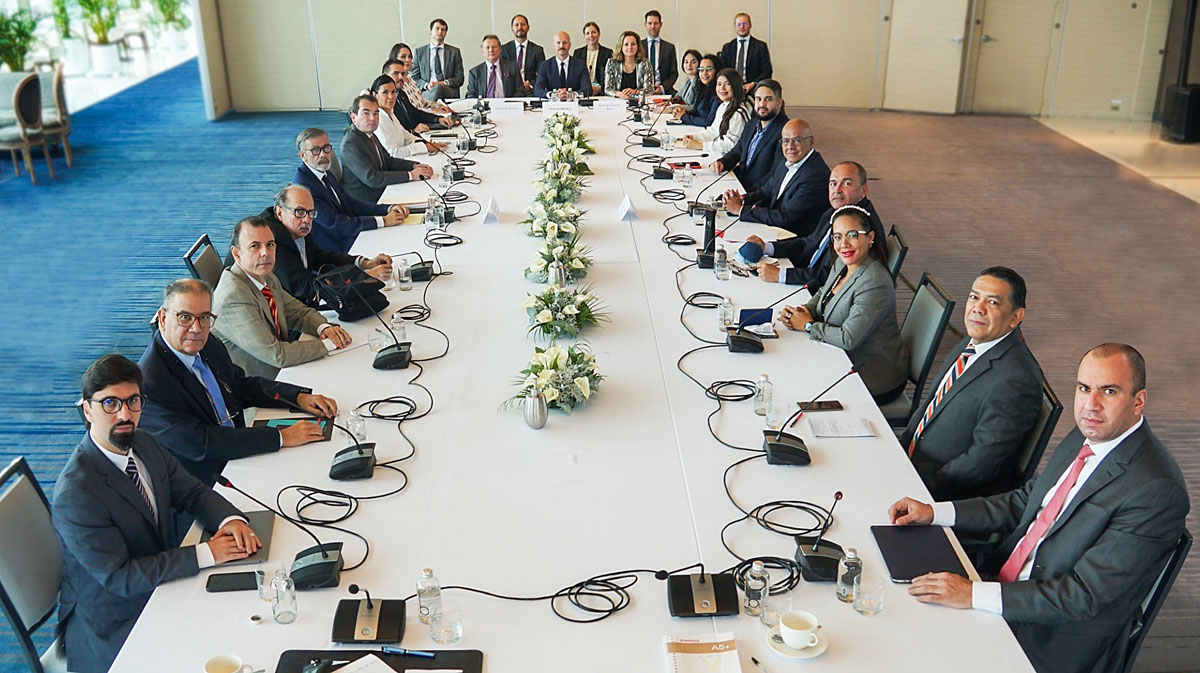
Figure 3.6 For several years, Norway facilitated negotiations between the government and the opposition in Venezuela on a political and inclusive solution to the conflict, based on a desire from both parties. Photo from the signing of the memorandum of understanding that the parties signed in Mexico City in August 2021.
Photo: Ministry of Foreign Affairs
The war between the Sri Lankan authorities and the Tamil Tigers (LTTE) cost an estimated 80,000–140,000 civilian lives over a quarter of a century.13 The negotiations began as indirect and secret. Norway facilitated a comprehensive ceasefire agreement that halted much of the violence and laid the foundation for several rounds of negotiations on a political solution. Despite considerable will for a period, both sides remained beholden to short-term political considerations. The parties also did not make sufficient compromises, and failed to anchor visions of profound changes well enough within the population. After the 2005 election, the authorities increasingly focused on military means. Despite repeated attempts by Norway and the international community to bring the parties back to the table, the war ended in military victory for the government forces. In early 2009, government forces killed at least 40,000 civilians, mainly Tamils with whom the Tamil Tigers had entrenched themselves on a narrow strip of land by the sea.

Figure 3.7 Minister of Constitution and chief negotiator G.L. Peiris from the Sri Lankan authorities and chief negotiator Anton Balasingham from the Tamil Tigers greet each other, with Norway’s State Secretary Vidar Helgesen in the role of facilitator, during the first round of peace negotiations for Sri Lanka in Thailand in September 2002.
Photo: Stephen Shaver, POOL/AP Photo
In Sri Lanka, Norway experienced how sensitive it is to facilitate impartial mediation between a government and a non-state armed group. The third-party role required patience and the ability to withstand significant criticism from parts of Sri Lankan society. Norway cooperated closely with India, Japan, the EU, and the United States during the peace process in Sri Lanka. The humanitarian suffering and the country’s strategic location in the Indian Ocean between Europe, India, and China contributed to the international community’s strong support for the peace process and to it regarding Norway’s role as important. At the same time, international support and pressure were not sufficient to keep the process going when the parties’ own faith in a negotiated solution waned.14
Norway has facilitated negotiations on its own, such as in the Philippines, Venezuela, and Sri Lanka, and jointly with other states, such as Guatemala and Colombia. Regardless of whether we are working alone or with others, it is important to have strong international support, in the form of groups of friends, observers or other international constellations. It is often necessary to have a strong player behind you, who can put pressure on the parties or offer incentives if needed, in order to increase the chances of a solution. The United States has taken on this role in many processes.
3.5.4 Processes formally led by others
The last category deals with work where the Norwegian involvement has often been extensive, but in processes formally led by others. Norway’s role has primarily been to provide a professional framework and safe haven for sensitive conversations, or to assist with advice to parties and expertise as requested. A recent example is in the ceasefire negotiations on Gaza after 7 October 2023, where Norway has been closely involved in the negotiations on the release of hostages and has supported the parties and the formal mediators through the sharing of assessments and information.
Another example is the negotiations that ended the second civil war between North and South Sudan. The war lasted from 1983 to 2005 and was the longest in Africa’s history. An estimated two million people were killed in acts of war or died of hunger and disease as a result of the war.15 Twice as many were forced to flee. IGAD, a regional organization consisting of the countries of the Horn of Africa, led the negotiations that led to the signing of the Comprehensive Peace Agreement in 2005. Norway was actively engaged through the troika cooperation between Norway, the United States, and the United Kingdom, where we contributed expertise and advice. The relationship with the Sudan People’s Liberation Movement/Army (SPLM/A), which largely represented the population of South Sudan, was close. This was partly due to the Norwegian organizations Norwegian People’s Aid and Norwegian Church Aid, which had assisted the population in need during the civil war. After the signing, Norway supported the implementation of the agreement.
The peace agreement succeeded in ending Africa’s longest and bloodiest war, and provided an opportunity to address the causes of the conflict and create a just Sudan. That did not happen, for which the parties themselves primarily must take responsibility. The resistance to implementing the necessary profound changes in Khartoum contributed to South Sudan’s insistence on holding a referendum on secession or continued unity. Over 98 per cent voted for secession and South Sudan became an independent country on July 9, 2011. Since then, Sudan and South Sudan have been marked by war and conflict, with tragic consequences for the civilian population in both countries. This shows how important it is that an agreement is firmly anchored among local powerholders.
Textbox 3.5 The Troika cooperation between Norway, the United States, and the United Kingdom
The Troika cooperation is unique in Norwegian peace diplomacy and has enabled Norway, the United States, and the United Kingdom to work closely together on conflict resolution in the Horn of Africa for decades. The cooperation was developed through efforts to support the regionally-led peace process between North and South Sudan. This experience has been important for Norway during its two terms on the UN Security Council. The cooperation between the three countries is based on a common set of core values, but the countries are also different and have complemented each other. The influence of the United States on the parties has been important. Britain was a member of the EU and had in-depth knowledge of the Sudanese state apparatus, a legacy of the Anglo-Egyptian Condominium of which Sudan was a part. Norway’s network among Sudanese civil society actors and public engagement in Norway have both been a strength in our contribution.
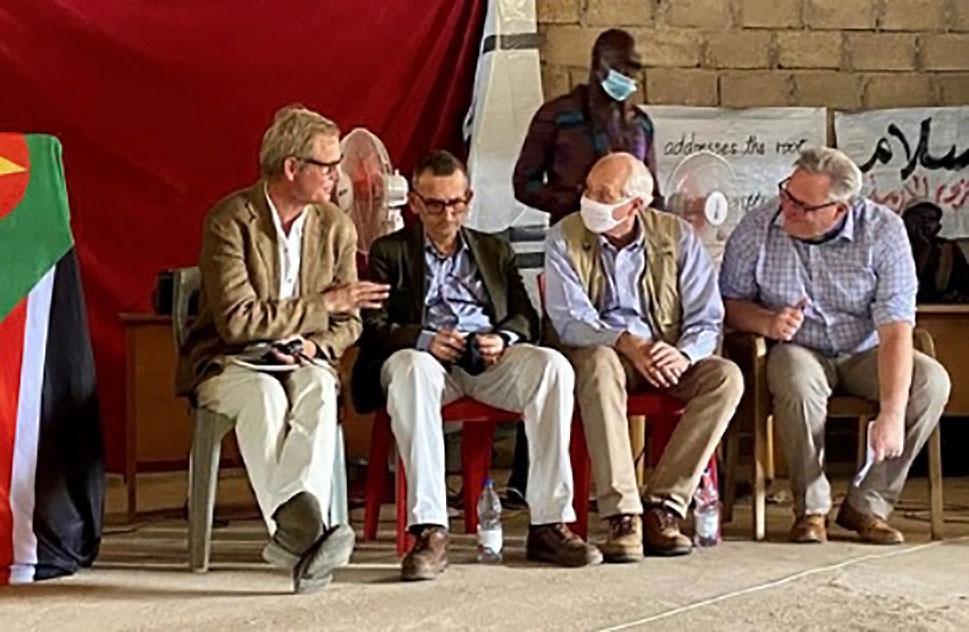
Figure 3.8 A visit to Kauda in Sudan in 2021 by Troika representatives from Norway, the United States, and the United Kingdom, in addition to the Special Representative of the UN Secretary-General in Sudan.
Photo: Ministry of Foreign Affairs
Another example is from Spain. The Basque rebel movement ETA was established in 1959 and was responsible for a number of major terrorist attacks and murders that continued after the transition to democracy in 1976. Governments of varying parties had sought dialogue with the movement without success. In 2005, the Spanish government informally asked the Centre for Humanitarian Dialogue (HD, see Chapter 6) for assistance in establishing contact with the movement with a view to laying the foundations for a solution. The process was politically controversial in Spain, and the authorities wanted a discreet non-governmental international facilitator such as HD to make it possible to keep a certain distance from the talks and avoid internationalization. At the same time, there was a need for support from states for the process. The Norwegian support was provided at the request of the Spanish government and developed over time. Together with Switzerland, Norway contributed safe meeting places, transport, facilitation of conversations, and as a witness. Norway has not previously discussed its role publicly. However, leaders from both major government parties have publicly confirmed Norway’s role in their memoirs. Along the way, the experiences of the British government and the Irish Republican Army (IRA) from the peace process in Northern Ireland were also drawn upon.
The ETA process is an example of how a non-governmental international facilitator such as HD may need assistance from a state for complementary roles. This ‘hybrid diplomacy’ was critical for the decision by the parties to sit down at the negotiating table. There were several breaks in the negotiations along the way. Police efforts to counter the movement continued in parallel with the talks, and ETA did not cease its armed activity. A final agreement was never reached. However, the combination of pressure from the Spanish authorities and facilitation of talks with support from Norway created a dynamic that contributed to ETA unilaterally declaring in 2011 that it was ending its armed activity. In 2018, ETA went a step further and unilaterally dissolved the organization. ETA was removed from the EU’s terrorist list in 2022. Parts of the Basque political movement now exist as legal political parties.

Figure 3.9 Norway was strongly involved in the peace process between North and South Sudan. The photo is taken during the three-year anniversary celebration of the peace agreement in South Sudan in 2008.
Photo: Heidi Elburgi Johansen/Ministry of Foreign Affairs.
Footnotes
Harpviken, K. B. & Tryggestad, T. L. (2025). Norsk fredsengasjement: Spenning mellom idealisme og interesser? I Svendsen, Ø. & Haugevik, K. (Red.) Dilemmaer i norsk utenrikspolitikk (1. utg). Cappelen Damm Akademisk. (Norwegian Peace Engagements: Tension between Idealism and Interests?’ I Svendsen, Ø. & Haugevik, K. (Eds.). Dilemmas in Norwegian Foreign Policy (1. edition). Cappelen Damm Akademisk. (in Norwegian only)
Pharo, H. Ø. (2023). Folkeforbundet og De forente nasjoner: Stormakter og småstater i en ny verdensorden – og Norges plass i den. I H. Ø. Pharo, Ø. Østerud, J. Simensen og S. Engh (Red.), Kampen for en ordnet verden: Folkeforbundet, FN og Norge. (‘The League of Nations and the United Nations: Great Powers and Small States in a new World Order – and Norway’s place therein’. I H. Ø. Pharo, Ø. Østerud, J. Simensen and S. Engh (Eds.), Kampen for en ordnet verden: Folkeforbundet, FN og Norge. (‘The Struggle for an Orderly World: The League of Nations, the UN, and Norway’) Dreyers forlag. (in Norwegian only)
Tamnes, R. (1997). Norsk utenrikspolitikks historie: Bd. 6. Oljealder. 1965–1995. (The History of Norwegian Foreign Policy: vol. 6. The Age of Oil. 1965–1995’. Universitetsforlaget. (in Norwegian only)
Egeland, J. (1989). Impotent superpower – potent small states: Potentials and limitations of human rights objectives in the foreign policies of the United States and Norway. Oxford University Press.
Report No. 40 (2008–2009) to the Storting on Norway’s Humanitarian Policy. Ministry of Foreign Affairs. https://www.regjeringen.no/no/dokumenter/stmeld-nr-40-2008-2009-/id563842/ and the Ministry of Foreign Affairs. (2008). Norway’s Humanitarian Policy. https://www.regjeringen.no/globalassets/upload/ud/vedlegg/hum/hum_strategi_web08.pdf (in Norwegian only)
Nissen, A. (2015). The Peace Architects: Norwegian Peace Diplomacy Since 1989 [PhD thesis]. Department of Archaeology, Conservation and History, University of Oslo.
Report No. 15 (2008–2009) to the Storting on Interests, Responsibilities and Opportunities – Main Lines of Norwegian Foreign Policy. Ministry of Foreign Affairs. https://www.regjeringen.no/no/dokumenter/stmeld-nr-15-2008-2009-/id548673/
Report No. 1 (2024–2025) to the Storting on the National Budget 2025. Ministry of Finance. https://www.regjeringen.no/no/dokumenter/meld.-st.-1-20242025/id3056833/ and Prop. 1 S Appendix 2 (2024–2025) For the financial year 2025 – Amendment of Prop. 1 S (2024–2025) National Budget 2025 and Prop. 1 LS (2024–2025) Taxes and duties 2025 (balancing). Ministry of Finance. https://www.regjeringen.no/no/dokumenter/prop.-1-s-tillegg-2-20242025/id3072373/
Calculation from figures from the National Budget 2025 (blue book, balanced budget adopted by the Storting in the autumn of 2024). The total amount for the aid budget (balanced budget 2025) is NOK 58,044,000,000 and the total for Chapter 151, item 70 peace and reconciliation is NOK 395,260,000.
The Norwegian Police Security Service (PST). (2025). National Threat Assessment 2025. https://www.pst.no/globalassets/2025/nasjonal-trusselvurdering-2025/nasjonal-trusselvurdering-2025_no_web.pdf (in Norwegian only)
Ministry of Foreign Affairs. (December 12, 2023). Condemning attack on Norwegian ship in the Red Sea. Regjeringen.no. https://www.regjeringen.no/no/aktuelt/fordommer-angrep-pa-norsk-skip-i-rodehavet/id3018236/
NOU 2016: 8 A Good Ally: Norway in Afghanistan 2001–2014. https://www.regjeringen.no/no/dokumenter/nou-2016-8/id2503028/ pg.155
According to the UN, at least 100,000 killed. The number of casualties is uncertain, as no aid organisations or other international actors were allowed into so-called safe zones during the final phase of the war in 2009, and in 2011 the UN estimated the total number of civilians who died during the last months of the war at 40,000. Around 330,000 were trapped in the so-called safe zones. Petrie, C. (2012). Report of the Secretary-General’s Internal Review Panel on the United Nations Action in Sri Lanka. https://digitallibrary.un.org/record/737299?ln=en&v=pdf
Sørbø, G.M., Goodhand, J., Klem, B., Nissen, A.E. and Selbervik, H. (2011). Pawns of peace. Evaluation of Norwegian Peace Efforts in Sri Lanka, 1997–2009 (Evaluation Report no. 5/2011). NORAD. https://www.cmi.no/publications/4233-pawns-of-peace-evaluation-of-norwegian-peace
Center for Preventive Action (2025, April 15). Civil War in Sudan [Global Conflict Tracker]. https://www.cfr.org/global-conflict-tracker/conflict/power-struggle-sudan