Introduction
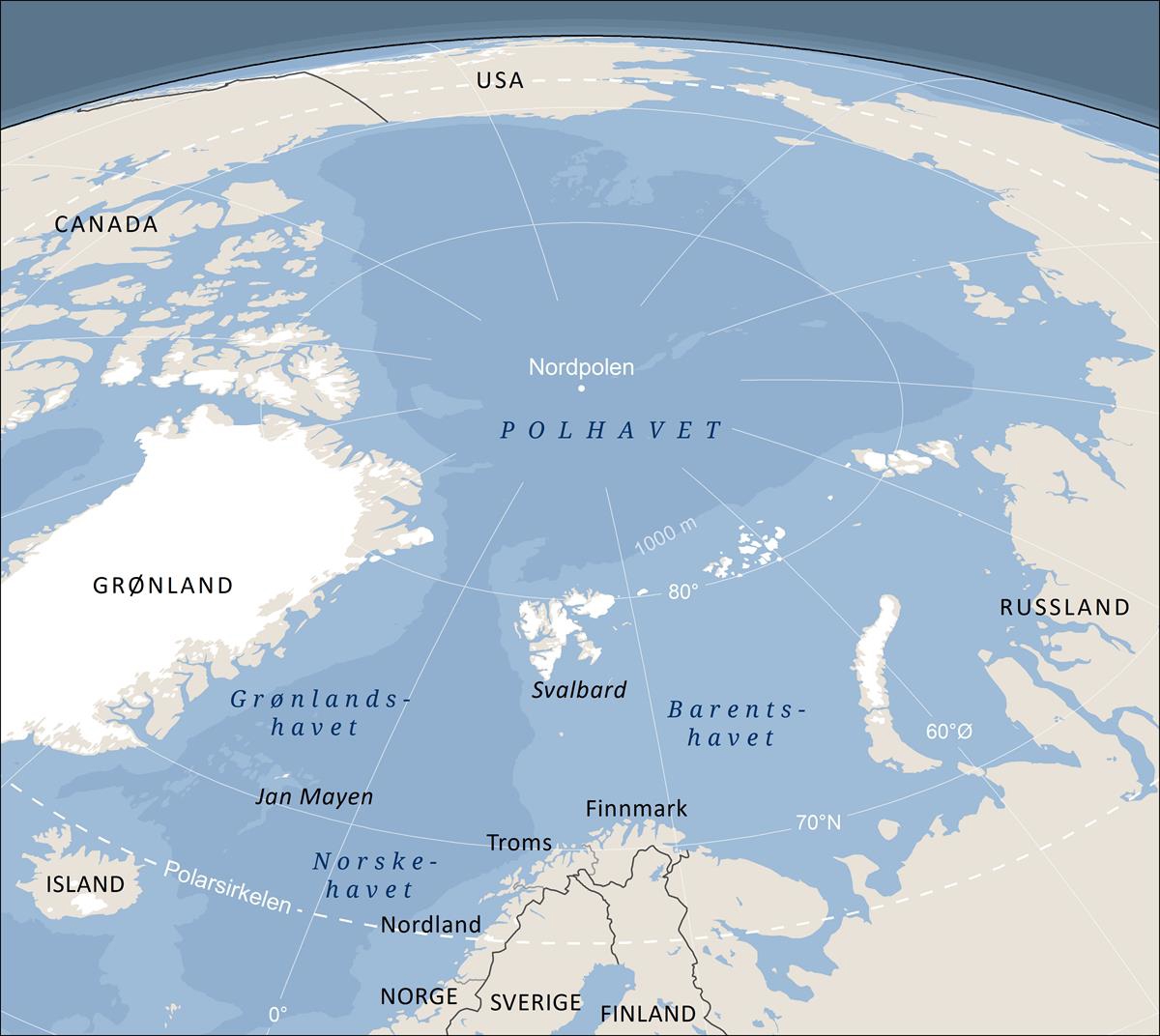
Norwegian Polar Institute 2025
Russia’s illegal war of aggression against Ukraine is the greatest security threat facing Europe and Norway today. The war is having a direct impact on the business sector and communities in the north. Maintaining settlement patterns, activity levels, and security and preparedness along Norway’s border and the external border of both NATO and the Schengen area is a matter of strategic national importance. The initiatives Norway implements in the north are of both national and international significance.
At the same time, these initiatives have clear consequences for daily life in North Norway. Urban settlements in the north play an important role as regional social and economic centres. But local communities in North Norway are often far apart, face demographic challenges and have a limited labour market. Reduced access to fisheries resources is placing further pressure on the region.
International interest in the Arctic is growing as a result of the deteriorating security situation, heightened global competition and the dramatic pace of climate change in the region. The major planned defence investments, combined with the initiatives to expand space-related activities on Andøya and boost electricity production and industrial activity in Finnmark, will bring investments in the billions to the region. This will promote job creation, business activity, improvement of infrastructure and local development.
The aim of Norway’s High North strategy is to ensure that North Norway is home to vibrant local communities where people want to live, and that enhance our national security and preparedness.
This High North strategy is based on Norway’s fundamental security interests as defined in our National Security Strategy: a free and independent Norway, a robust democracy, a safe society with a high level of trust, an open and adaptable economy, allied solidarity and unity in Europe, and a world that seeks solutions based on international law.
This strategy is also underpinned by Norway’s climate policy and indigenous policy. Norway has a statutory target of becoming a low-emission society by 2050. However, climate risk and the need for climate change adaptation must be properly taken into account in planning processes. The importance of Sámi culture as a valuable part of Norway’s historical heritage must also be recognised.
The geographical scope of this strategy comprises North Norway and the circumpolar Arctic. The main focus is on North Norway, Norway’s ocean areas and the northern parts of the neighbouring Nordic countries. Svalbard is only mentioned in this strategy where specifically relevant. The Government’s general Svalbard policy is set out in a dedicated white paper that was presented in 2024.
The Government has identified five priority areas:
1. Norway’s freedom of action and influence in the High North
We will uphold Norway’s sovereignty and sovereign rights and promote stability by maintaining a civilian and military presence in the region and strengthening total preparedness and situational awareness. Research and knowledge provide the basis for good policy development, sound management and sustainable business activities. It is of fundamental importance that developments in the Arctic are in line with international law. We will continue to support multilateral forums such as the Arctic Council. We will strengthen cooperation within the northern Nordic region and cooperation with our Nordic Allies, with the US and Canada, and with key European Allies and other non-Arctic countries where this is in Norway’s interests.
2. A total defence that provides security, promotes activity and enhances preparedness
The planned defence investments in North Norway will not only provide security, but will also promote job creation, innovation and value creation. The business sector plays a vital role as a supplier to the Norwegian Armed Forces and as a driver of new growth, technology and ideas. Society’s ability to deal with crises, war and unforeseen events is the cornerstone of our total preparedness. The objective is to increase national control and ensure a coordinated national effort to keep Norway safe.
3. Vibrant, safe communities
Cooperation between the central government administration, the counties and the municipalities, and innovation in service provision and social development will be vital in the years ahead. Regional cooperation with neighbouring Nordic countries will also be important for exchanging experience and building capacity and knowledge. The aim is for people to be able to study where they live and work, for children to have a positive environment to grow up in, and for young people to view the north as an attractive place to live. Vibrant communities in the north make Norway stronger.
4. Infrastructure to connect communities
Access to electronic communications and an efficient, accessible transport system are vital for building attractive, dynamic local communities in the north. In view of the long distances between communities and limited resources, priority must be given to measures that strengthen preparedness and promote settlement growth and business development. We will increase mobility across national borders in the north and develop infrastructure that enhances our total preparedness.
5. Business development to promote value creation
A profitable and diverse business sector in the north is important in terms of settlement patterns, value creation, and preparedness and security, both for Norway and in a wider European context. Norway’s rich natural resources, both onshore and offshore, are our greatest comparative advantage. The initiative to boost electricity production and industrial activity in Finnmark and the major effort to strengthen our national defence will promote development in the north. We will also work towards restructuring and growth in the seafood industry, which is a mainstay of many local communities.