Norway’s freedom of action and influence in the High North
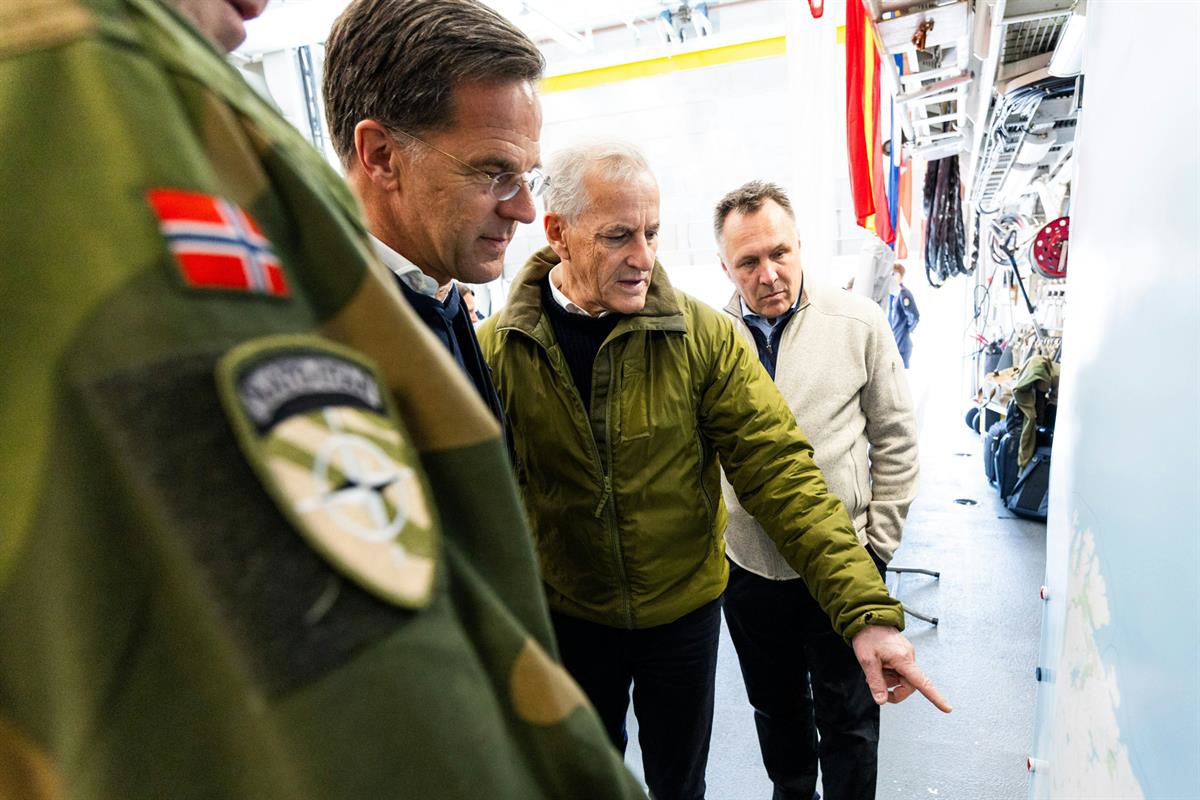
Photo: NATO
Safeguarding Norwegian interests in the High North will be a more demanding task for Norway in the years ahead. Upholding Norwegian sovereignty and sovereign rights will require a strong defence capability, cooperation with Allies, physical presence, knowledge, and sound administration. The legal framework that regulates borders, activity and public administrative practice must be maintained. We must support forums and cooperation arenas that address cross-border issues, including international climate and environmental obligations.
Russia’s war of aggression against Ukraine is a serious violation of international law and a threat to security across Europe. It is having a direct impact on the Norwegian High North and Norway’s neighbouring areas and has disrupted most activities involving cross-border cooperation with Russia. Norway will pursue a coherent, consistent and predictable Russia policy. In order to safeguard Norwegian interests and promote stability and security in the High North, there is still a need to maintain contact with Russian civilian and military authorities in areas such as border administration, search and rescue, and fisheries management in the Barents Sea.
With the defence of national interests as the point of departure, it is essential that Norway has the knowledge needed and ability to influence future developments, in an uncertain and unpredictable world. Shrinking sea ice cover and greater accessibility are increasing the strategic importance of the region. In light of this, Norway needs to strengthen its preparedness, situational awareness and response capacity, in collaboration with Allies, using both military and civilian resources. Norway is monitoring developments in maritime traffic through the Northeast Passage and in the sea areas off Norway, including movements of the Russian shadow fleet.
For Norway, it is of fundamental importance that developments in the Arctic are in line with international law and adhere to international rules and norms. The 1982 UN Convention on the Law of the Sea (UNCLOS) constitutes the basic international legal framework for all maritime activity, including in the Arctic. The Convention establishes rights and obligations pertaining to freedom of navigation, marine scientific surveys, exploitation and protection of the marine environment and its resources, delimitation of maritime areas, delineation of the outer limits of the continental shelf and other uses of the sea.
Multilateral cooperation in forums such as the Arctic Council will continue to be a priority for Norway moving forward. Norway is to be a clear and active voice in NATO and will work to enhance knowledge of the Arctic region, including the Norwegian High North, within the Alliance. We will seek to ensure that the Allied presence in the north is adequately adapted to Norwegian conditions and based on our situational awareness. The Government will work to incorporate issues relating to the Arctic into the development of European foreign and security policy, promote closer cooperation between the EU and NATO in the north, and help shape relevant EU initiatives.
Norwegian security and sovereignty
The Government is strengthening Norway’s defence capability in the north through increased national investments and close cooperation with Allied countries. In the region near the border with Russia, steps are being taken to improve infrastructure, surveillance and mobility in collaboration with Sweden and Finland. Border controls are being strengthened, and new sensors and surveillance systems are being used to enhance security along the border with Russia. The Government is working to improve maritime security and situational awareness in the region by investing in new military vessels, undersea capabilities, intelligence, surveillance and closer civilian-military and public-private cooperation. Digital and space-based surveillance capabilities in the High North will be strengthened. The Government is also strengthening Norway’s ability to counter complex threats such as cyberattacks, disinformation, sabotage and the use of migration as a tool to exert pressure on the Schengen external border. The Coast Guard and other authorities work together to ensure responsible, integrated resource management and to uphold Norway’s sovereignty and sovereign rights, using, among other things, satellite solutions and by maintaining a physical presence. Norway will also strengthen its capacity to protect and repair critical infrastructure on the Norwegian continental shelf, in cooperation with Allies.
Norway will carry out broader, more predictable controls of foreign investments. Actors involved in the delivery of critical services or in vulnerable value chains must exercise due diligence with regard to investments from countries with which Norway has no established security cooperation.
International and Nordic cooperation
Norway will be a strong voice in international processes relating to the environment, ocean management and use of resources in the Arctic. The Arctic Council is the most important international forum for knowledge production, cooperation, dialogue and diplomacy in the Arctic. The four main priority areas of the Norwegian chairship of the Arctic Council (2023–2025) were the oceans, climate and environment, sustainable economic development and people in the north, with Arctic youth and indigenous peoples as cross-cutting priorities.
Norway gives priority to maintaining close dialogue with Allies in and outside the region, and will contribute actively to NATO processes, sharing its insight into Russian and Chinese activity in the north. We will work to reduce the risk of conflict and misunderstandings that can lead to escalation and heightened tensions, and to enhance understanding among our Allies of our national positions.
Norway will further develop bilateral cooperation on Arctic affairs, giving priority to the Nordic countries, other Arctic Allies and key European Allies, to enhance joint situational awareness and promote Norwegian interests in the north. We will also strengthen collaboration with other non-Arctic countries, in particular countries that are actively involved in knowledge development and environmental cooperation relating to the Arctic and that recognise the importance of a rules-based world order. A prerequisite for such collaboration is that it is in line with national security interests. Norway will follow a restrictive policy with regard to Chinese activity in the High North.
Cooperation in the northern Nordic region will be strengthened. Cross-border cooperation schemes adapted to a new era should be established between Norway, Sweden and Finland. In Norway’s view, such initiatives must be based on local and regional needs, with the clear support of the national authorities.
Given the current security situation, it is essential to strengthen Norway’s capacity to receive Allied reinforcements. Harmonised border-crossing systems are important in order to improve military mobility. We will also harmonise legislation to facilitate labour mobility and cross-border services and strengthen cooperation to limit adverse impacts on the environment and safeguard the interests of indigenous people.
Norway as a polar nation
Norway’s role as a polar nation is underpinned by a knowledge-based Arctic policy. Norway has a number of leading research communities and gives priority to maintaining research infrastructure, strong institutions and international cooperation on climate issues, the environment and sustainable development. By working together, the research and business communities can also take full advantage of Norway’s geographical location in the Arctic and use their knowledge to find solutions to national and global challenges.
Svalbard provides a basis for crucial international cooperation on environmental, climate and polar research. The University Centre in Svalbard (UNIS) plays a key role in educating future polar researchers and offers programmes to provide representatives of the public administration and other sectors with insight into polar issues. The new research office established in cooperation between the Research Council of Norway and the Norwegian Polar Institute will strengthen Norwegian leadership of research activities in Svalbard.
The Government will strengthen Norwegian research efforts in Arctic waters. Funding has been allocated to the Research Council of Norway to support the joint efforts of the 18 research institutions participating in the new 10-year Arctic Ocean 2050 research programme, where the research vessel Kronprins Haakon will have a central role.