2 Introduction
Wellbeing is about having a good life. It involves shared values, societal benefits and social justice. A high level of wellbeing is a shared value across groups, municipalities, regions and countries. High wellbeing promotes health and mastery, and it can strengthen resilience in the face of various burdens and stress. High level of wellbeing in the population has positive consequences for society as a whole: This includes less sick leave absence, a lower mortality rate and better life outcomes for each individual. Emphasising wellbeing in policy development can help equalise social differences and create a fairer and more just society. Wellbeing can be considered a resource for society as it can better equip the population to meet various challenges.
The central government has a key role in ensuring that its citizens have the necessary conditions to live a dignified and fulfilling life, but it should be reluctant to define what constitutes a good life. Therefore, the National Wellbeing Strategy does not define any specific form of lifestyle as being the correct one. The measurement system includes both objective and subjective indicators of wellbeing (1). Objective indicators are what we today generally view as welfare factors – such as the work and study environment, housing and communities, and financial and material situations. Subjective factors include, for example, meaning and mastery, a sense of security and belonging and satisfaction. Resources and material assets are fundamental parts of wellbeing, and economic concerns weigh heavily when measuring wellbeing. There are correlations between financial situations and mental health, including suicide. Social differences in economics are a fundamental factor behind social differences in wellbeing.
Figure 2 presents examples of subjective and objective components included in wellbeing measurements.
The strategy is based on the perspective of how we can better facilitate the provision of the individual opportunities for a good life.
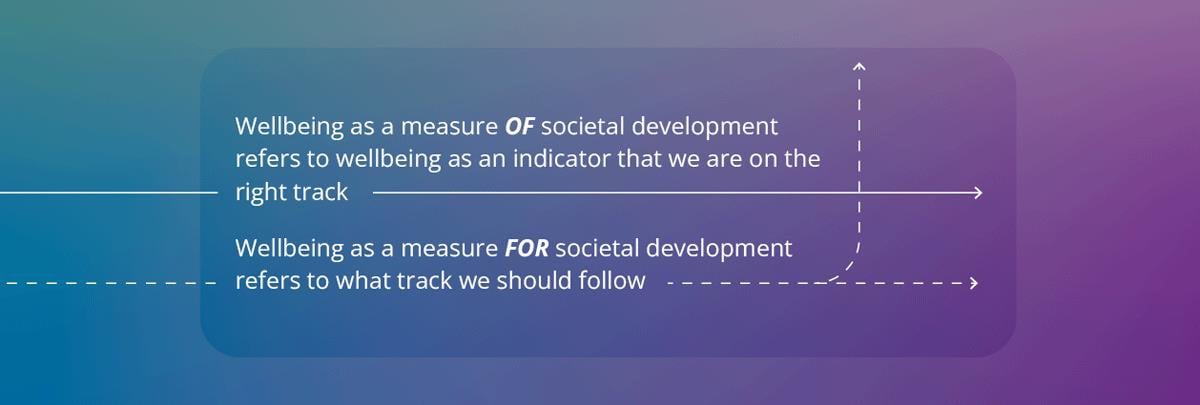
A great deal of work is being done in today’s administration with relevance for the wellbeing strategy, and wellbeing is mentioned in a number of white papers, action plans and strategies. The decision to prepare a National Wellbeing Strategy for Wellbeing as a measure of societal development and to equalise social differences in wellbeing is anchored in the white paper on public health, Meld. St. 15 (2022–2023). (2). “Wellbeing as a measure of societal development” refers to wellbeing as an indicator that we are on the right track. “Wellbeing as a measure for societal development” refers what track we should follow.
The Ministry of Health and Care Services has led the work on the strategy, which has been developed with input from a working group comprised of representatives from the Ministry of Health and Care Services, the Norwegian Institute of Public Health, the Norwegian Directorate of Health and Statistics Norway, as well as Menon Economics. In addition, several government sectors, both at the ministry and directorate level, the Norwegian Association of Local and Regional Authorities and representatives from county governor’s offices, county authorities, municipalities, as well as voluntary and non-profit organisations have contributed their input. The strategy was sent out for input in March 2024. Input has been important for the development of the strategy itself but it also forms the foundation for further work on an action plan during the 2025–2030 strategy period.
2.1 Goals for the National Wellbeing Strategy
With this National Wellbeing Strategy, the Government seeks to lay the foundation for developing goals and instruments to ensure a societal development that facilitates equal opportunities for a good and meaningful life and that ensures a good and even distribution of wellbeing in the population. The aim is for knowledge from wellbeing measurements in the population, wellbeing indicators and knowledge of how wellbeing is distributed in the population to be used to a greater extent in political decision-making processes. In this way, measures can be developed that are more in line with the citizens’ own needs. This in turn can contribute to a fairer society and a stronger democracy.
At the same time, it is important to recognise that there will also be challenges with using wellbeing as a measure of and for societal development. Among other things, this must be organised in a manner that allows for different life choices. Wellbeing as a measure must always be weighed against different political priorities and values. Wellbeing consists of both objective and subjective components (see Figure 2), and it is the objective components in particular that can be influenced through policymaking. The subjective components are fundamentally difficult to measure and are also more difficult to emphasise in policy development as they will depend, among other things, on the expectations and starting points of individuals and groups. These are factors that will be important to take into account in future work on wellbeing as a measure of and for policy development.
The strategy will highlight how the concept of wellbeing can be used across sectors and form the basis for prioritisations in national and local budget processes. To achieve this, there is a need for national, regional and local measurements of the population’s wellbeing and an indicator framework that allows us to monitor developments. These are necessary but not sufficient conditions for achieving the goal of wellbeing as a measure of and for societal development. Other instruments include acts, regulations, guidelines and supervision that ensures sufficient compliance with this goal in all sectors. At national, regional and local levels, it is necessary to ensure an economic structure and governing tools to achieve a stronger correlation between economic development and the population’s wellbeing. The pathway from measurements to policymaking is discussed in more detail in Chapter 5.2.
With the National Wellbeing Strategy, Norway also wishes to contribute to the work of developing a Nordic model both for measuring wellbeing and for how wellbeing can be used as a measure of and for societal development. The Nordic co-operation is described in Chapter 6.1.
2.2 Background of the National Wellbeing Strategy
Wellbeing does not necessarily coincide with economic prosperity. Over the past decade, there has been a growing interest and commitment to wellbeing both internationally and in Norwegian professional environments. A growing number of countries are now using their populations’ wellbeing as a supplementary measure of societal development. The UN (3) points out that the reason for the growing global interest stems from the need to address the complex and interwoven challenges and crises facing the world in the 21st century. Examples include climate challenges and environmental degradation, pandemics, social differences and rapid technological changes. When encountering these issues, politicians and decision-makers need a tool that encompasses phenomena that have value for people’s lives and thus also for society, and which are to a lesser extent linked to economic growth. This can promote decision-making that is in the best interests of the people, the planet, peace and partnership.
In Norway, wellbeing as a measure of societal development was mentioned in the National Budget for 2010 (4) and later in the white paper Public Health Report: Good health – a common responsibility (Meld. St. 34 (2012–2013)) (5), where the need to develop better measures of societal development and the term “gross national wellbeing” was used. The white paper on public health focussing on mastery and opportunities (Meld. St. 19 (2014–2015)) (6) also mentions the need for data and indicators that cover various aspects of wellbeing. The need to develop good measures and indicators of wellbeing is also mentioned in Long-term Perspectives on the Norwegian Economy 2017 (Meld. St. 29 (2016–2017)) (7). Follow-up of these reports resulted in the report Gode liv i Norge [Good lives in Norway] (available in Norwegian only) in 2016 (8) about measuring wellbeing. The report was prepared by the Norwegian Directorate of Health in collaboration with Statistics Norway, the Norwegian Institute of Public Health and the NOVA/OsloMet Norwegian Social Research institute. The primary recommendation in the report is that comprehensive information on wellbeing should be included as a basis for both health policies and other policy areas. Based on this report, a measurement system was developed and tested (9), and Statistics Norway conducted the first national measurement of the population’s wellbeing in 2020. National surveys conducted in 2021, 2022, 2023 and 2024, in addition to a number of surveys conducted in counties and municipalities all provided information on wellbeing at a local level. Both national and regional surveys indicate clear social inequities in wellbeing that is important to address. The national surveys are the mainstay of work on wellbeing in Norway.
Health-related wellbeing has also been a key issue in the development of health economic analyses over the past 20 years, with health economic research groups at universities playing a key role. Important questions in health economics research have included whether “years of life lost” or “years of life gained” is too narrow a measure of losses and gains from introducing new treatment methods, and how wellbeing years can be measured and valued. A description of how health and wellbeing can be included in assessments can be found in Chapter 5.2.5.
Developments in Norway have paralleled those in a number of other countries. Through its Better Life Initiative from 2011, the OECD has been an important driving force in efforts to put wellbeing on the political agenda. In 2019, New Zealand became the first country in the world to launch a Wellbeing Budget and now publishes this annually as an important part of its national budget (10). Countries such as Scotland, Iceland, Finland and Wales are now following New Zealand in its transition to a wellbeing economy. This is described in more detail in Chapter 5.2.6.
The Government seeks to develop a model that emphasises wellbeing as a measure of and for societal development and that can shift wellbeing from a subjective and individual condition or experience to a collective value that the authorities can promote, facilitate and manage at the societal level to a greater extent than today.
2.3 What is wellbeing?
Wellbeing is about what really matters in people’s lives. The term is used to describe both subjective experiences and objective conditions. The subjective wellbeing (inner experiences) is about how life is experienced by the individual. It includes both assessments of life (e.g. life satisfaction) and functioning in daily life (e.g. sense of mastery and meaning), as well as positive and negative emotions (such as happiness and sadness). The objective wellbeing (external factors) deal with especially important aspects of the life situation, such as freedom, security, health, community and opportunities for self-development (11).
The term quality of life can be used in other countries, which can also be defined as wellbeing, wellness and contentment. In our work on the national strategy, we have decided to consistently use the term wellbeing. The concept of wellness emphasises that a good life involves both inner experiences and actual conditions. This is consistent with how the term wellbeing is used internationally, for example by the OECD and Eurostat, the European statistics agency. The term wellbeing also emphasises, the quality of the whole life. The fact that the term wellbeing is a concept that can help us to see the totality of people’s lives is also emphasised in the report Livskvalitet – Anbefalinger for et bedremålesystem [Wellbeing – Recommendations for a better measurement system] (available in Norwegian only) (9) and Statistics Norway’s report on the indicator framework (1).
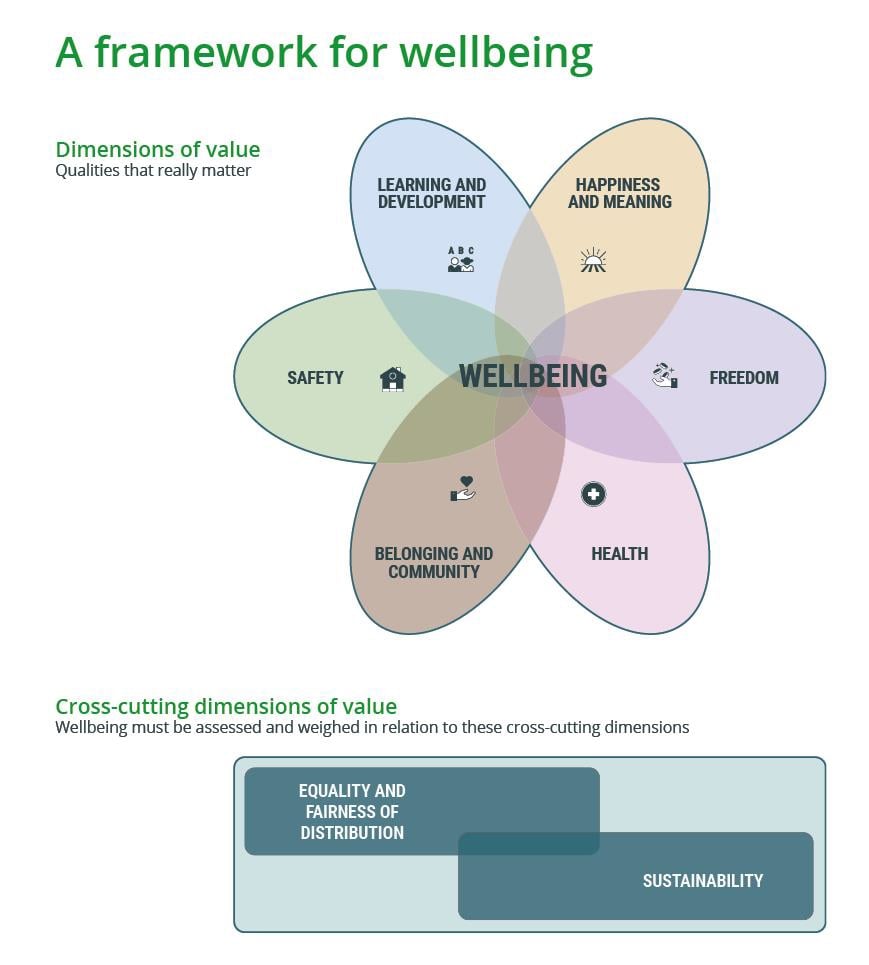
Figure 1. Value dimensions of wellbeing (1)
Design: Thomas Bjørnskau, Statistics Norway
The key components of the concept of wellbeing are illustrated in Figure 1. The leaves of the “wellbeing flower”represent the most important factors, or values, for wellbeing. These values can be regarded as end goals in themselves rather than the means of realising other benefits, and there has been strong support among the population (cf. the Norstat survey, Chap. 4.4).
In the figure, happiness and meaning represents the purely subjective wellbeing such as emotions, meaning and engagement, while freedom represents the ability to realise one’s own objectives and have control over one’s own life. Health includes both one’s own physical and mental health and that of loved ones. The value belonging and community represents the quality of different types of communities and social relationships, such as relationships with family, friends and colleagues, where social support and a sense of belonging are important. The value security represents the absence of various forms of risk and events that can threaten, among other things, physical integrity and the fulfilment of basic needs. Access to social networks and health services are also important aspects of security. Learning and development involves the opportunity to learn and develop, which will enable the person to use their abilities, social skills and knowledge. These values overlap with our common human needs, our physiological needs, the need for security, belonging, self-realisation, mastery and development. When these needs are met, the wellbeing is positively affected. When they are not met, the wellbeing is negatively affected.
The two cross-cutting dimensions in Figure 1 are fundamental values that are of significance for the wellbeing: Equality and fair distribution and the value of sustainable development.
2.4 How do we measure wellbeing?
The values shown in Figure 1 are the starting point for wellbeing measurement tools and indicators as presented in the report Livskvalitet – Anbefalinger for et bedremålesystem [Wellbeing – Recommendations for a better measurement system] (available in Norwegian only) (9) and in the report on an indicator framework for measuring wellbeing in Norway (1). A more detailed description of the indicator framework can be found in Chapter 5.1.
Because wellbeing is about what makes life good and what really matters in people’s lives, there is widespread agreement that measurements of wellbeing must include both subjective and objective components. The national measurements of wellbeing that have been prepared on the basis of the report Livskvalitet – Anbefalinger for et bedremålesystem [Wellbeing – Recommendations for a better measurement system] (available in Norwegian only) (9) include both a set of subjective measures and a set of objective measures. Measurement tools for the objective wellbeing are based on the most important frameworks and arenas for people’s lives (see Figure 2). These include physical and mental health, social community and relationships, work and education, economic and material situations, housing, local environment and safety, society and rights, leisure and culture, knowledge and skills. This list helps to further concretise the six wellbeing values (the wellbeing flower). For example, freedom is about financial situations (economic freedom and action), labour (autonomy in the workplace) and governance (democratic participation and absence of discrimination).
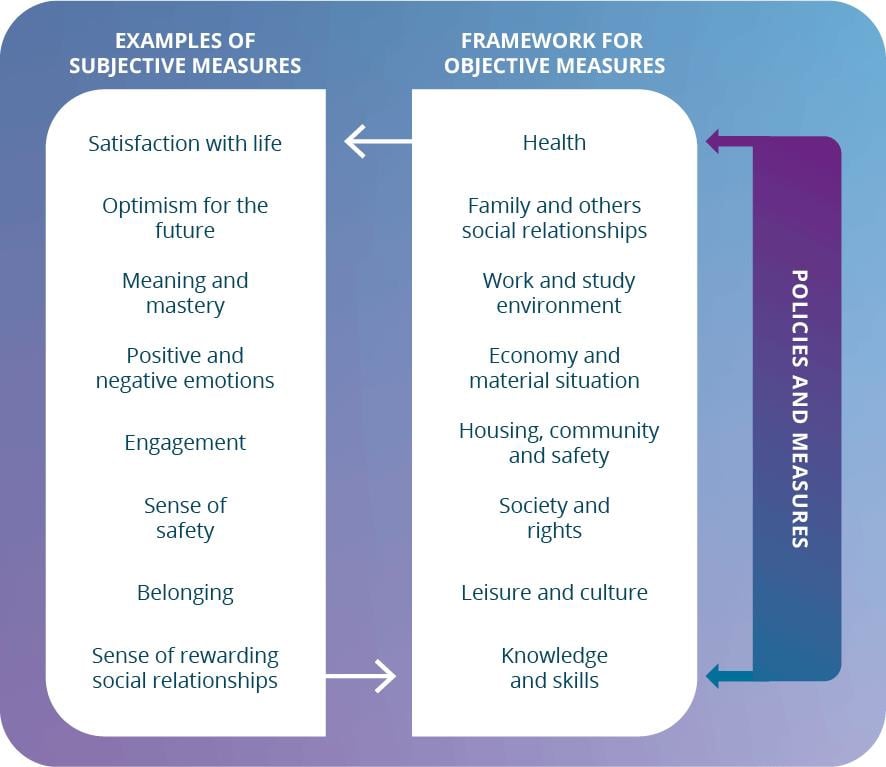
Figure 2. Subjective and objective components of wellbeing measurement
The objective goals affect opportunities for achieving a high subjective wellbeing. For example, good health and sufficient financial resources will lay the foundations for optimism for the future and belief in one’s own coping skills and mastery, which in turn can affect the objective components in a positive way. In this way, the subjective and objective aspects of wellbeing can form part of a mutually reinforcing feedback loop, in either “good” or “bad” circles. Public policies can facilitate good circles by influencing the objective components, for example through welfare, labour market and education policies, legislation, etc.
The components of both the subjective and objective wellbeing have been important in the work of developing an indicator framework that can be used both to monitor developments in the population’s wellbeing and for policymaking.
2.5 Relationship between wellbeing, sustainability and the UN Sustainable Development Goals
Promoting wellbeing at the community level involves creating communities that are active, resilient and sustainable locally, nationally and globally. Wellbeing combines the health, economic, social and environmental dimensions of sustainable development (12). Statistics Norway’s report Forslagtil et rammeverk for måling av livskvaliteti Norge [Proposal for a framework for measuring wellbeing in Norway] (available in Norwegian only) (1) mentions three sustainability imperatives: Satisfy human needs, ensure social justice and respect environmental limits. The key themes within each imperative are eradicating extreme poverty, promoting human opportunities, ensuring political participation and equitable distribution, combating climate change and halting biodiversity loss (13). Satisfying human needs and ensuring social justice is fully in line with the wellbeing perspective. Freedom, security, health and self-development can be viewed as fundamental human needs. Combatting climate change and halting biodiversity loss is important both in its own right and for the wellbeing of both current and future generations (1). The UN emphasises that crises such as environmental degradation, pandemics, climate change, natural disasters and social inequities make it more important than ever to develop decision-making tools that place human needs as the basis for societal development, rather than the goal of economic growth.
The 2030 Agenda is the world’s action plan for sustainable development, concretised through 17 Sustainable Development Goals (SDGs) and 169 targets, and involves achieving sustainable development along three dimensions: economic, social and environmental. The Sustainable Development Goals were adopted at the UN General Assembly in 2015, with the support of all 193 Member States. Norway was a driving force behind the adoption of the goals, and is committed to working to ensure that the world achieves these goals by 2030. The SDGs represent a new and holistic approach to development. They encompass all countries and affect all parts of society. These commitments have been followed up through Mål med mening – Norges handlingsplan for å nå bærekraftsmålene innen 2030 (Meld. St. 40 (2020–2021)) [Meaningful goals – Norway’s action plan to achieve the Sustainable Development Goals by 2030] (available in Norwegian only). Follow-up is led by the Ministry of Digitalisation and Public Governance in collaboration with the other ministries.
Although wellbeing is included as part of the heading in the main goal, nr. 3, there are no indicators linked to this. Based on national indicators and suggested measuring points as set out in Norway’s action plan for achieving the Sustainable Development Goals by 2023, Statistics Norway established a sustainability indicator project in 2022, on behalf of the Ministry of Local Government and Regional Development. Statistics Norway collaborates with all ministries and respective subordinate agencies on the review and assessment of relevant national indicators for the sustainable development goals and targets under these, as a supplement to the UN’s global indicator set. The Ministry of Health and Care Services, which is responsible for working to achieve Sustainable Development Goal 3, “Ensure healthy lives and promote wellbeing for all at all ages”, has involved the Norwegian Institute of Public Health and the Norwegian Directorate of Health in the work on the “sustainability indicator project”. This review has resulted in the most relevant indicators in a Norwegian context for achieving the sub-goals under Goal 3, but there is still a lack of relevant indicators for the main goal itself, Goal 3.
The national work on wellbeing and the development of the indicator framework could be a way for Norway to follow up the Sustainable Development Goals and operationalise the wellbeing section of SGD 3. This can therefore be an important supplement to the global and national indicators.
The Government has decided to present a new white paper on the Sustainable Development Goals in 2025. Wellbeing is discussed in particular in Chapter 4 involving a safe and socially sustainable welfare society.
2.6 The relationship between wellbeing, health and public health
Health and wellbeing are interconnected, and health encompasses somatic, oral, mental and sexual health. Factors that affect health and wellbeing are fairly similar across groups and individuals. The most important determinants of wellbeing largely overlap with the determinants of health, and also largely coincide across groups. In Norstat’s survey (Chapter 4.4), health appears to be one of the most important aspects of a good wellbeing, along with family, security and freedom. Wellbeing surveys in the population also include a number of questions related to both physical and mental health, and health is one of the ten dimensions used by Statistics Norway in its report on a proposal for a framework for measuring wellbeing in Norway (1).
Wellbeing as part of public health work in Norway has over the past decade evolved from being synonymous with subjective and individual experiences to also being a collective societal value that can be used to indicate a desired direction for societal development. Wellbeing is therefore a broader policy area than public health.
At the same time, we know that good and evenly distributed public health is important for achieving the goal of a good and evenly distributed wellbeing. Therefore, wellbeing as a societal goal also emphasises the importance of good public health work at national, regional and local levels.
The principles of public health work are relevant to work on promoting a good wellbeing. This applies, for example, to cross-sectoral co-operation and initiatives across administrative levels, the equalising of differences, efforts aimed at social determinants and ensuring that measures work best for those who need them most (proportionate universalism)1. These are principles that affect the population at large and that will help reduce social differences in both health and wellbeing. There is also cross-party agreement on the three goals of the national public health policy2.
Although many of the principles are the same, the goals for public health work and wellbeing work differ: The goal of public health work is to achieve better health throughout the population, while the goal of wellbeing work is to provide a better overall measure of and for societal development across sectors and policy areas. Public health work will nevertheless be of great importance in promoting wellbeing as a societal goal.