6 Help for individuals
The vast majority of trips abroad proceed without any problems. Sometimes people encounter difficulties in other countries that they are able to resolve themselves or with the help of their insurance company, fellow travellers, friends or family. It is one of the key tasks of the Foreign Service to provide assistance to individuals who find themselves in a difficult situation while travelling abroad, and the missions will seek to provide all the help they can within the established framework. However, it is important that individuals take responsibility themselves by preparing well for their trips abroad and ensuring that they have adequate travel insurance coverage.
It must be made clear that the Norwegian welfare state only covers Norwegian territory and that it is the legislation of the country concerned that applies to Norwegians when they are abroad.
Textbox 6.1 Overstaying a visa
Many countries impose heavy penalties for violation of immigration regulations. Norwegian citizens who travel to another country are guests of that country and are expected to behave accordingly. Individuals who overstay their allotted time in a country are in essence abusing the host’s hospitality.
Norwegian embassies around the world are seeing an increase in the number of cases where Norwegian citizens are required to pay high fines or go through lengthy administrative processes to rectify a situation in which they have stayed in a foreign country beyond their visa expiration date. There have also been cases where Norwegians have been given long prison sentences because they have been unable to pay their overstay fines. Such actions by local authorities are often intended as a deterrent and may be designed to prevent other foreign nationals from abusing the trust they have been shown when they were granted permission to enter a country and stay as a guest.
This chapter provides a brief description of some of the most common types of consular cases involving serious illness and accidents, loss of life, assistance to minors, arrests, imprisonment and other forms of deprivation of liberty. In these types of cases, the Foreign Service primarily provides assistance by offering advice and guidance on the best ways for an individual to deal with the situation. The Foreign Service may also be able to offer some concrete, practical assistance.
The assistance described in this chapter differs from the consular services described in chapter 3.2 and 5, which are largely regulated under specific legislation. The assistance described in this chapter has no statutory basis.
6.1 Reports of concern and missing person reports
Many consular cases begin when a friend or family member contacts the Foreign Service with concerns about the safety or welfare of a Norwegian citizen who is travelling abroad. In most cases, these incidents are resolved relatively quickly, either because the individual concerned turns up or the family and friends themselves manage to establish contact with them. However, sometimes enquiries that begin as a concrete or general concern can bring to light serious or tragic circumstances, for example that the person in question has been imprisoned, has had a serious accident or has died. For this reason, cases involving a report of concern must always be taken seriously and the Foreign Service will seek to provide the most effective assistance or guidance it can in each individual case.
The Foreign Service does not have the ability to trace Norwegian citizens abroad, or to carry out an investigation into what might have happened to someone. Therefore, in many cases the Foreign Service will recommend that the concerned friend or family member contact the Norwegian police in order to report the person as missing. Efforts to trace missing persons can generally only be carried out through international police cooperation.
In some cases, a ‘missing’ person may not wish to talk to friends or family. If the concerns reported appear to be serious, the mission may decide to consult the local authorities, for example, to find out whether they have any information about an incident involving the person in question. In cases where there is a report of immediate danger to life and health, the mission may decide to contact the local police directly to enable them to try to locate the person and carry out a welfare check.
6.2 Accidents and illness
While it is easy for people to believe ‘it won’t happen to me,’ both the Foreign Service and the insurance industry know from experience that something happens to someone every single day, and accidents or illness can strike anyone, anywhere in the world.
It is primarily the individuals who choose to travel abroad without travel insurance who end up needing consular assistance in connection with accidents or illness. Their inability to pay for the costs of necessary health services often poses the greatest problem. In some cases, this can be resolved relatively easily. If a person travelling in the EU/EEA countries or Switzerland has left their European Health Insurance Card at home, and a request is submitted during normal Norwegian working hours, Helfo (The Norwegian Health Economics Administration) can quickly issue a temporary card. Other cases can be more difficult to resolve, and on occasion the Foreign Service has been contacted and informed that payment must be received before life-saving treatment can begin. Such situations are very challenging and raise a number of fundamental dilemmas.
The Norwegian state is not an insurance fund for Norwegian citizens who have chosen to travel abroad without adequate and valid travel insurance. The same applies to Norwegians who have emigrated from Norway, and to Norwegian citizens who have never lived in Norway. The Foreign Service does not have the resources to cover hospital expenses incurred by Norwegians abroad. When necessary, it may be possible in some cases for the missions to provide a financial guarantee to cover such expenses provided the patient, a relative or other person has deposited sufficient funds with the Ministry of Foreign Affairs beforehand.
If there is no one who can, or is willing, to provide a guarantee for such expenses, a mission may in certain cases grant the person concerned an emergency loan. For more information, see chapter 5.7.
Some individuals contact the Foreign Service because they need advice on where to get necessary medical treatment. While the missions can sometimes provide information on potential doctors and hospitals, it is never possible for them to guarantee the quality of these health care services. Travel insurance companies generally have their own lists of doctors or hospitals they recommend and can advise their clients on where to go and how to deal with questions about payment for health services.
Responsibility for initiating search and rescue operations in connection with accidents or natural disasters lies with the authorities of the country concerned. The Foreign Service does not play any role in search and rescue operations abroad, nor can it decide to initiate such operations, but it can provide information. The priorities set by the authorities in another country may differ from those many Norwegians would consider to be reasonable and prudent. This may be due to different traditions, different ways of organising rescue operations or differences in terms of available resources. It is important that Norwegians are aware that any expenses incurred in connection with search and rescue operations abroad are not covered by ordinary travel insurance.
Textbox 6.2 The impacts of the climate crisis and overtourism
Embassies along the Mediterranean coast are seeing that forest fire seasons are now lasting for several months, and there is an increasing risk of severe flooding and contamination of drinking water, among other things. These developments, combined with growing tourist flows and heightened pressure on basic national infrastructure such as rescue services and health care, are expected to lead to an upsurge in the types of difficult situations that Norwegians may encounter on their summer holidays.
The local authorities attach importance to allocating their resources to the most important issues, and to protecting life and health. Many travel agencies have good emergency response plans and have measures in place to ensure that their clients have a place to sleep if a hotel is threatened by fires. Individuals who have purchased travel insurance may also receive helpful assistance from their insurance company. Norwegian citizens should not expect the Norwegian authorities to provide water bottles, extra clothes or first aid wherever they travel.
6.3 Mental illness
Many Norwegians live with psychological problems and mental health issues. Most people with such health challenges cope well when on holiday abroad. However, the Foreign Service increasingly needs to provide assistance to Norwegian citizens who suffer serious mental illness while abroad.
Norwegian missions abroad and the Foreign Service Response Centre at the Ministry of Foreign Affairs occasionally receive calls from Norwegians abroad who are having suicidal thoughts. Efforts have been underway for some time to provide employees in the Foreign Service’s first-line services with basic training in dealing with these difficult conversations. If there is deemed to be an immediate threat to life and health, the authorities in the country in question may be asked to carry out a welfare check. The Foreign Service also cooperates with relevant helplines in Norway.
People suffering from serious mental illness are often especially vulnerable and can be difficult to help. The Foreign Service cannot implement measures on behalf of someone who does not wish to receive consular assistance, and some individuals find it hard to ask for help. In situations involving acute mental health problems abroad, even those who want to seek appropriate mental health care may have difficulty in obtaining it. The standard of mental health care services in many countries is very poor and in some cases essentially non-existent. Unfortunately, there are situations in which people who are urgently in need of mental health care are arrested instead of receiving health care. There have been cases where the Foreign Service helped to convey information regarding an individual’s mental health history from a Norwegian health institution to the local authorities in order to ensure that this is given due consideration when determining further criminal proceedings.
6.3.1 Scheme for assisting and repatriating people with serious mental illness
Most insurance policies contain provisions stating that the coverage does not extend to pre-existing medical conditions that are registered or under treatment before departure from Norway. As patients with serious mental illness often do not have travel insurance, the Norwegian authorities provide special assistance to this patient group.
The Ministry of Health and Care Services has established a grant scheme for assisting and repatriating Norwegians suffering from serious mental illness while abroad.1 The scheme provides funding to cover expenses relating both to the transport of foreign nationals with serious mental illness from Norway to their home country, and to the transport of Norwegian citizens with serious mental illness back to Norway from abroad. The Norwegian Directorate of Health is responsible for administering the scheme, and the responsibility for taking decisions on funding in individual cases has been delegated to the offices of the county governors.
The Foreign Service cooperates with Norwegian health trusts on cases involving Norwegian citizens with serious mental illness abroad. An assessment of whether a person should be transported back to Norway is carried out by medical personnel, and repatriation is conditional on the consent of the person concerned. In recent years funding under the scheme has been used to repatriate between 15 and 30 individuals with severe mental illness to Norway each year. The grant scheme was established in the 1990s, and the Government will take steps to initiate a review of its framework.
People suffering from a serious mental illness who are unable to take care of themselves abroad may be denied a passport or have their passport revoked when they return to Norway. It is therefore standard practice for the Foreign Service to inform the police about individuals who have been transported back to Norway with the help of funding under this scheme, as this will better enable the police to determine whether the individual concerned fulfils the necessary requirements for having a passport.
6.4 Deaths
The Foreign Service deals with between 1 200 and 1 400 cases involving deaths abroad each year. This figure has doubled since the previous white paper on consular affairs was published. The increase may reflect the overall rise in the number of Norwegian citizens travelling abroad at any given time.
Notification of next of kin
All countries that are party to the Vienna Convention on Consular Relations of 1963 are obliged to ‘inform without delay’ the consular post of the sending state when a citizen of that state dies. However, notification procedures are not always automatic, and the length of time it takes before the Norwegian authorities are notified of deaths abroad can vary. This is particularly the case for persons with dual citizenship who die in their other home country. The Foreign Service is therefore frequently first informed of a death by the next of kin.
In situations where the next of kin are unaware that a family member has died abroad, the Foreign Service will obtain confirmed information from the local authorities and pass this on to the Norwegian police, who will then notify the next of kin in Norway in accordance with the standard procedures for notification of deaths in Norway.
It is crucial that the process of notifying the next of kin does not start until the identity of the deceased has been established and confirmed in writing by the local authorities, which are usually the local police or health service. In some cases, it may take some time before the mission receives the substantiated information needed to begin the notification process. While it is important that the next of kin are notified as soon as possible, there must not be the slightest doubt about the identity of the deceased when the mission requests that the next of kin are to be informed. In the interim, the next of kin may have been informed of the death through other channels. This may create a difficult situation for the persons involved, but the ramifications of an incorrect notification of a death can be very distressing.
Notification of death form
When a Norwegian citizen dies abroad, it is necessary to send a ‘Notification of death’ form to the National Population Register to ensure that the death is registered by the relevant Norwegian authorities.
The authorities in the country in which the death occurred are responsible for issuing an official death certificate. The procedure for issuing death certificates varies from country to country, but the certificate is normally a physical document that may also contain security features to prevent forgery or other forms of misuse. The time it takes to issue such death certificates and the method of delivery to the Foreign Service may also vary. In many cases, it is the next of kin who are the main recipient of the death certificate.
At present, once an official death certificate has been issued by the local authorities, a ‘Notification of death’ form is sent as a physical document from the mission to the National Population Register. The Ministry of Foreign Affairs seeks to modernise and simplify this procedure, and will work together with the Ministry of Finance to assess the potential for digitalisation of this process.
Advice and guidance for the next of kin
After they have received news of the death of a family member, many next of kin contact the Foreign Service. The missions can provide them with some advice and guidance on steps to take in the given situation.
If the deceased had travel insurance, the mission may help the next of kin to establish contact with the deceased’s insurance company, which will arrange for transport of the coffin or urn and deal with various other practical tasks. If the deceased did not have travel insurance, the mission may among other things help the next of kin to find a local funeral director or provide assistance with transferring money.
Sometimes, there is no next of kin who want to arrange or can afford to pay for repatriation of the deceased or a funeral in the country in question. In these cases, the deceased will be buried locally at the country’s expense in accordance with local legislation and practice.
The Foreign Service does not cover any expenses related to transport or funerals, and it does not provide assistance in dealing with the deceased’s belongings or issues concerning inheritance. Any assistance will usually be confined to advising the next of kin on who they should consult. The settlement of an estate after a death abroad can be a complex matter, and the individuals involved will normally need legal assistance. The missions abroad keep lists of local lawyers who can be consulted.

Figure 6.1 Foreign Service Response Centre (UDops)
The Foreign Service Response Centre in Oslo receives around 16 000 calls every year from Norwegians abroad.
Photo: Ministry of Foreign Affairs
6.5 The Foreign Service’s role in serious criminal cases
Norwegian citizens are occasionally subject to serious crimes abroad, including gross violence, rape and murder. It is always the authorities in the country where the incident took place who are responsible for investigating and, where appropriate, prosecuting the offence.
The Foreign Service can provide advice and guidance to Norwegians affected by serious crime abroad. Individual needs for assistance vary considerably depending on the type of crime, and where in the world and how long ago the offence was committed. The assistance that can be provided primarily involves establishing contact with, for example, family members, the local police, local courts and lawyers, and potentially also the local health service and other support services. If the Norwegian police are involved in the case, the mission may also provide assistance with establishing contact between the Norwegian police and the police authorities in the country concerned. This is particularly relevant in cases where the Norwegian police are in contact with the family in Norway or are offering assistance and information to the foreign police authorities investigating the case.
Individuals who are subject to gross violence or rape often need follow-up from the health services, and they often wish to return to Norway as quickly as possible. Victims who are young adults and have valid insurance coverage may find that their insurance company is able to help to cover the costs of a parent travelling abroad to support them, or help to arrange their return journey and/or psychological support. There are considerable differences between legal procedures in different countries and between the seriousness with which various crimes are viewed. This applies in particular to cases involving sexual abuse and rape, where contact with the police and the legal system may be very difficult for both female and male victims. Views also differ about the legal status of victims, and this is why some victims choose not to report or pursue the matter, even though they would have done so if they had been in Norway.
Cases involving Norwegian citizens killed abroad are always very difficult for the victim’s family. The consular assistance offered by the Foreign Service in such cases is generally the same as in other cases involving deaths abroad, but it usually also involves helping to establish contact between the next of kin and the local police and a lawyer. In some cases, the Norwegian and foreign police authorities may also cooperate on the case through international police channels. In cases where a person has been killed, it may take some time before the body of the deceased is released so that the next of kin or the deceased’s insurance company can arrange for the coffin to be transported to Norway.
There have been several cases where the presumed perpetrator has evaded prosecution by travelling to a third country or back to their home country after committing a crime. This makes the police’s work more difficult. It is up to the police in the country where the incident took place to decide whether to issue an arrest warrant for the perpetrator and request to have them extradited from the country in which they are staying. The Foreign Service plays no role in the work of the prosecuting authorities in other countries or in any dialogue between two other countries concerning extraditions.
6.6 Assistance to minors
Every day the Foreign Service deals with cases involving children and young people who find themselves in a difficult situation abroad. These cases are given high priority, and the Foreign Service makes every effort to provide assistance, as children and young people can be particularly vulnerable when they are abroad.
At the same time, it is important to state openly that it may be difficult for the Foreign Service to help minors abroad and that it is not always possible to resolve or help resolve a case in the way we should wish. It is also important to make it clear that the Foreign Service is not responsible for Norwegian children who are in another country. It is the country in which the child is staying that is responsible for safeguarding the child’s rights under the Convention on the Rights of the Child.
In Norway, children have strong legal protection, and support services such as child welfare services, family counselling, education and health care are well developed. Other countries may not have similar support structures in place. It is also the case that practices that are illegal in Norway may be legal in other countries.
It is the duty and responsibility of parents to make decisions on behalf of their children, and it is the individuals with parental responsibility for a child who decide where the child should live and how it should be raised. This also applies in cases where the living conditions in the foreign country where the child lives differ from those in Norway. In cases where there is joint parental responsibility, both parents must agree before their child can move from Norway to another country or be taken on a longer trip abroad. Children have the right to be heard, and the parents have a duty to give weight to the child’s opinions in accordance with the age and maturity of the child.
6.6.1 Child welfare services
Children sometimes suffer as a result of decisions taken by their parents or because of unforeseen events. Missions in countries that are popular tourist destinations for Norwegians regularly experience situations where Norwegian children are abandoned for short periods of time as a result of their parents’ alcohol or substance abuse or mental health problems. These children are particularly vulnerable because they often do not speak the local language and do not have any other family nearby. Children with ties to more than one country may be vulnerable as well. Today, more and more families have ties to more than one country, and this has led to a growing number of international parental disputes and child welfare cases that are difficult for the Norwegian authorities to deal with.
The Foreign Service cannot intervene directly to protect or care for Norwegian children abroad. This can only be done by the child welfare authorities in the country concerned. If there are no such official institutions locally, there may still be local voluntary organisations that can take on this role. Cases like this can often be resolved by grandparents or other family members in Norway agreeing to travel abroad to help bring the child back to Norway.
The Foreign Service can play a coordinating role, and will submit a report of concern to the Norwegian child welfare services in cases where there is a duty to so under the Child Welfare Act.
Norway has ratified the 1996 Hague Convention.2 This has strengthened cooperation with other countries that are party to the Convention on dealing with cross-border parental disputes and child welfare cases. The Norwegian Directorate for Children, Youth and Family Affairs (Bufdir) is Norway’s central authority for the Convention. The transmission of information under the Convention, including reports of concern, takes place directly between the designated central authorities of the various countries.
If there is a need to convey concerns relating to a child welfare case between Norway and a country that is not party to the Convention, this can be done via the Foreign Service.
6.6.2 Child abduction
Cases involving international child abductions are very challenging. The type of assistance the Norwegian authorities can offer in these cases depends both on the country the child has been abducted to and the country the child has been abducted from. The information provided in this white paper primarily relates to cases involving child abductions from Norway.
International child abduction is a criminal offence under Norwegian law.3 It includes cases where a child is unlawfully removed from the country in contravention of the parental responsibility of the other parent and cases where a child is unlawfully retained following a lawful stay abroad, for example for a holiday or access stay. It also includes cases where a child who is under a care order issued by the Child Welfare Tribunal is taken out of the country without the consent of the child welfare services.
Many of the cases the Foreign Service deals with concern transnational families where at least one parent is a foreign national or a Norwegian citizen originally from a country other than Norway. Most of the abducted children in these cases are also dual citizens. Family law varies from country to country, and the legislation in the country concerned may not confer equal status on women and men in child abduction cases. Cases in which a man abducts a child to his other home country where the legal status of women is weak may also share similarities with cases involving negative social control and honour-motivated violence, as described in chapter 6.7.
Abducting a child from Norway is a criminal offence, and the left-behind parent may report the matter to the police. The police can issue an international alert for the abductor and the missing child, which can help locate them and lead to the arrest of the abductor if, for example, they cross an international border. When the police receive a report of a child abduction, they must also notify NAV (the Norwegian Labour and welfare Administration) to discontinue the payment of benefits and child allowance.4 Imposing economic sanctions on the abductor can sometimes encourage the abductor to cooperate in arranging the return of the child, but this is not always the case. Some child abduction cases remain unresolved until the child comes of age and can decide for themselves where they want to live.
Norway has ratified the 1980 Hague Convention.5 If a child has been abducted from Norway to another contracting state, individual assistance will be given by the Norwegian Directorate for Children, Youth and Family Affairs (Bufdir), Norway’s central authority for the Convention.
If a child has been abducted from Norway to a country that is not party to the international conventions on child abduction, there are no intergovernmental instruments in place that can be used to secure the return of the child to Norway. In practice, the only assistance the Norwegian authorities can offer in such cases is confined to providing information, guidance and advice to the left-behind parent. This is the responsibility of the Ministry of Foreign Affairs. At the start of an international child abduction case, the Ministry will invite the left-behind parent to an initial meeting in order to offer guidance and advice on the various options available.
Webpages on international child abduction are available on the government website,6 and the Government will update these webpages as necessary and make them available in additional languages.
6.7 Negative social control and honour-motivated violence
The term ‘negative social control’ is used to describe situations where someone uses pressure, threats or coercion to restrict another person’s life choices or prevent them from making independent decisions about their own life. Forced marriage, situations where an individual is forced to stay abroad against their will and various forms of abuse are also types of negative social control. Combating negative social control and honour-motivated violence is one of four main objectives of the Government’s integration policy. Prevention is key in this context, as is following up the individuals affected and taking steps to prosecute those responsible when possible. Efforts in this area primarily take place in Norway, and the Ministry of Labour and Social Inclusion has overall responsibility for coordinating this work. More details will be presented in a new action plan against negative social control and honour-motivated violence to be presented in spring 2025.
The Ministry of Foreign Affairs takes part in these efforts together with various other ministries and directorates. For a more detailed presentation and discussion, see NOU 2024: 13 Lov og frihet (Law and freedom, Official Norwegian Reports, Norwegian only). This white paper provides a general description of the framework for the consular assistance that can be provided in cases involving these issues.
6.7.1 Consular assistance to at-risk individuals
Every year the Foreign Service assists around 250 individuals who have been subject to or are at risk of negative social control or honour-motivated violence abroad.7 The Foreign Service gives high priority to dealing with these cases when they arise. Combating negative social control and honour-motivated violence is a key objective of the Government’s integration policy, and special representatives on integration issues have been posted at the Embassies in Amman, Ankara, Islamabad and Nairobi as extra resources for dealing with cases involving negative social control and honour-motivated violence. These special representatives are appointed by the Norwegian Directorate of Integration and Diversity (IMDi) and also help to promote prevention by carrying out competence-building activities abroad.

Figure 6.2 Special representatives on integration issues
In addition to specific work with consular cases involving individuals who have been subject to or are at risk of negative social control or honour-motivated violence, the special representatives on integration issues carry out competence-building activities.
Photo: Embassy in Nairobi / Ministry of Foreign Affairs
Almost all of the cases relating to negative social control and honour-motivated violence that the Foreign Service deals with involve transnational families. Most of these families are affiliated with a country in the Middle East, East Africa or South Asia. A large number of those who are at risk also have dual citizenship. The security situation in many of the areas where cases involving negative social control occur is challenging, and Norway often only has a limited consular presence there.
Limited scope of action in cases involving negative social control and honour- motivated violence
In these cases as well, individuals may have unrealistic expectations about what the Foreign Service can do to help. It is therefore important to make it clear that cases of this type cannot always be resolved.
Norwegian legislation does not apply abroad, and all individuals must respect the applicable laws of the country they are in. The local authorities are responsible for ensuring the safety of people within their national borders and only they have the right to employ forcible means on their own territory. Once an individual has been taken abroad, it may be too late to prevent them from being subject to negative social control or honour-motivated violence, such as forced marriage and female genital mutilation, or to curb the ramifications of it.
If the Norwegian authorities are concerned about an individual who is abroad, they may decide to ask the local authorities to carry out a welfare check to find out how the person is doing and implement any necessary protective measures.8
Only the authorities of the country in which the person is staying are permitted to intervene directly in these situations. If the Norwegian authorities believe that an individual’s life and health are at risk and that concrete action is called for to prevent harm, they must rely on the host country’s authorities to carry out the necessary measures. The Foreign Service can alert the local authorities to a situation but does not have the authority, expertise or practical ability to prevent individuals from becoming victims of crime, human rights violations or other forms of abuse while abroad.
Cases involving negative social control and honour-motivated violence often encompass actions that are illegal under Norwegian law but are not necessarily considered a criminal offence or otherwise unacceptable in the country in which the person is staying. These are especially challenging cases, as Norwegian rules and values are rooted in a very different reality that may not reflect the situation viewed from the other country’s perspective.
It is often difficult for individuals who are subject to negative social control and honour-based violence to help themselves. Both their immediate and extended family may be the inherent cause of their situation. Consular assistance in these cases, like many others, primarily consists of offering advice and guidance. When possible, the Foreign Service can also help to facilitate transport to Norway, for example by issuing passports. Often, the greatest challenge is that the individuals at risk have been deprived of their freedom of movement by the parent, spouse or other member of the extended family who wants them to remain in the country abroad.
Negative social control inflicted abroad can also extend to limiting the individual’s ties to Norway. For individuals who are not Norwegian citizens, this may for example entail preventing them from renewing their settlement permits. Cases of this type can involve adults, often the spouses of Norwegian citizens, as well as children. The consular assistance provided to this group often shares an interface with matters relating to immigration. Foreign Service officers working directly with consular matters at the missions (such as the special representatives on integration issues) frequently cooperate closely with employees of other agencies working on immigration matters. In Norway, the Expert Team against negative social control and honour-based violence at the Directorate for Children, Youth and Family Affairs (Bufdir) includes representatives of the Directorate of Immigration (UDI) to help to coordinate these efforts.
Cases where the Foreign Service is able to provide consular assistance to minors on their own generally involve young people who are old enough to ask for help themselves. In some of these cases, considerations relating to the child’s life and health may make it necessary to provide assistance without informing the parents that the child has sought help, and sometimes at odds with the parents’ decision on where the child is to live. These are highly complex cases that involve a number of serious implications and dilemmas.
6.7.2 Scheme to cover travel expenses
A special scheme has been established to cover travel expenses for individuals who have been subject to or are at risk of negative social control, forced marriage or female genital mutilation. This reimbursement scheme has been in place for many years. The scope and objectives of the scheme have been adjusted in various phases, and a more detailed presentation of the scheme is provided in NOU 2024: 13 Lov og frihet. The scheme is administered by the Expert Team at Bufdir. Travel expenses covered under the scheme are granted on the basis of assessment by the Expert Team.
Both the conclusions of Official Norwegian Reports 2024:13 and issues emerging in connection with individual cases have highlighted areas where the scheme’s objectives need to be clarified and regulated, and the Ministry of Labour and Social Inclusion has initiated an interministerial process to revise the rules and framework.
6.8 Criminal prosecutions abroad
Sometimes, Norwegians are detained or imprisoned abroad. The Foreign Service estimates that there are more than 100 Norwegian citizens in custody abroad or in some other way deprived of their freedom of movement by the local authorities at all times.
As stated in chapter 3.4, everyone has a duty to comply with the legislation that applies in the country they are in. Individuals who violate the law in the country they have chosen to travel to must expect to be arrested and prosecuted in that country.
The key advice the Foreign Service gives people who have been arrested, imprisoned or subject to some form of prosecution abroad is to engage a local lawyer.
6.8.1 Apprehension, arrest or detention
When a Norwegian citizen is arrested or otherwise detained in another country, the police in that country are to inform the person that they have the right to request consular assistance. If the person concerned would like assistance, the police are to notify a Norwegian mission of the arrest.
The way this works in practice varies from country to country. The length of time it takes before the Foreign Service is notified that a Norwegian citizen has been arrested and is requesting consular assistance may also vary. Under the provisions of Article 36 of the Vienna Convention on Consular Relations, the Foreign Service is to be informed ‘without delay’, but it is common for this to take a few days. The Foreign Service is therefore frequently first informed of an arrest by the family or friends of the person concerned.
The missions give high priority to visiting Norwegian citizens as quickly as possible after they have been arrested. The possibilities for visiting prisons and how quickly an initial visit can be made will vary from case to case. It has become more common to offer preliminary support digitally or over the phone.
The Foreign Service does not assess the substance of the case in question or take a position on the question of guilt. The Norwegian authorities are not a party in cases involving Norwegian citizens abroad and cannot represent them in a foreign court of law.
6.8.2 Prosecution and due process
Legal systems and legal safeguards differ widely from country to country. Norwegian citizens who are subject to criminal prosecution or other legal proceedings abroad cannot expect the legal processes to be the same as in Norway. It is the responsibility of the authorities of the country in which the legal proceedings take place to ensure that fundamental legal safeguards are upheld.
The Norwegian authorities set clear limits to the right of foreign states to intervene in legal proceedings before Norwegian courts. Likewise, they show great caution about going into the legal aspects of cases that are being prosecuted before foreign courts.9 However, the Norwegian authorities may become more actively engaged in cases where Norwegian citizens are involved and the criminal process is obviously unsatisfactory, there is gross differential treatment, or human rights are being violated. In special cases this may include initiating a dialogue at a political level, but the key, most common way of addressing problems is for the Norwegian citizen’s lawyer to raise the matter before a local court according to the rules that apply under local law.
All Norwegian citizens who are arrested or imprisoned or in some other way involved in court proceedings abroad will need legal assistance. The missions keep lists of relevant local lawyers who can be consulted in the host country and in any other countries for which the mission is responsible, and can make these available to Norwegian citizens who need help to find a lawyer. The lists do not represent any recommendation of specific lawyers by the Norwegian authorities.
Legal assistance can be very expensive. In some cases the authorities of the host country will appoint a lawyer and cover legal expenses. This will vary from country to country and may depend on the type of case in question. The Foreign Service does not cover any expenses relating to legal assistance for Norwegian citizens detained or imprisoned abroad.
It is possible to seek financial support to cover legal expenses abroad. Applications for free legal aid for cases abroad are processed by the Office of the County Governor, which may grant free legal aid under certain exemption provisions and when special grounds apply. The Foreign Service can provide assistance in forwarding applications to the Office of the Country Governor and, in certain cases in helping to disburse any allocated funds.
Norwegian citizens imprisoned abroad often wish to engage a lawyer in Norway to assist them as well. Norwegian lawyers are rarely authorised or licensed to represent their clients in other countries’ courts, and may have limited knowledge of the local legal system. In these cases the lawyers maintain a direct dialogue with one another.
In certain cases, the Foreign Service may decide to attend a Norwegian citizen’s trial abroad as an observer. This is only done in exceptional cases where there are grave concerns about the individual’s fundamental rights or their life and health. The purpose is to signal the Norwegian authorities’ interest in the case, but the Foreign Service may not intervene in the case or seek to influence the court proceedings. Generally, the Foreign Service makes an effort to observe court cases involving the death penalty as a potential outcome. The Foreign Service does not have an automatic right to participate as an observer at court proceedings abroad, and may need to obtain permission from the local authorities or the local court. Considerations relating to resource use and the need to ensure the safety and security of employees can limit the frequency and degree to which the Foreign Service is able to observe court cases abroad.
6.8.3 Prison visits and prison conditions
Visiting a Norwegian citizen who has been detained or imprisoned abroad is an important consular task.
The purpose of prison visits is to establish and maintain dialogue with the prisoner and with relevant contact persons at the prison. When appropriate, and in consultation with the prisoner or the prisoner’s lawyer, the mission may in some cases choose to meet with the prison authorities to relay claims on behalf of the prisoner about e.g. mistreatment, discrimination or inadequate health-related follow-up. In such cases it is important to make it clear to the authorities of the country in question that it is their responsibility to ensure the health and safety of prisoners.
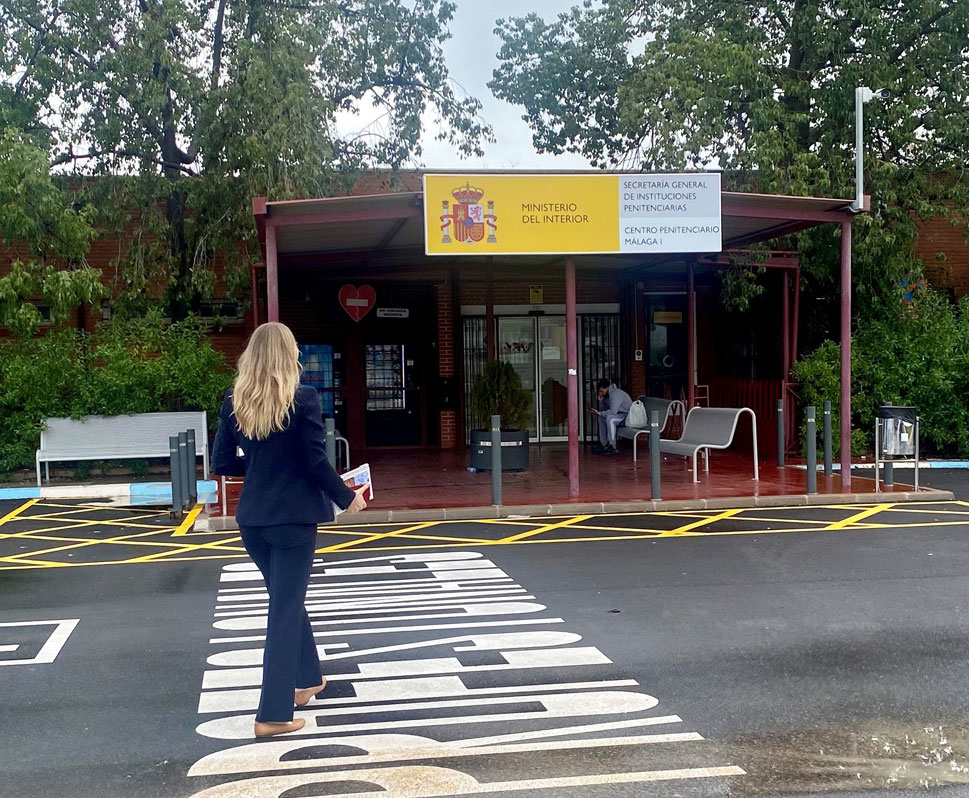
Figure 6.3 Prison visits
Foreign Service officers or honorary consuls may visit Norwegians imprisoned abroad.
Photo: Norwegian Embassy in Madrid/Ministry of Foreign Affairs
If a person is in custody for a long period or has been committed to prison, the mission will follow up the prisoner on a regular basis. When it is practicable and responsible in terms of safety and security, the mission will usually try to organise at least one prison visit per year. The frequency of visits may vary from case to case, and in very serious cases the mission may consider it necessary to visit the prisoner more frequently. This is to be clarified in a dialogue between the mission and the Ministry. The decision to pay more frequent visits often reflects grave concerns regarding a prisoner’s health and safety. Thus the allocation of Foreign Service resources in this area will generally be based on sensitive personal information that is subject to a duty of confidentiality.
People not associated with the Foreign Service may also wish to visit Norwegians imprisoned abroad. These are often friends, family members or representatives of NGOs. The Norwegian Church Abroad (Sjømannskirken), for example, offers prison visits as an important part of its outreach activities for Norwegians in foreign countries, and many prisoners greatly value these visits. The Foreign Service informs prisoners of the services available and can pass along requests for visits.
Conditions in foreign prisons are often very different from Norwegian standards. People held in pre-trial custody or serving a sentence in another country cannot expect standards that are higher than the general prison standards in the country in question. Many prisons have complaints mechanisms in place for prisoners who wish to raise their concerns about prison conditions. In especially serious cases, the Foreign Service will relay a prisoner’s concerns to the prison authorities, who will always have responsibility for ensuring the health and safety of prisoners.
In most countries, prisoners have access to a nutritious diet and hygienic sanitary facilities, and inmates can often purchase items and services that make their situation easier. In some cases, friends or family members in Norway can transfer money directly to an inmate’s ‘prison account’ or provide funds another way. If necessary, the Foreign Service may provide assistance in transferring funds.
6.8.4 Death penalty and other unacceptable penal sanctions
Sometimes Norwegian citizens are being prosecuted in countries that practise the death penalty or use other unacceptable penalties, such as flogging or other forms of corporal punishment.
The Norwegian authorities are actively engaged in international efforts to abolish the death penalty. Cases where a Norwegian citizen has been or is in danger of being sentenced to death are followed up closely and given high priority, and the Norwegian authorities will always request that the sentence is not carried out in such cases. When necessary, it is normal practice to raise the matter at a high political level.
6.8.5 Transfers of sentenced persons
After all local legal proceedings have been completed and a final judgment has been passed in a foreign court, the prisoner may apply to Norwegian or foreign judicial authorities for transfer to Norway to serve part or all of the sentence. Applications for transfers may be submitted via a mission abroad and will be processed by the Norwegian Correctional Service, or in certain cases by the Ministry of Justice and Public Security.
6.9 Especially complex consular cases
Every year the Foreign Service deals with a small number of cases that are particularly complex and require a different level of focus than typical types of consular cases. The following provides a brief overview of some of the complex consular problems that Norway and other countries’ foreign services may encounter. Since these types of cases are very rare, the cases described here do not necessarily involve Norwegian citizens specifically. They are presented here to demonstrate the complexity of these issues and the potential problems that may arise.
6.9.1 Disappearances and arbitrary detentions
As described in chapter 6.1 on reports of concern and missing person reports, family members or friends in Norway sometimes lose contact with a person travelling abroad. In a few of these cases, there may be reason to suspect that the individual has been ‘taken’ by a state actor. If the state in question denies any knowledge of the case, it may be because the local authorities genuinely not have any information about the individual, or it may be a case of an enforced disappearance.10
Enforced disappearance is a blatant violation of human rights, and the missing person usually has no form of legal protection. Cases involving such disappearances are very difficult, and the Foreign Service has few or no means at its disposal to determine what has actually transpired. The only way to find answers is if the local authorities investigate the matter, and they are unlikely to do so if they are behind the disappearance. The Foreign Service often advises the next of kin to report the disappearance to the Norwegian police, and will follow the matter up at regular intervals with the local authorities.
Arbitrary detentions
In recent years the foreign services of other countries have dealt with a number of cases involving arbitrary arrests or detentions where a country’s authorities have ostensibly detained foreign citizens for the purpose of exerting political pressure. This phenomenon is sometimes referred to as hostage diplomacy.
Norway has endorsed the Declaration Against Arbitrary Detention in State-to-State Relations launched by Canada in 2021. International cooperation on preventing and responding to such incidents is important. At the same time, it is crucial to carefully consider when to define a case as anything beyond the ordinary exercise of authority. The politicisation of an individual case does not necessarily make it easier to deal with or serve the interests of the arrested person. It is therefore advisable to use caution in all discussion involving such cases.
6.9.2 Kidnappings abroad
Sometimes a Norwegian citizen is kidnapped abroad. Kidnapping is a criminal act committed by groups or individuals for political or criminal purposes and in pursuit of a specific aim. Hostage-takers usually demand a ransom, but may issue demands for political or other concessions from the authorities of Norway or other countries.
Internationally, there have been several high-profile examples of individuals who have been abducted while abroad. Some cases are resolved or closed relatively quickly, whereas others may be ongoing over several years. Unfortunately, the person who has been kidnapped is sometimes killed, either by the hostage-takers or in connection with the measures implemented by the local authorities to resolve the situation. For Norway’s part, the most serious case in recent years was the 2015 murder of a Norwegian citizen kidnapped by the terror organisation ISIL.
The Ministry of Foreign Affairs maintains close, constructive cooperation with other parts of the government administration in connection with cases where Norwegian citizens have been kidnapped abroad. Although these cases generally involve a single individual, the assistance efforts are often dealt with by establishing a separate crisis management team. Kidnapping cases need to be kept confidential, and good routines for communication are essential. There is often an immediate danger to an individual’s life and health, and there have been instances where the Norwegian media have been aware of a kidnapping abroad, but have chosen not to publish the story out of consideration for the individual involved.
Norway does not pay ransom money. This is an important principle and will be maintained in all dealings with terrorists and other criminals, both because payment of any ransoms would increase the risk of other Norwegians being taken hostage and because the Norwegian authorities do not wish to support the financing of criminal and terrorist activities.
Textbox 6.3 Foreign terrorist fighters – an example of multiple consular issues
During the 2010s a number of Norwegians travelled to conflict areas in the Middle East. Several of them chose to join a terrorist organisation involved in the civil war in Syria. The situation in the region was serious and unpredictable. Individuals who travel or settle abroad implicitly accept the risks that entails, and individuals who stay in an area for which the Norwegian authorities have issued a travel warning are placing themselves at heightened risk. This includes the risk that the Foreign Service may have little or no ability to assist them if something happens. This was very much the case in the territory controlled by the terrorist organisation ISIL.
After ISIL was defeated in territorial terms in 2019, a small number of Norwegian women and their children were interned in camps in northeastern Syria. As the security situation stabilised, it became possible to offer consular assistance to those living in the camps. A total of 14 individuals, including 6 orphaned children, received consular assistance enabling them to travel to Norway.
Asking for and accepting any offers of consular assistance is voluntary. In these particular cases, none of the adult women chose to seek consular assistance from the Norwegian authorities for a long period. This is every individual’s prerogative. Parents with parental responsibility have the right and the duty to make decisions for their children, and if the parents do not wish to receive consular assistance, there is generally very little that the Norwegian authorities can do. The Foreign Service does not have the competence or authority to take children away from their parents or to decide that the children are to travel to Norway.
One complicating factor in some consular cases is that it can put the individual at risk if it becomes known that they have asked for consular assistance. Another factor that made these particular cases more difficult was the need to establish the children’s identities and ascertain that they were indeed Norwegian citizens. It was necessary to carry out DNA testing of all the children to determine whether they qualified for assistance to travel to Norway (see chapter 5.1).
The type of consular assistance offered in these cases is referred to internationally as ‘repatriation’. While all Norwegian citizens have the right to enter Norway, this does not mean that the Norwegian state is under obligation to organise the arrangements for their travel or to retrieve Norwegians abroad and repatriate them. This applies to all types of consular cases, such as those involving individuals subject to negative social control (see chapter 6.7) or assisted departures in crisis situations (see chapter 7.3).
While international arrest warrants had been issued for the Norwegian women in the camps in Syria for belonging to a terrorist organisation, the women were not under arrest, and the prosecuting authorities had not asked to have them extradited. The consular assistance that was provided in connection with their transport to Norway was based on their free choice. These were extraordinary circumstances outside the normal parameters of consular assistance, and safeguarding the health and well-being of children was a key consideration. Because international warrants had been issued for the adults, practical aspects relating to several of these cases were dealt with in close cooperation with the police.
The consular assistance offered in these cases was extensive and resource-intensive and involved a wide array of ministries, directorates and agencies. Certain elements of the Foreign Service’s crisis management organisation were employed to assist with repatriation using a rapid deployment team (URE). This included transporting five orphaned children to Norway on a medevac flight in 2019. This was due to concerns about the life and health of the children. Because they were orphans, the costs were covered under the budget of the Ministry of Foreign Affairs. In the cases where adults were given assistance to return together with their children, steps were taken to recover the costs from the individuals concerned. There is limited precedent for doing this in consular cases, but as was pointed out in white paper Assistance to Norwegians abroad (Meld. St. 12 (2010–2011)), it is appropriate to seek to recover costs in extraordinary cases where gross negligence has been shown and where the potential preventive effect of this is a key consideration.
6.9.3 Human trafficking
Human trafficking is a serious crime and a violation of fundamental human rights. The Foreign Service does not have any concrete consular tasks in this area but may play a part in identifying potential victims of human trafficking abroad when dealing with consular cases, including in its efforts to combat negative social control and honour-motivated violence and issues relating to immigration cases.
If a Foreign Service employee receives information that gives ground to believe that a person is, or is at risk of becoming, a victim of aggravated human trafficking, the duty to avert a criminal offence applies. In such cases the Foreign Service will notify and establish contact with the relevant authorities about the case. Efforts may involve contact with the police, the Directorate of Immigration or other authorities as well as identifying and following up potential human trafficking cases in connection with the processing of applications for passports, visa and residence permits.
If a mission receives questions from individuals abroad about the rights they have in Norway in regard to violence, abuse and exploitation, the mission will refer them to the relevant Norwegian authorities.
The Ministry of Justice and Public Security will present a strategy for combating human trafficking in spring 2025.
Footnotes
The scheme is described in detail in the guide ‘Hjemsendelse av alvorlig psykisk syke. Gjennomføring av pasienttransporter til og fra utlandet’ (Repatriation of individuals with severe mental illness. Organising patient transport to and from abroad, Norwegian only) issued by the Norwegian Directorate of Health.
Convention of 19 October 1996 on Jurisdiction, Applicable Law, Recognition, Enforcement and Co-operation in respect of Parental Responsibility and Measures for the Protection of Children.
Section 261 of the Penal Code on removal from care.
See the act relating to the discontinuation of benefits and child allowance following an international child abduction (Norwegian only).
Convention of 25 October 1980 on the Civil Aspects of International Child Abduction. In addition, the European Convention of 1980 on Recognition and Enforcement of Decisions concerning Custody of Children and on Restoration of Custody of Children.
www.barnebortforing.no
Figures from the Norwegian Directorate of Integration and Diversity (IMDi) count each individual as a separate case, although most cases involve families with several children. In the period 2019–2023 IMDi registered between 235 and 273 cases annually. As a basis for comparison, the Foreign Service deals with a total of roughly 30 000 consular cases globally each year.
Read more in chapter 6.1 on reports of concern and missing person reports.
According to the territorial principle in international law, the receiving State is entitled to exercise authority by enacting legislation, rendering judgements and employing coercive measures within its own territorial limits.
The term ‘enforced disappearance’ refers to an arrest, detainment, abduction or other deprivation of liberty carried out by a state actor or by persons or groups acting on behalf of or with the permission of the state.