6 Autonomy, Artificial Intelligence and Data Governance
The increasing automation and integration of artificial intelligence (AI) in drone systems and AAM technologies are transforming the way aerial operations are conducted in both civil and public sectors. The government recognizes the significant societal benefits of these developments – ranging from improved operational efficiency and real-time data acquisition to enhanced situational awareness in complex environments. At the same time, this transformation raises important ethical, legal, and societal questions, particularly concerning privacy, transparency, and trust.
Autonomous drone systems are being developed at various levels of capability – from remotely operated platforms with pre-programmed routes to fully autonomous systems capable of adapting to dynamic environments without human intervention. As autonomy becomes more advanced, often enabled by AI-based perception and decision-making, the operational role of human pilots shifts from direct control to supervision and oversight.
These advancements are particularly relevant in harsh or data-scarce environments, such as mountainous regions, tunnels, or disaster areas, where drones equipped with advanced navigation and sensing systems can operate safely without constant connectivity. Use cases include powerline inspections, emergency response, infrastructure monitoring, and delivery operations.
Autonomous capabilities are further strengthened by AI technologies that enable drones to interpret data, adjust in real-time, and execute complex tasks such as object recognition, anomaly detection, and precision imaging. For example, AI-powered drones can autonomously inspect high-voltage isolators by dynamically adjusting sensors and flight paths based on visual pattern recognition, reducing the need for human involvement and improving data quality.
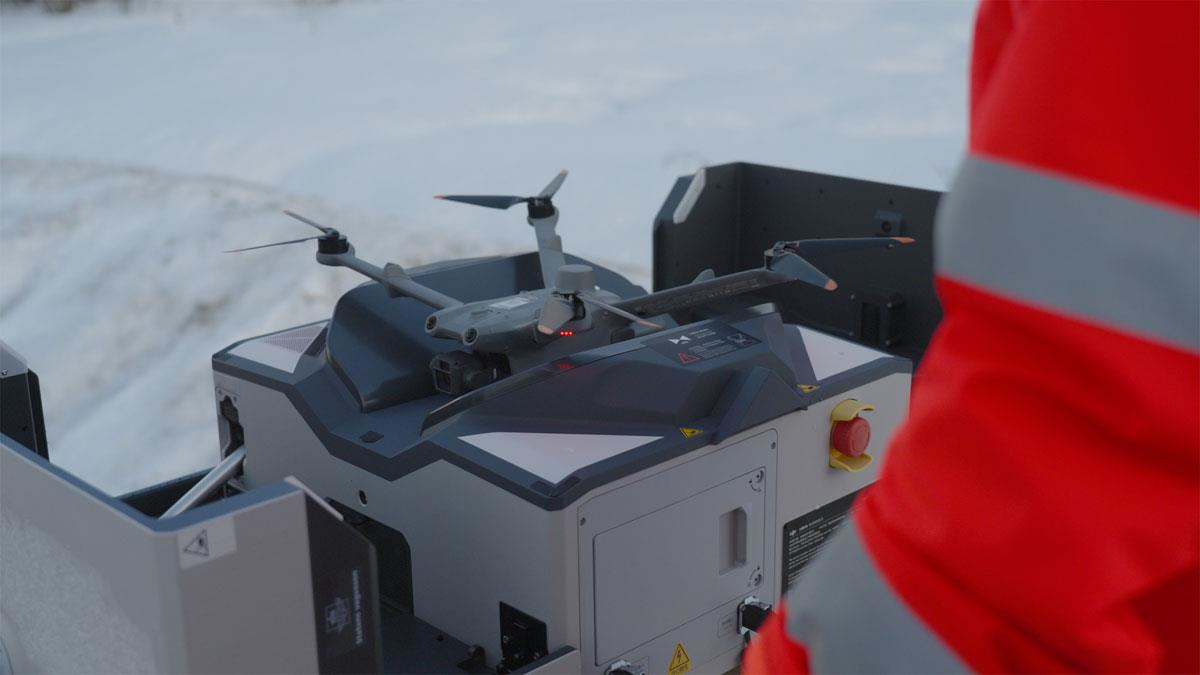
Figure 6.1 Drone-in-a-box
Photo: Norwegian Public Roads Administration/ Johan Peter Kraugerud, Red Ant AS
The government views autonomy, in combination with AI, as a prerequisite for scaling drone operations in a safe, efficient, and economically sustainable manner.
For autonomous systems to be accepted and trusted, especially in safety-critical applications, it is essential that their behavior is transparent and explainable. This includes the ability to understand how a system reaches a decision, particularly when outcomes affect public safety, security, or individual rights.
The government therefore supports the development of explainable AI – methods and frameworks that make algorithmic processes interpretable to both technical stakeholders and the general public. Explainability not only helps ensure ethical and legal compliance, but also supports system developers in identifying and correcting bias, error, or unintended behavior in algorithmic models.
As drones increasingly operate as data collection platforms and digital nodes, they become part of the broader cyber-physical infrastructure. Their software systems, communication links, and processing tools must therefore meet high standards of information security and resilience.
Risks such as unauthorized data access, system hacking, and foreign control over proprietary software used for drone operation and data processing have been identified as areas of concern. The government stresses the importance of secure data transmission, strict access controls, and clear policies for software dependency, particularly in operations involving sensitive or critical infrastructure.
The increased use of drones – especially in urban and residential areas – raises concerns related to privacy and data protection. Drones equipped with high-resolution cameras and sensors can collect vast amounts of information, including personal data, often without the knowledge or consent of those affected. This creates a need for clear and enforceable guidelines on data minimization, purpose limitation, and transparency of data use.
Operators, both public and private, are encouraged to conduct Data Protection Impact Assessments (DPIAs) prior to deploying drones for information-gathering purposes. These assessments must evaluate the potential impact on individual privacy and include appropriate safeguards.
To strengthen public trust, the government is considering a range of additional measures. These include raising awareness among drone operators about their data protection obligations, integrating privacy considerations into pilot training and licensing processes, and promoting public information campaigns in densely populated areas where drone activity is more frequent.
Technological solutions such as remote identification – where drone identity and operator information can be accessed in real-time – are crucial to improving accountability and reducing public anxiety. While such systems are already mandatory for most drone categories under current EU regulations, the government is assessing whether requirements should be expanded to include smaller drones, especially when operated near sensitive locations or in urban areas.
The aim is to strike a balance between public safety and innovation, ensuring that hobbyist or low-risk operations are not unnecessarily burdened while safeguarding against misuse in privacy-sensitive contexts.
Beyond privacy, the physical presence and sound of drones can negatively impact quality of life, especially when operations occur near homes, in parks, or in recreational nature areas. Even electrically powered, low-acoustic-signature drones can become a source of chronic disturbance if operated frequently or unpredictably.
The government emphasizes that drone operators must remain conscious of the social and acoustic footprint of their activities. This involves careful flight path planning, coordination of operations in terms of timing, use of noise-reducing technologies and aircraft designs, and, where possible, consolidation of operations to minimize the overall number of flights.
Maintaining public trust in drones and AAM technologies will depend not only on safety and efficiency, but also on ensuring that their use does not compromise the general public’s right to a peaceful living environment.
To support the safe and responsible use of autonomy and AI in drones and AAM, the government commits to:
- Facilitating the development and safe, effective use of automation, autonomy, and artificial intelligence in aviation
- Assessing the need for measures to protect personal privacy from unnecessary disturbances, including noise and visual disruptions resulting from increased drone and AAM activity
- Evaluating whether remote identification should be made mandatory for all drones
- Exploring measures to raise awareness about privacy and data protection among all drone operators using cameras or other types of sensors