1 Opening Statement by the Prime Minister
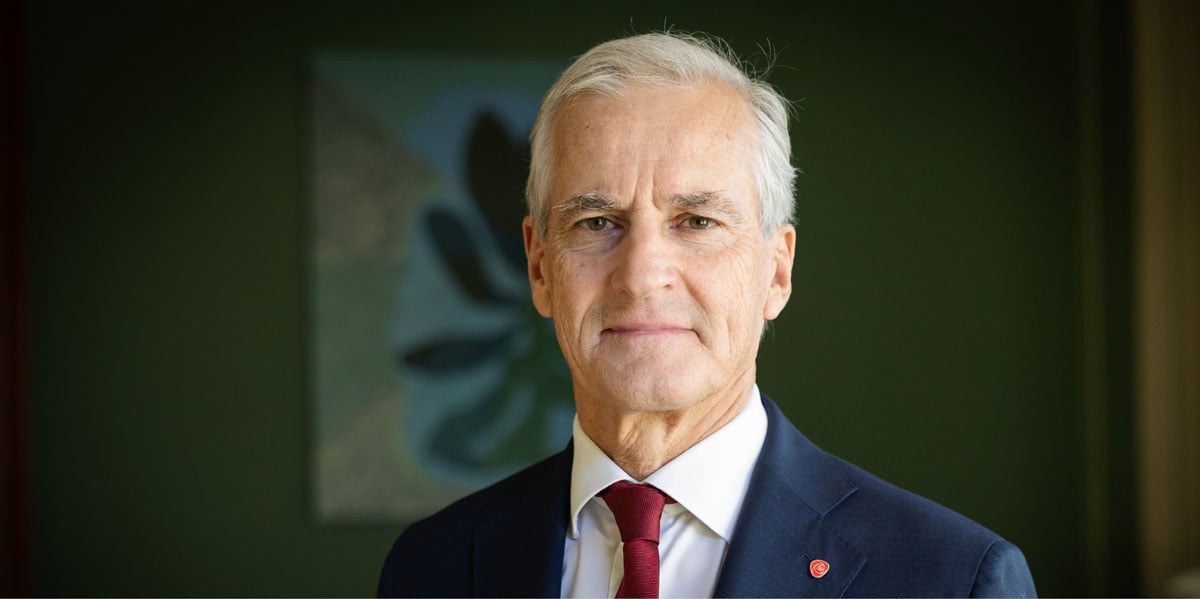
Photo: Martin Nielsen / Ministry of Education and Research
We are living in an unsettling time marked by interconnected crises such as climate change, geopolitical tension, rising inequality, polarisation, populism and increasing political instability. These developments pose significant challenges to global efforts to achieve the Sustainable Development Goals. Progress towards several goals has slowed, and on others, hard won gains have been reversed.
As members of a shared global community, we have a responsibility to show solidarity with one another. I firmly believe that leaving no one behind should be the guiding principle going forward. While no individual, company or government can address every challenge alone, each can make a meaningful contribution by standing with others and taking responsibility where they can.
The Sevilla Commitment from the Fourth International Conference on Financing for Development gives us a clear roadmap to reverse the recent negative trends and build positive momentum in the few years remaining until 2030. We cannot afford to let this opportunity pass.
The 2030 Agenda underscores the necessity of collective solutions. It is paramount that cooperation between states is founded on strong, credible international institutions capable of promoting peace, stability, and cooperation based on international law.
The 17 Sustainable Development Goals provide a comprehensive framework for advancing social, economic, and environmental development. It is time to acknowledge that achieving the goals is in the interest of all nations. Through cooperation and the pursuit of common solutions, the SDGs can serve as a shared platform and a transformative agenda for people and planet alike.
For Norway, the Government has therefore chosen to integrate the SDGs into mainstream policy development rather than treating them as a separate policy domain. We believe this approach strengthens ownership, enhances awareness of our shared challenges, and supports a more coherent and effective implementation across sectors.
Relatively small social and economic disparities, a resilient economy, and a robust welfare state provide a strong foundation for Norway’s progress. This puts us in a good position to achieve the goals. Our society is built on a well-established tradition of cooperation and trust, enabling us to remain at the forefront of SDG implementation. At the same time, significant challenges remain, particularly in areas where our high standard of living results in elevated levels of material and resource consumption, with corresponding climate and environmental impacts.
Gender equality is among Norway’s most important international priorities. Advancing the rights, opportunities and safety of women and girls is not only a matter of justice, but a prerequisite for sustainable development, conflict prevention and inclusive economic growth worldwide.
While cooperation globally is essential to succeed in implementing the 2030 Agenda, cooperation within our societies is equally vital. I am therefore pleased that so many stakeholders across the Norwegian society have contributed to this review.
Civil society, labour unions, local and regional government, the Sami Parliament, industry, academia, and the agricultural sector have all shared their perspective on the state of sustainable development. I am particularly proud of the strong and active involvement of youth in the preparation of this review. Their voices and insights are essential to ensuring that we remain on track towards a more just and sustainable future, meeting today’s needs without compromising the ability of future generations to meet their own.
Jonas Gahr Støre
Prime Minister of Norway